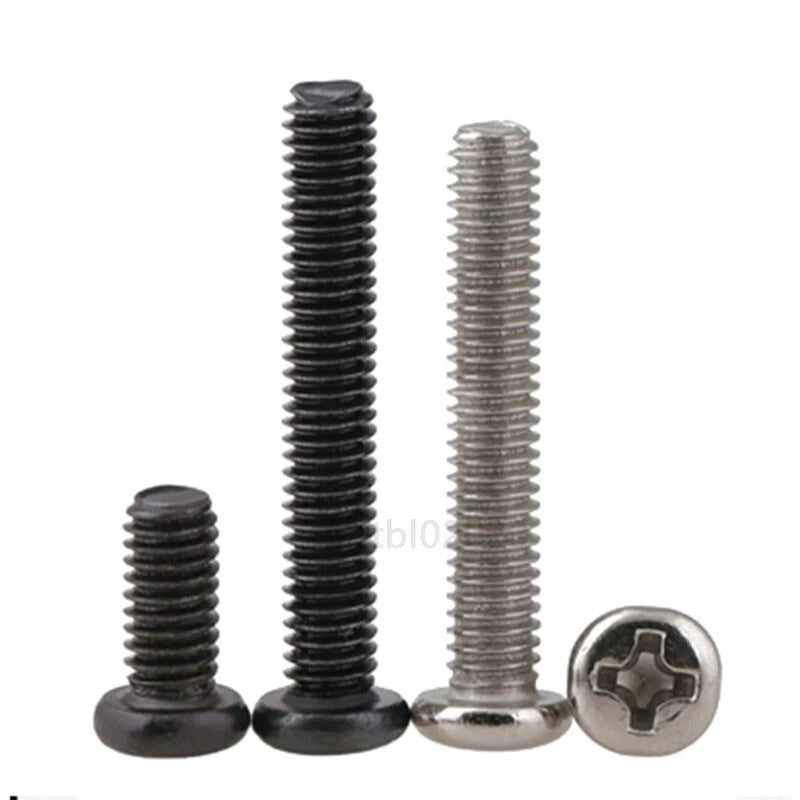
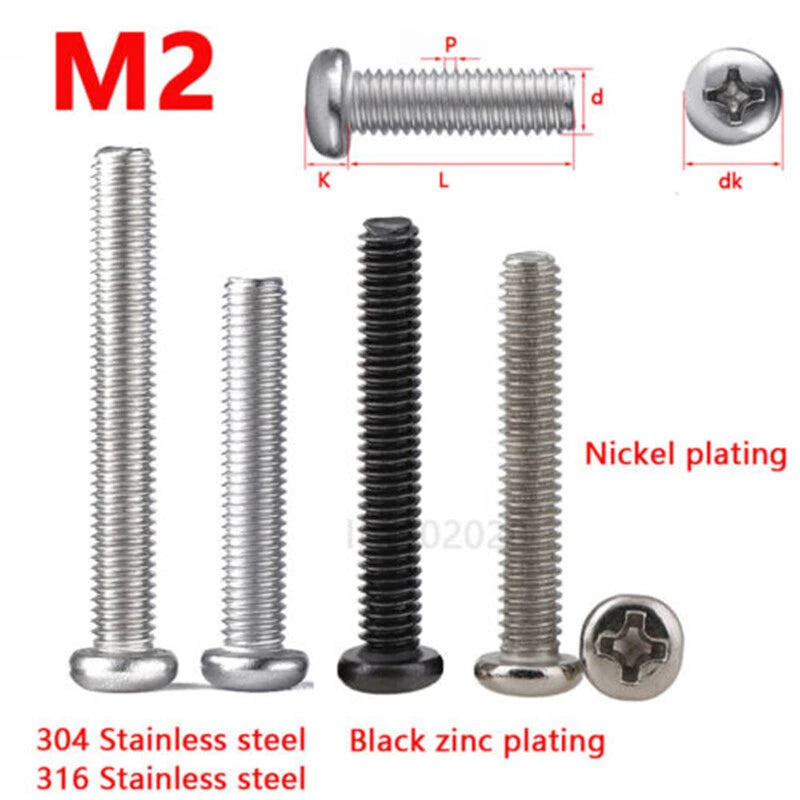
🔩 M2 Pozi Pan Head Machine Screws – A2/A4 Stainless Steel (304/316), Small Precision Fasteners
When you’re working on tiny electronics, drones, 3D printers, or precision instruments, every millimeter matters. These M2 Pozi pan head machine screws deliver reliable holding power in a miniature package. Choose from 304 (A2) stainless for general corrosion resistance, 316 (A4) for marine and chemical environments, or budget‑friendly 201 and carbon steel options. The Pozi drive (Pozidriv) reduces cam‑out and allows higher torque than Phillips, so you won’t strip those tiny heads. Available in multiple lengths, surface finishes (untreated, black zinc, nickel), and pack sizes. Perfect for hobbyists, repair shops, and production lines that need consistent, tiny fasteners.
✨ Why These M2 Pozi Screws Stand Out
M2 metric thread (2mm diameter) – Ideal for small electronics, camera gear, laptop hinges, RC vehicles, model making, and medical devices. Fits standard M2 nuts and tapped holes.
Pozi (Pozidriv) drive – Unlike Phillips, Pozi has straight sidewalls and extra contact points. Your driver locks in firmly, reducing slippage and head stripping – a huge advantage at this tiny scale.
Multiple stainless steel grades – 304 (A2) for outdoor/humid, 316 (A4) for saltwater/chemicals, plus 201 and carbon steel for dry indoor use. Pick the right corrosion resistance for your job.
Three surface finishes – Untreated (natural), black zinc plated (added corrosion protection), or nickel plated (bright, decorative).
Pan / round head design – Low profile with a slightly domed top. Provides a clean finish when seated in counterbores or on flat surfaces.
Flexible lengths & pack sizes – Common lengths available (e.g., 4mm, 6mm, 8mm, 10mm, 12mm, 16mm, 20mm – check dropdown). Sold in small packs or bulk quantities.
💡 Pozi vs. Phillips: Use a PZ0 or PZ1 driver for these M2 screws. A Phillips PH0 will work in a pinch, but Pozi bits provide much better grip and reduce stripping risk.
💬 Frequently Asked Questions – M2 Pozi Stainless Machine Screws
Why does stainless steel sometimes have magnetism? Is my 304 screw defective?
No, it's normal. 304 stainless is austenitic and generally non‑magnetic. However, during cold forming (screw manufacturing), some austenite can transform into martensite, which is magnetic. So your screw may exhibit slight magnetism near the head or threads. This does not affect corrosion resistance or quality. For true non‑magnetic applications (like MRI equipment), special annealed 304 or 316 can be ordered.
What’s the difference between 304 (A2) and 316 (A4) stainless steel?
304 is the standard “food‑grade” stainless, excellent for most outdoor, humid, and mildly corrosive environments. 316 adds molybdenum, giving it much better resistance to chlorides (saltwater, road salt, pool chemicals) and acids. If your project will be near the ocean or exposed to deicing salts, choose 316 (A4). For general indoor/outdoor use, 304 is perfect.
What screwdriver / bit do I need for M2 Pozi screws?
Use a Pozi #0 (PZ0) driver or bit. A PZ1 is slightly too large for M2. If using a Phillips driver, PH0 may work but expect less torque transfer and higher risk of cam‑out. For best results, we recommend a dedicated PZ0 Pozi screwdriver.
How do I verify these are genuine 304 stainless steel?
You can use a 304 stainless steel test solution (available online) – genuine 304 will not change color or will show a specific reaction. For professional verification, spectral analysis or chemical composition testing is accurate. We also support smoke testing and simulated environment testing upon request. Rest assured, our supply chain is traceable.
Can I use these screws in a tapped plastic housing or with M2 nuts?
Yes – M2 is a standard metric thread. They work perfectly with M2 nuts, threaded inserts, or self‑tapping into soft plastics (pre‑drill a 1.6mm pilot hole). For metal, always use a tapped hole or nut to avoid thread damage.
What’s the best material choice for an outdoor drone project?
For drones that may encounter moisture or light rain, 304 stainless (A2) is sufficient. If you fly near saltwater (beach), upgrade to 316 (A4). For indoor drones, 201 stainless or carbon steel with black zinc plating is fine and more economical.