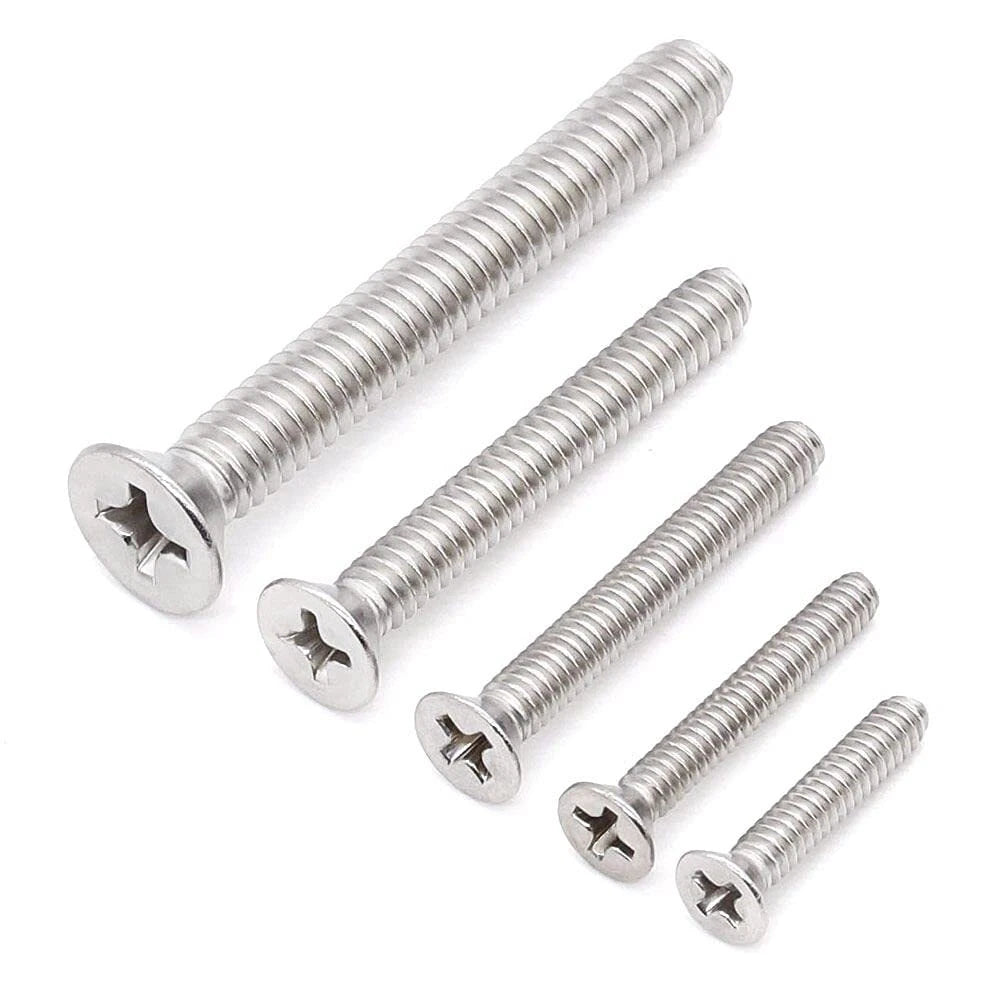
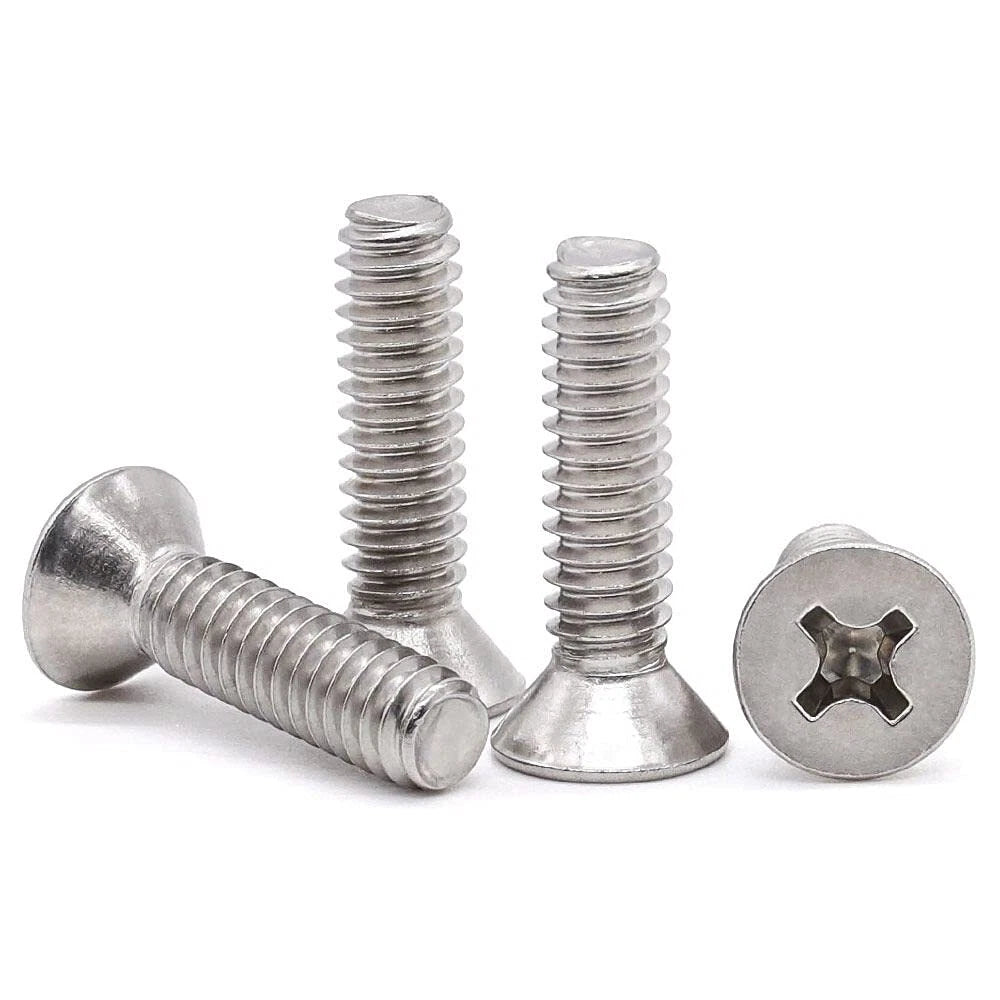
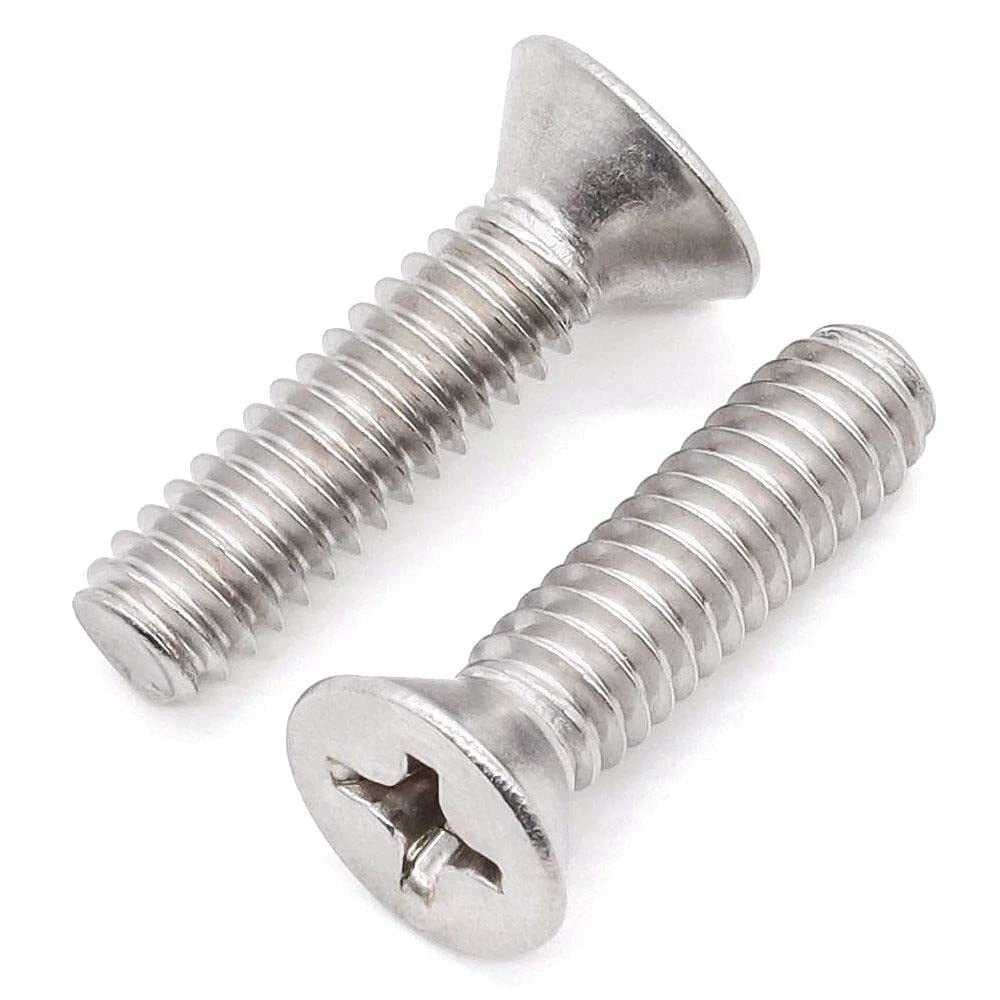
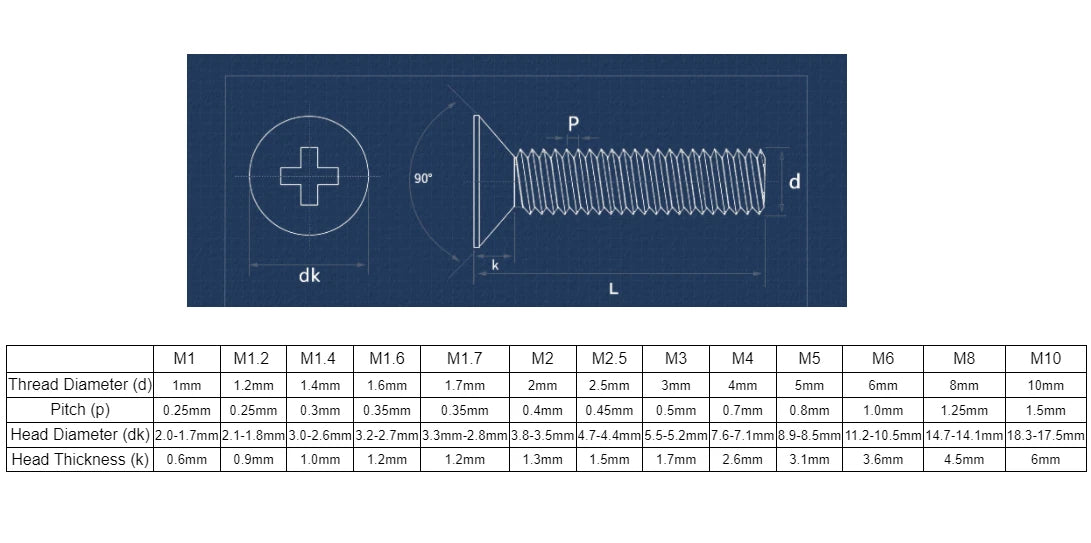
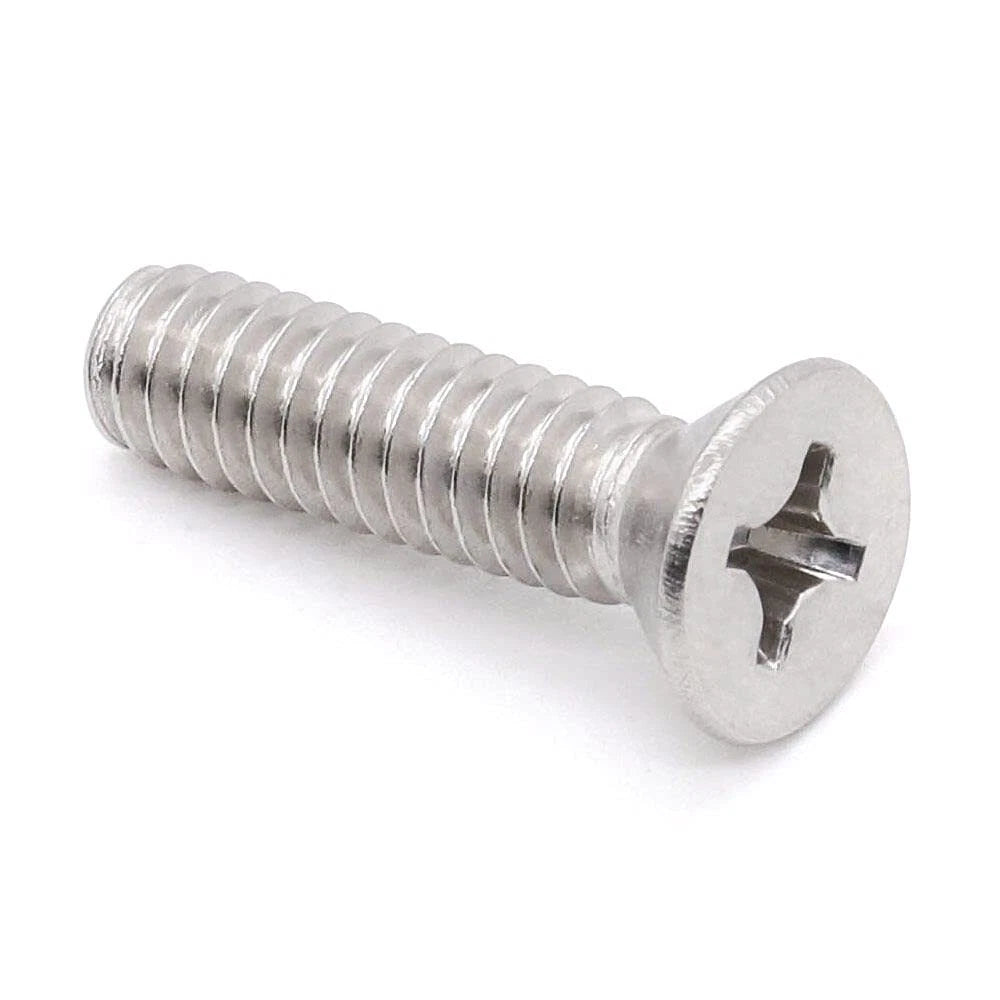
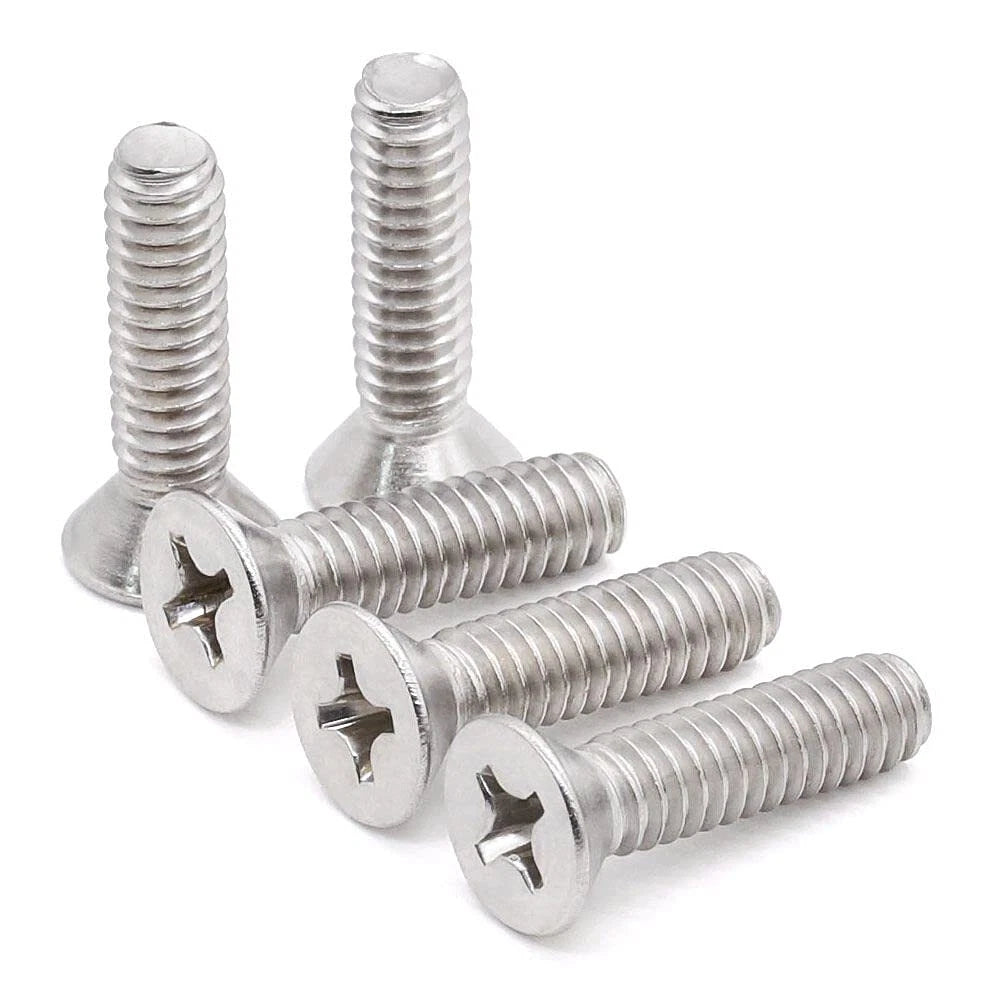
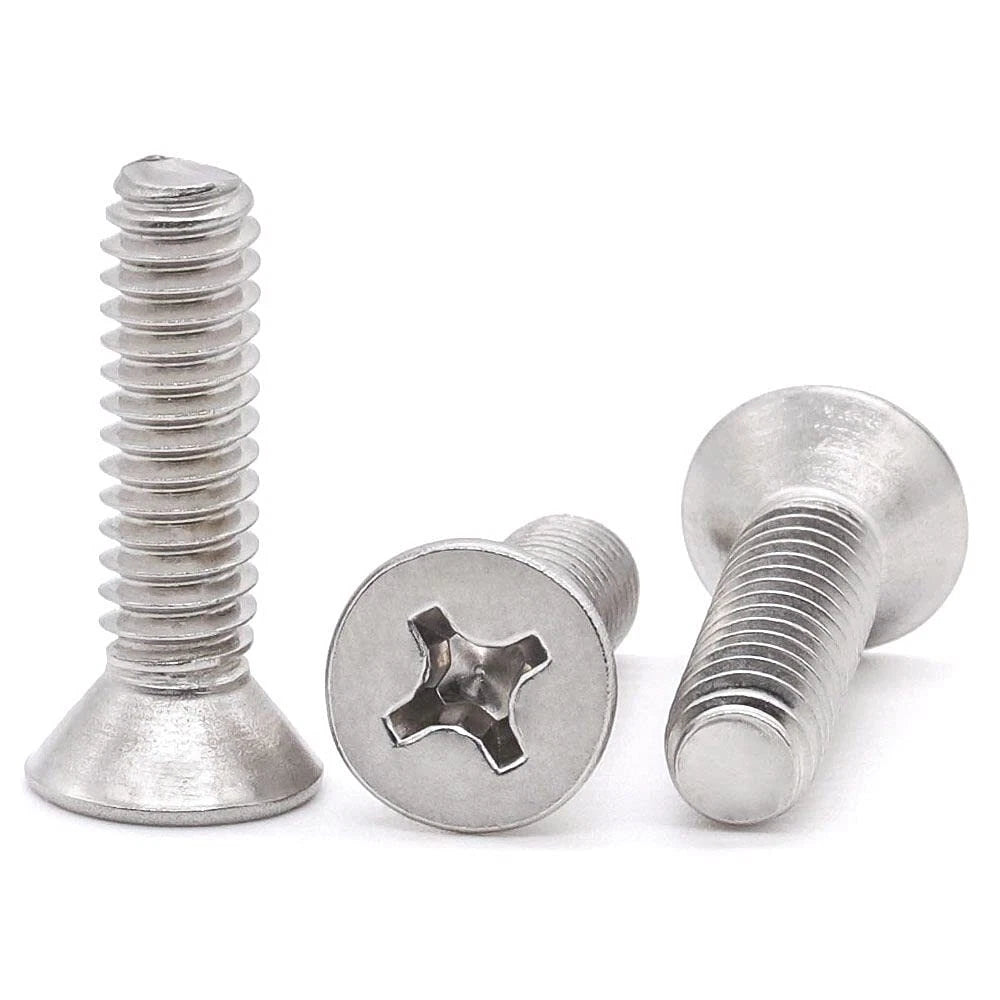
You're working on a delicate instrument, mounting a hinge flush to a wooden surface, or assembling a piece of equipment that needs a smooth, snag‑free finish. These M3 and M3.5 countersunk machine screws are made from A2 stainless steel (304), so they won't rust or stain over time. The 90° flat head sinks perfectly into a pre‑drilled countersink, leaving the screw flush with the material. Phillips drive gives you reliable engagement with standard crosshead bits. Available in lengths from 3mm up to 120mm – measured including the head. Fully threaded along the entire length, these screws give you maximum grip in both blind holes and through‑hole applications. Perfect for furniture, marine hardware, automotive trim, and any project where a flush finish matters.
1. Do I need to countersink the hole for these screws to sit flush?
Yes – for the head to be flush with the surface, you must drill a matching 90° countersink hole. If you drive them into a straight hole, the head will sit proud. Use a countersink bit the same size as the screw head. In soft wood, you can sometimes tap the head in with a hammer, but proper countersinking gives a much cleaner result.
2. How is the length measured for these screws? Does it include the head?
Yes – for countersunk screws, the overall length includes the head. Place the screw on a ruler with the top of the head flat against the zero mark – measure to the tip. So an “M3 x 20mm” screw has a total length of 20mm from the top of the head to the tip.
3. What’s the difference between M3 and M3.5? When would I use M3.5?
M3 is 3mm diameter, M3.5 is 3.5mm. M3 is very common for electronics, 3D printers, and small appliances. M3.5 is a less common size but used in some European appliances, older audio equipment, and specific machinery. If you’re replacing an existing screw, measure the diameter or check the original specs.
4. Are these screws suitable for outdoor use?
Absolutely – A2 stainless (304) is highly corrosion‑resistant. It’s perfect for outdoor furniture, garden equipment, boat fittings, and coastal environments. For continuous saltwater immersion, A4 (316) is better, but for 99% of outdoor DIY, A2 is excellent.
5. Can I use these screws with a nut, or do they need a tapped hole?
Both. You can thread them into a pre‑tapped hole of the same metric size, or pair them with a standard metric nut (M3 nut for M3 screw, M3.5 nut for M3.5 screw). They are machine screws – not self‑tapping.
6. What Phillips screwdriver size should I use?
For M3 and M3.5 screws, a #1 Phillips screwdriver is typically the correct size. For very small M3 screws (3-6mm length), a #0 may work, but #1 is standard. Avoid using a #2 – it will be too large and may damage the cross recess.