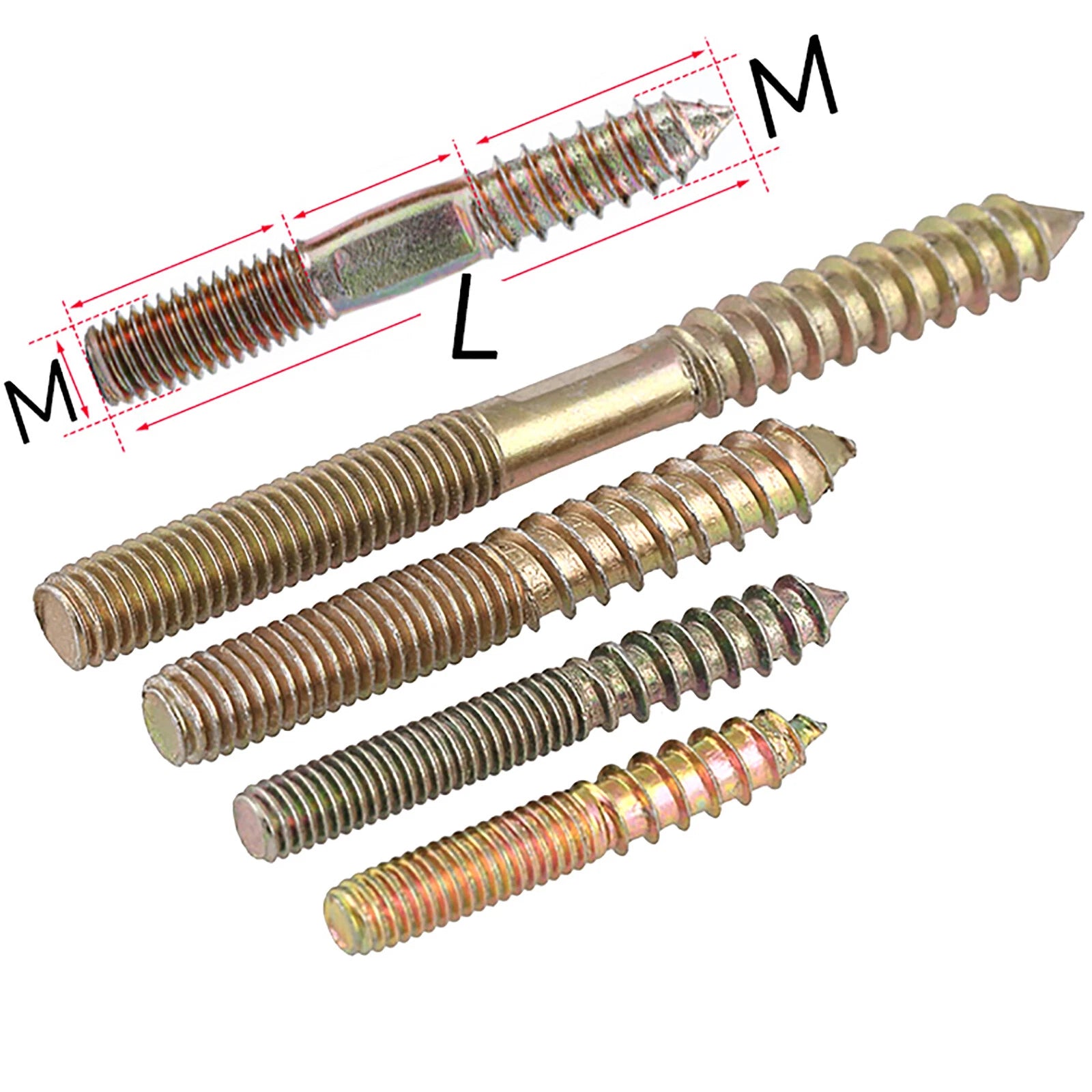
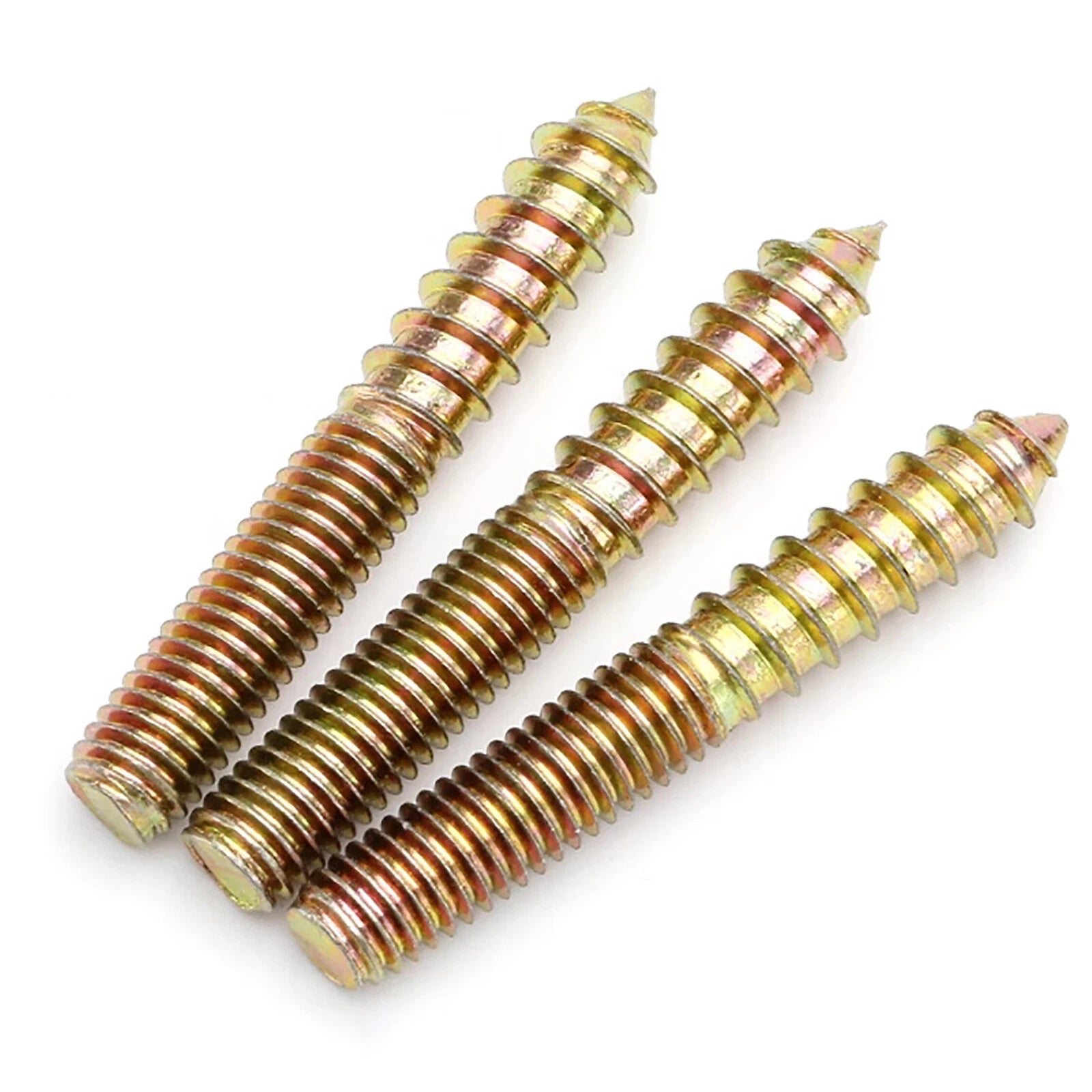
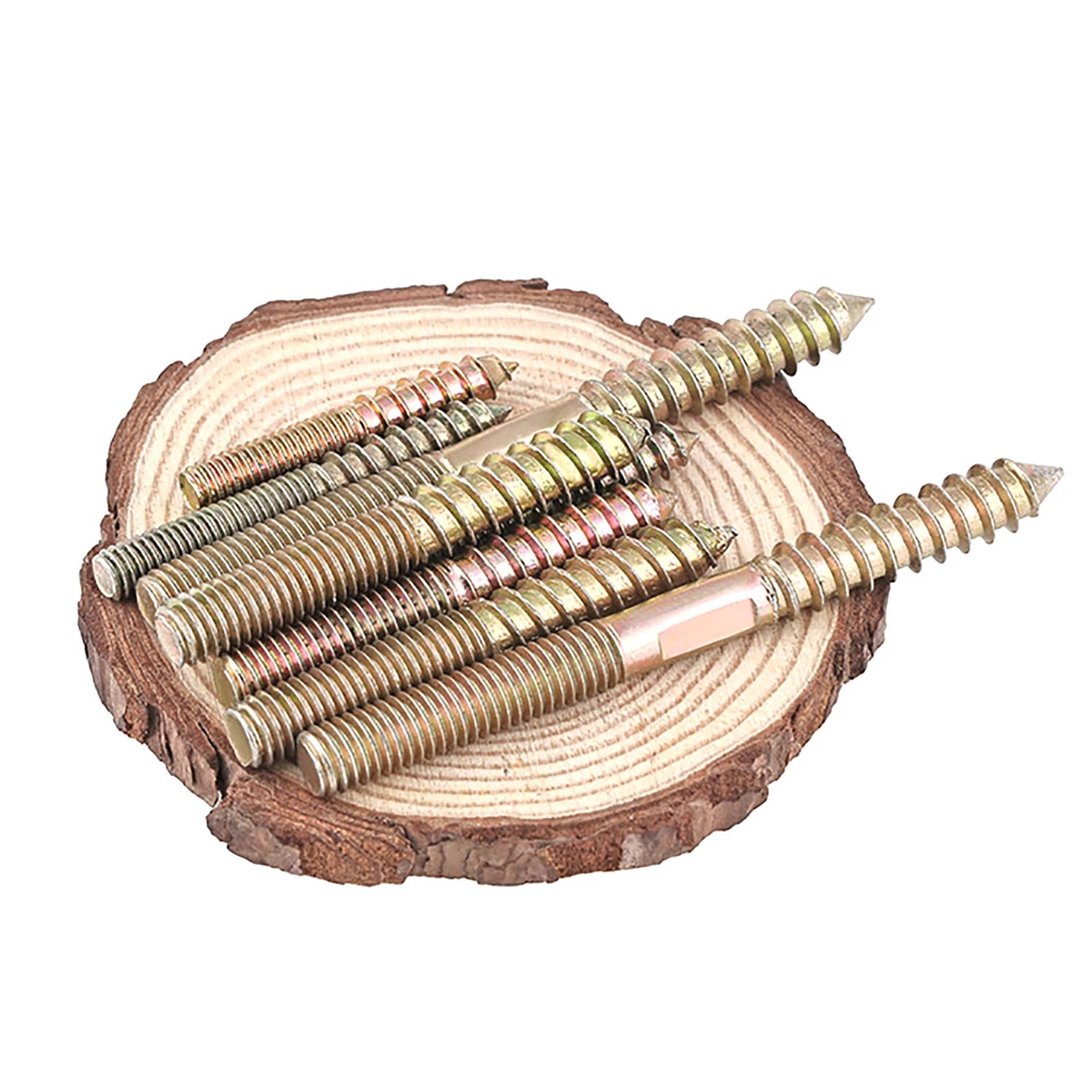
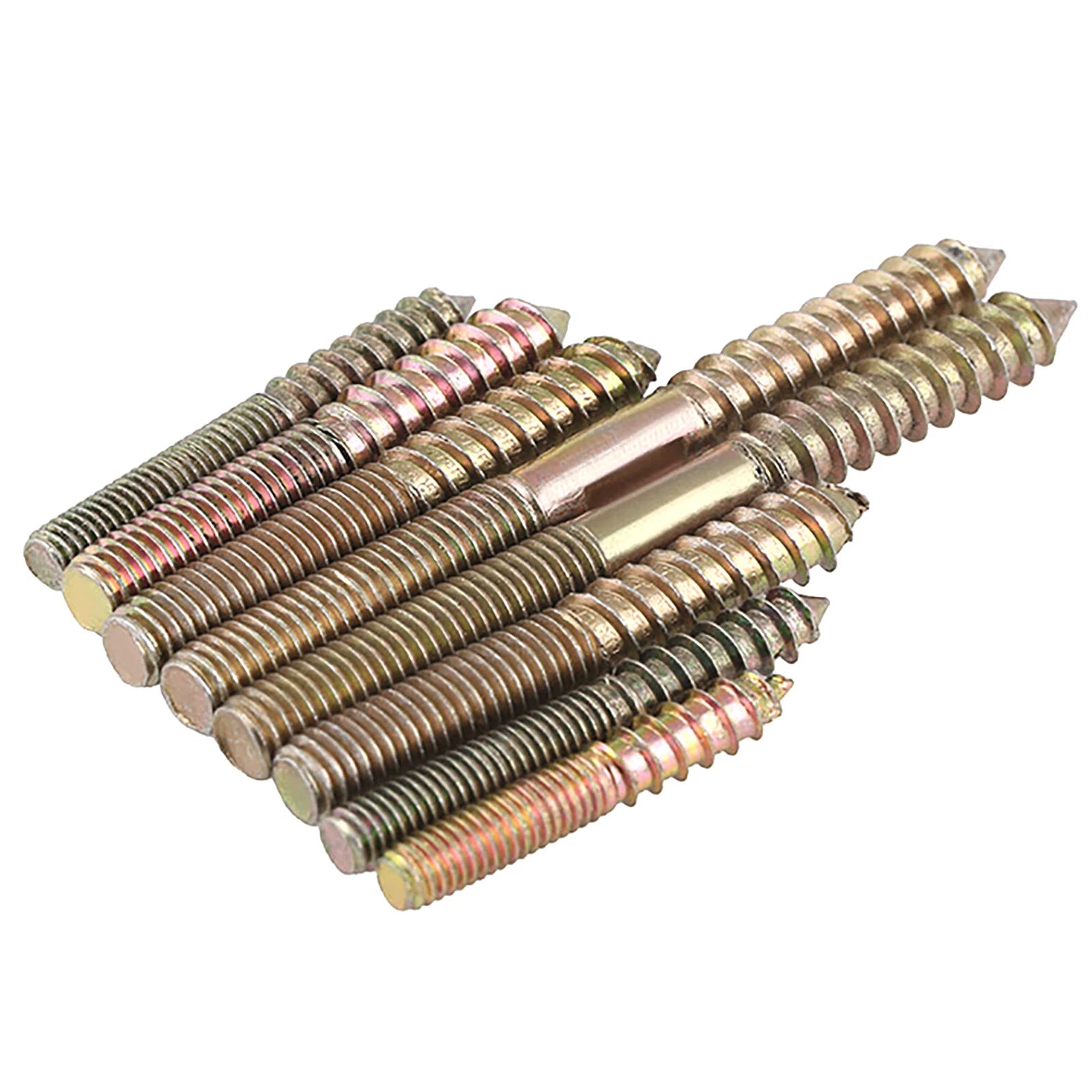
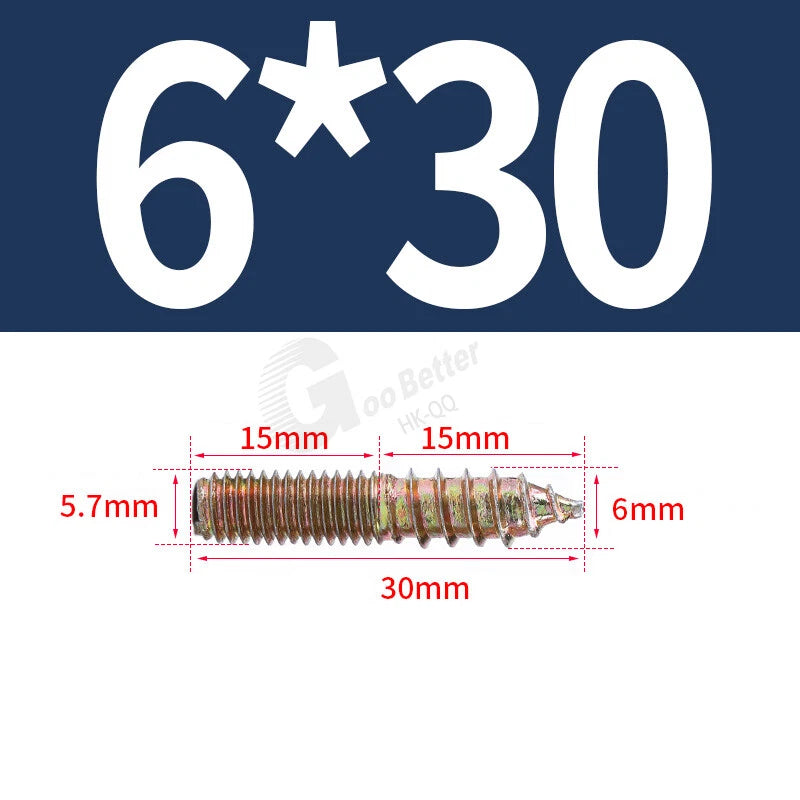
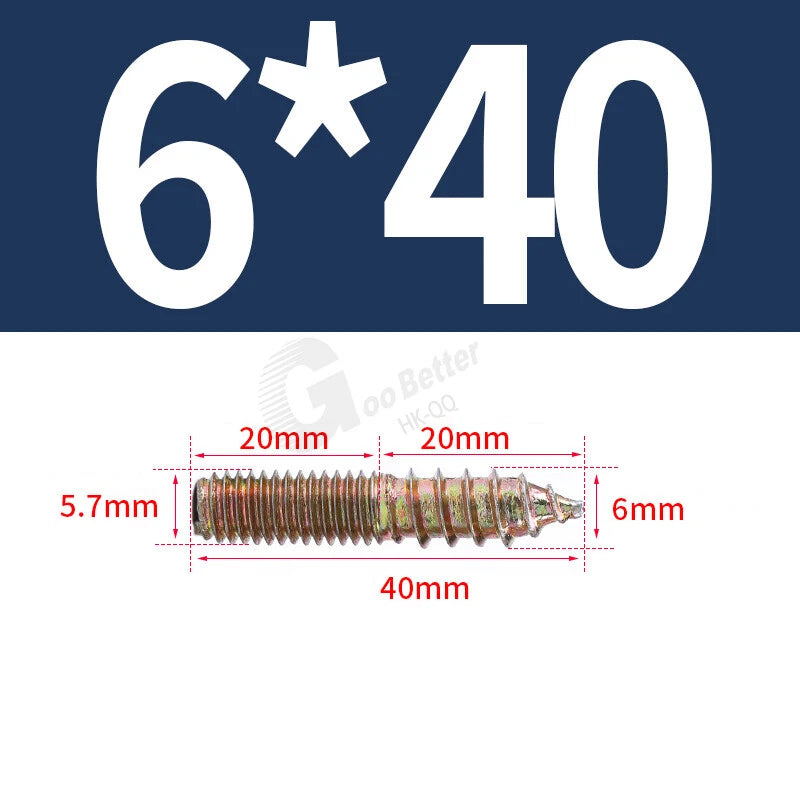
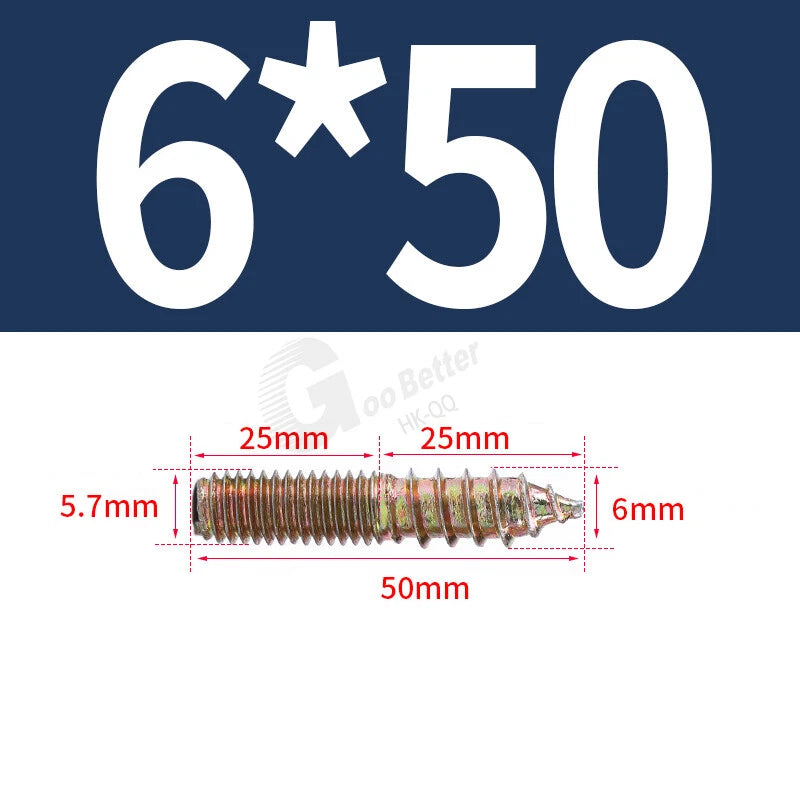
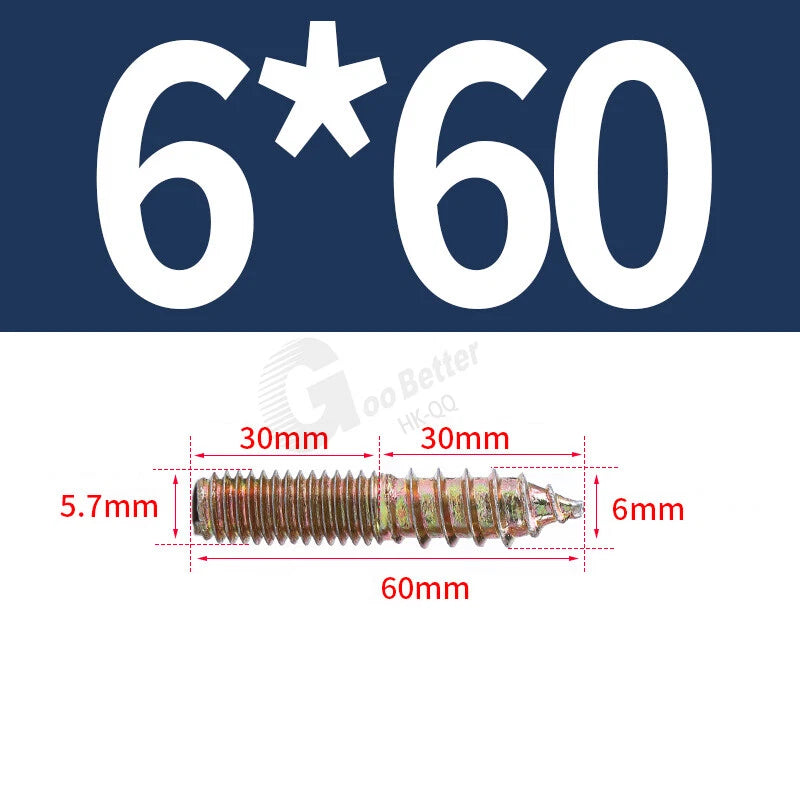
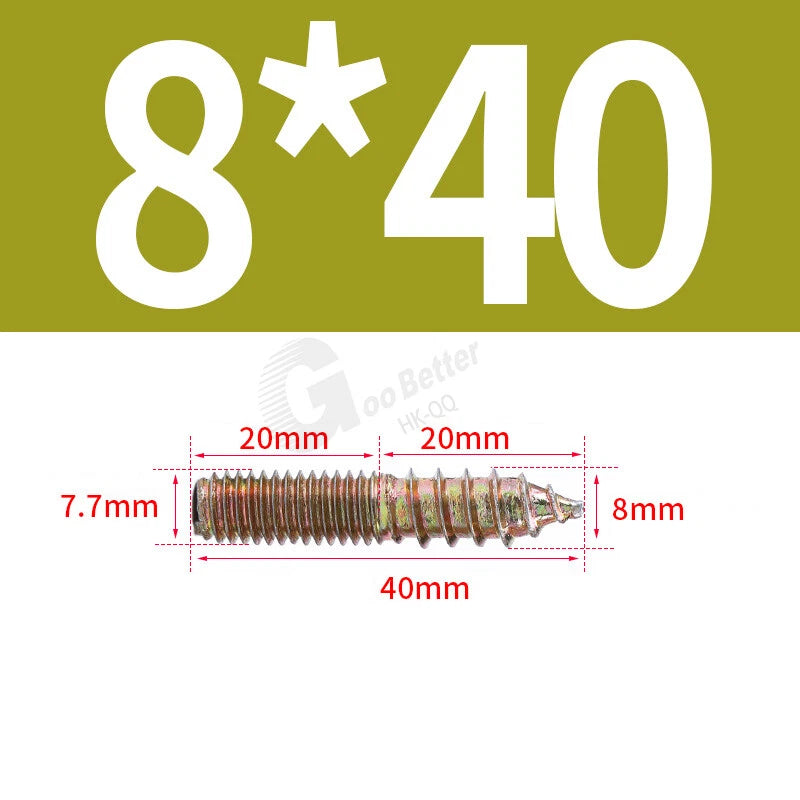
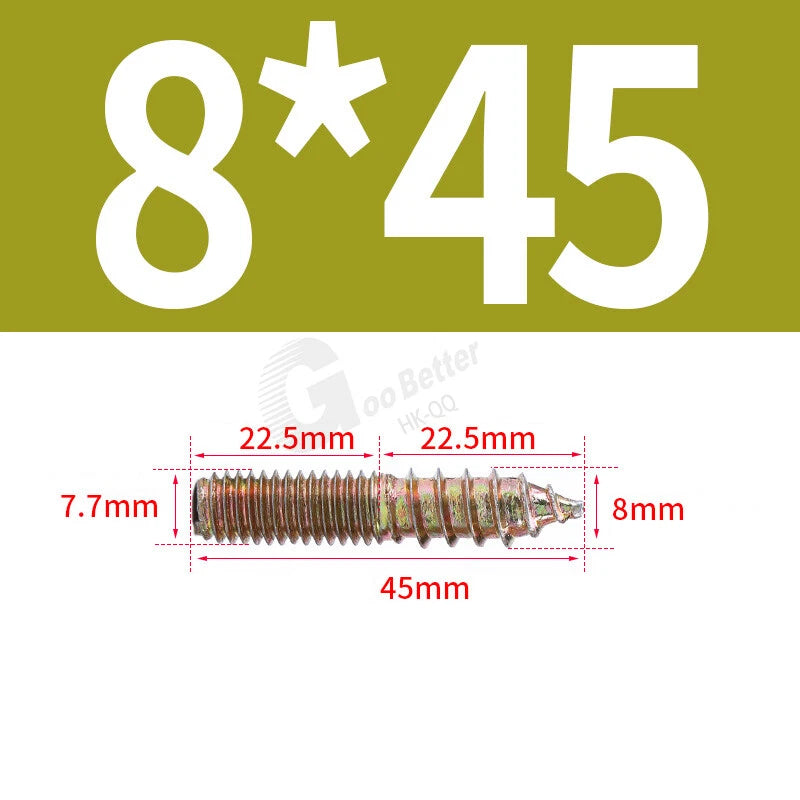
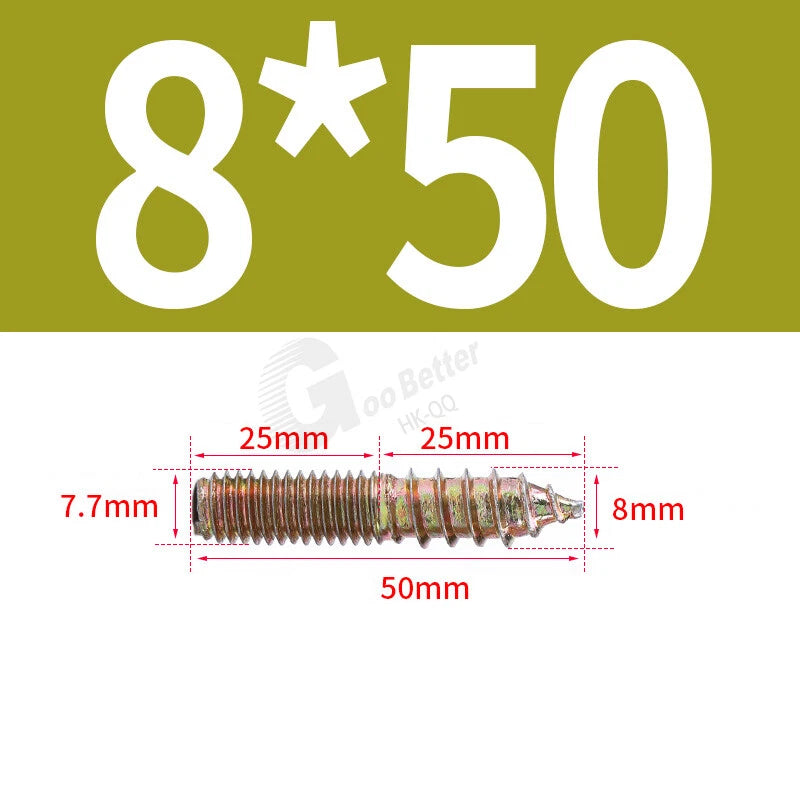
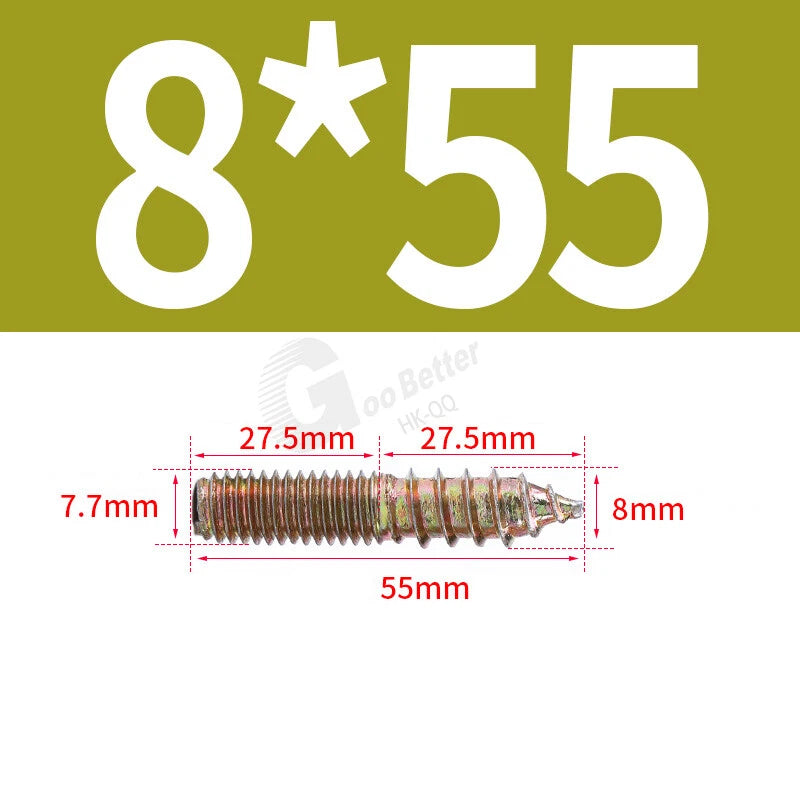
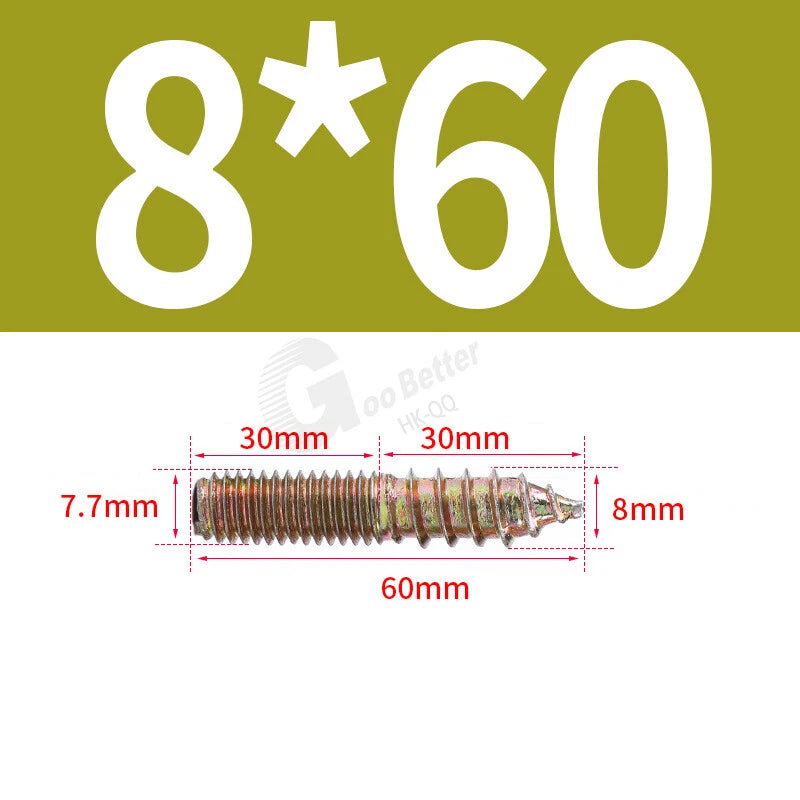
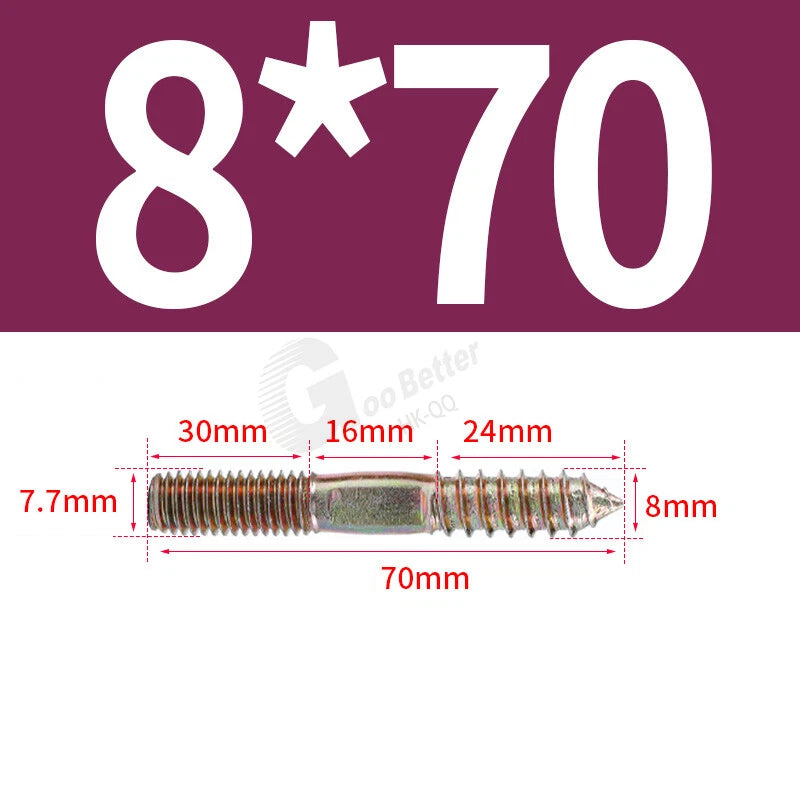
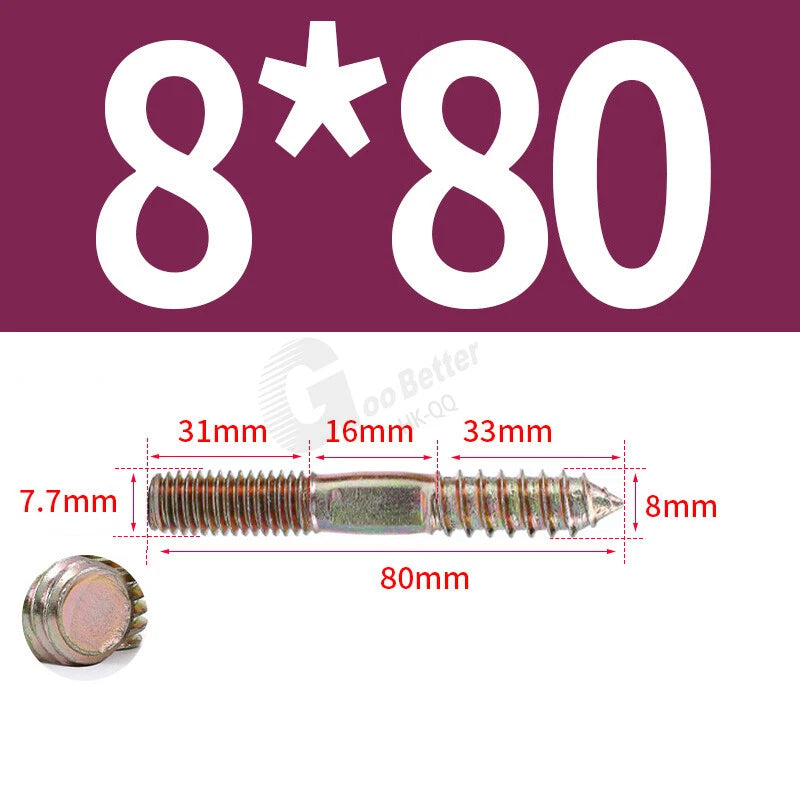
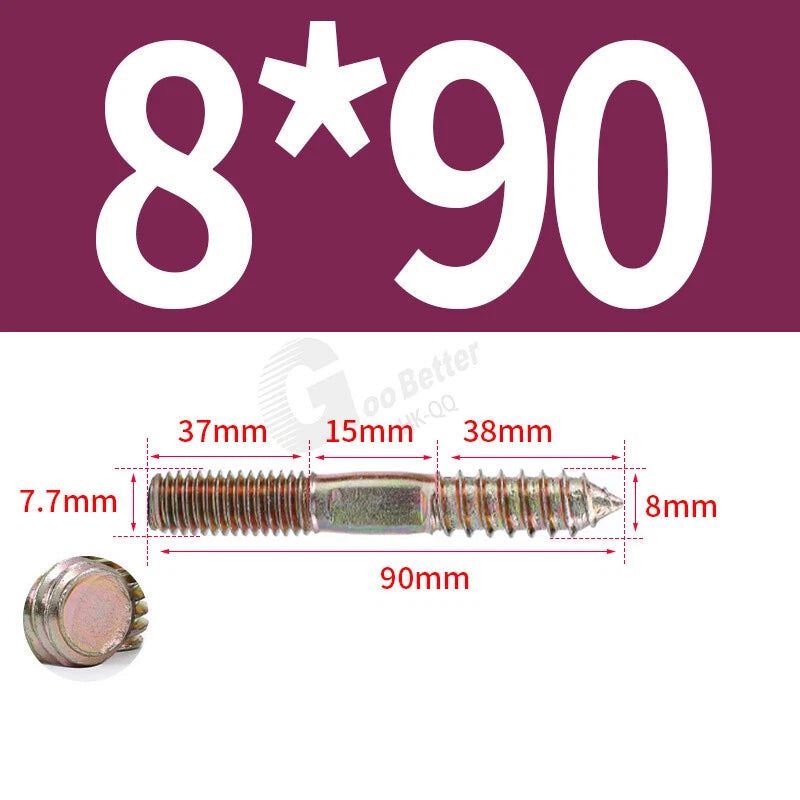
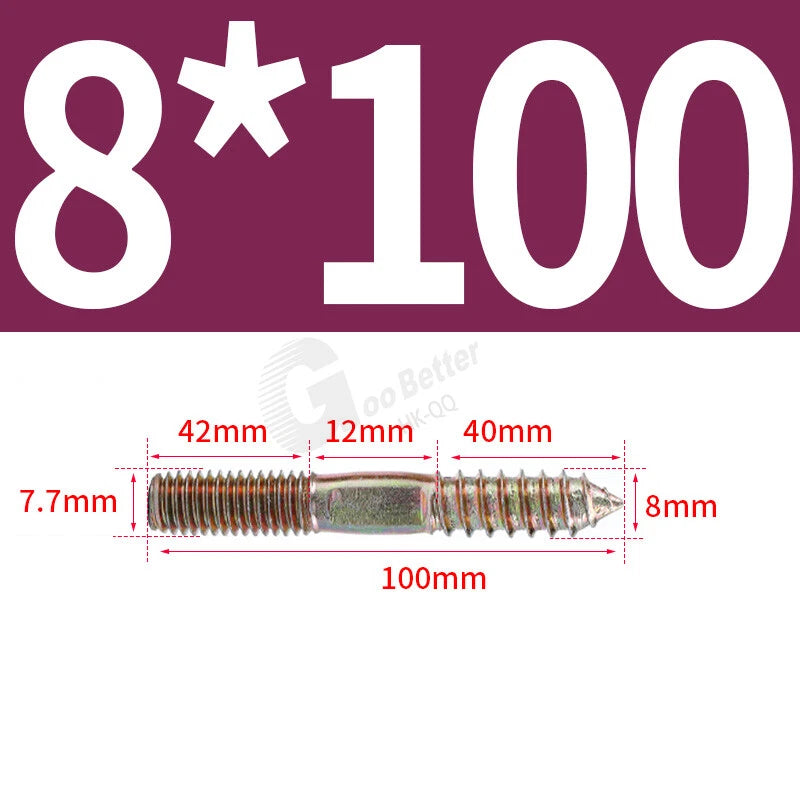
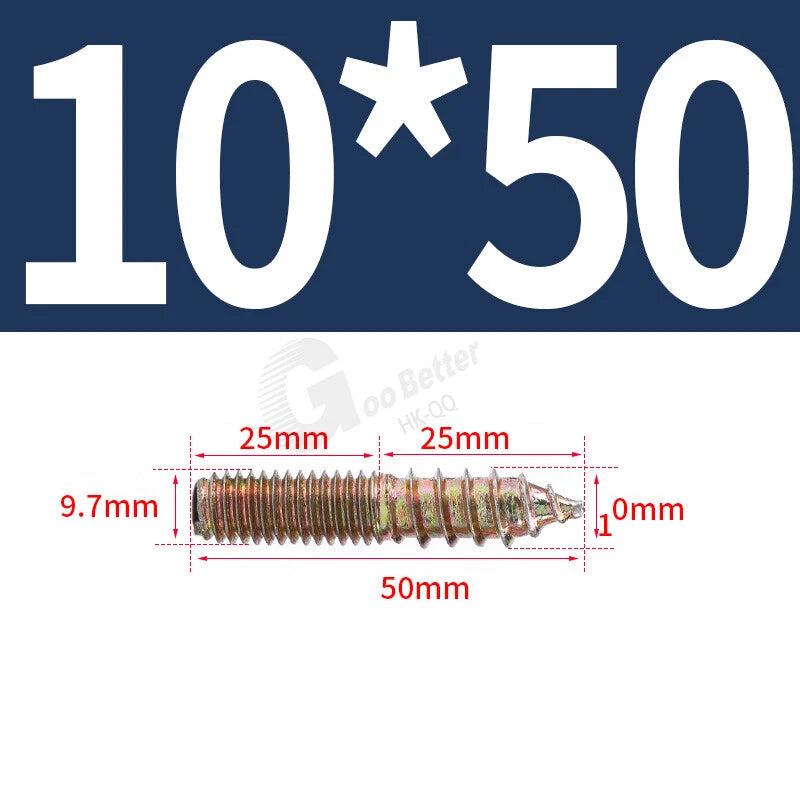
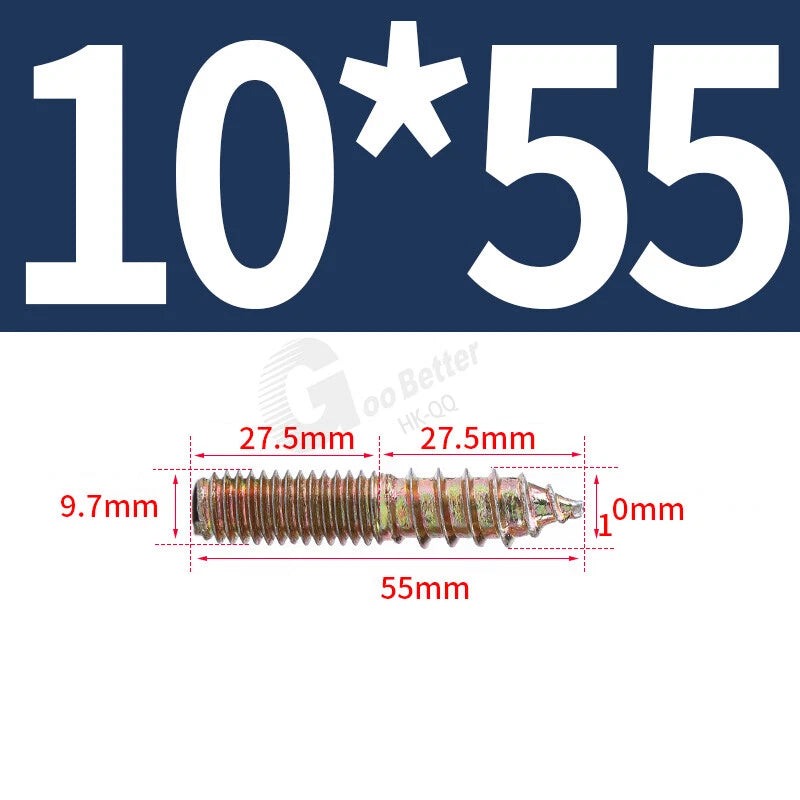
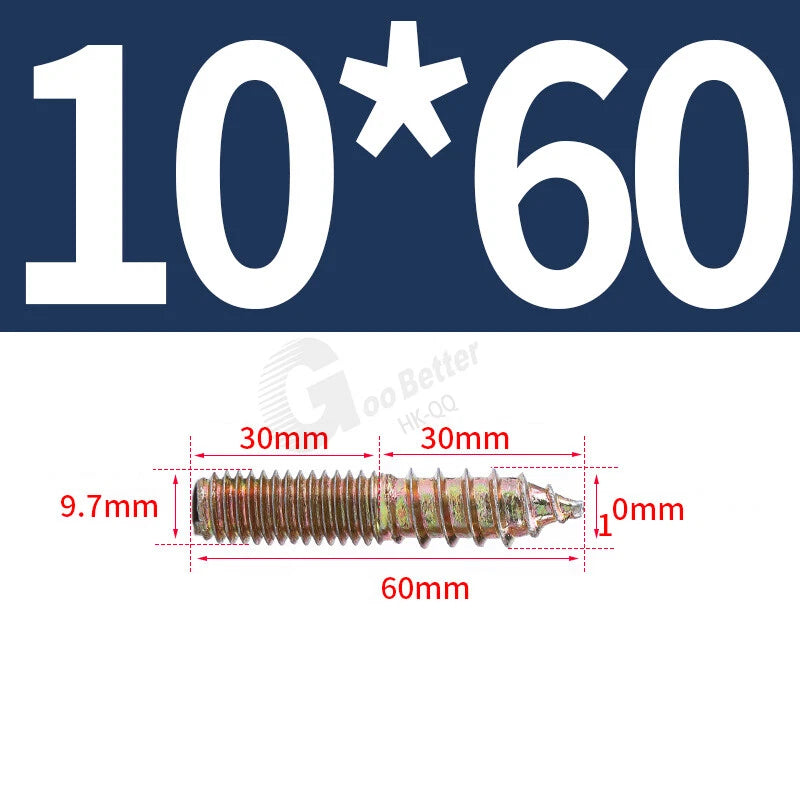
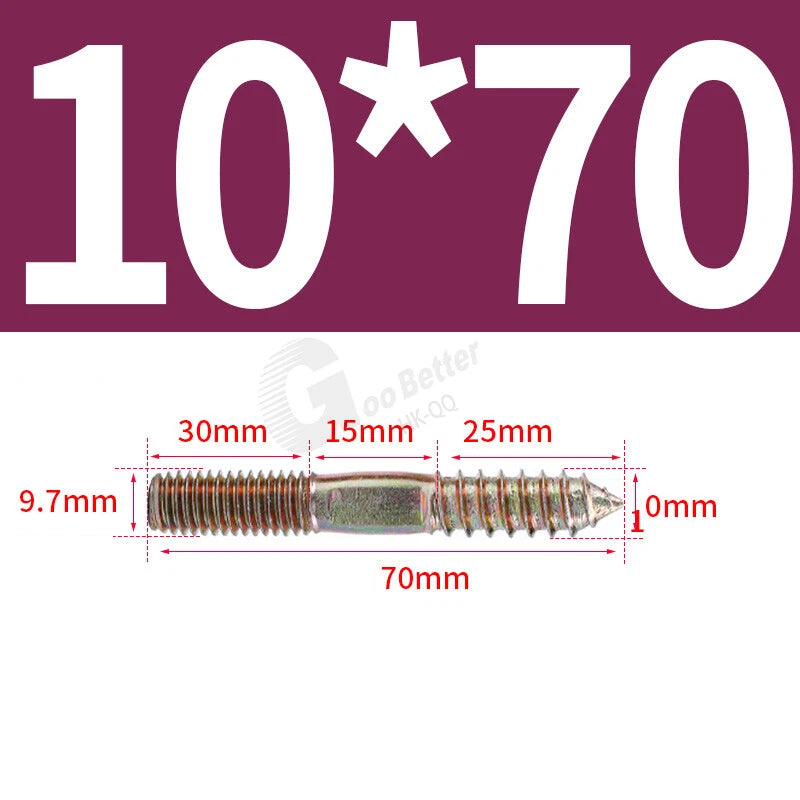
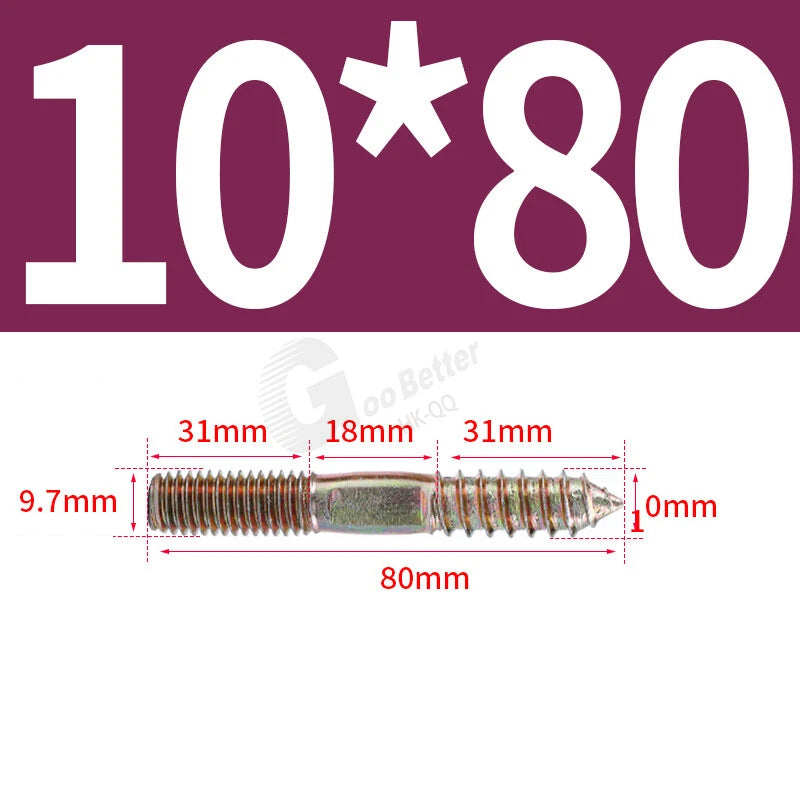
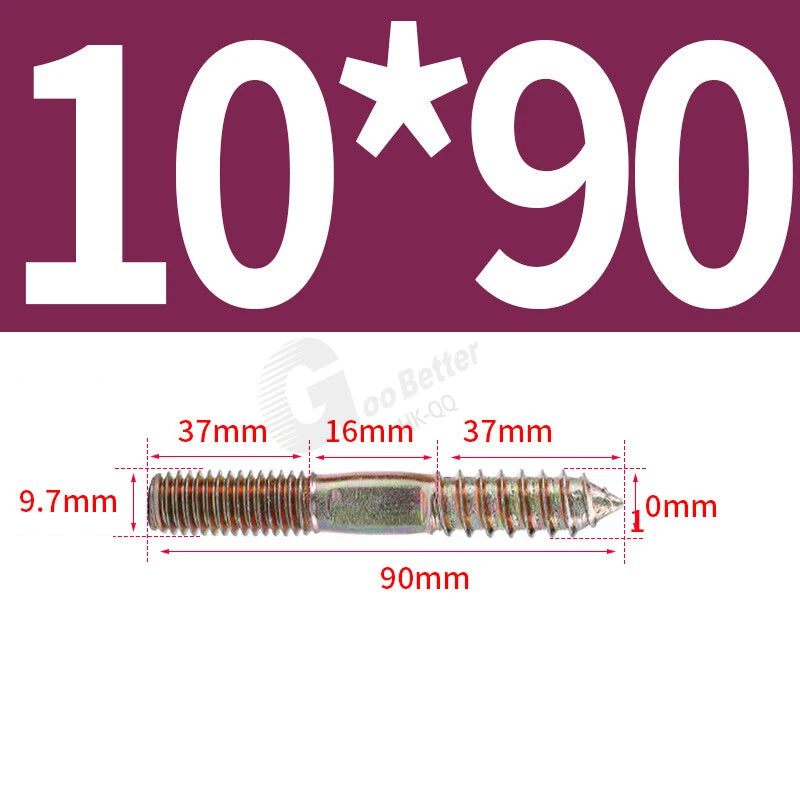
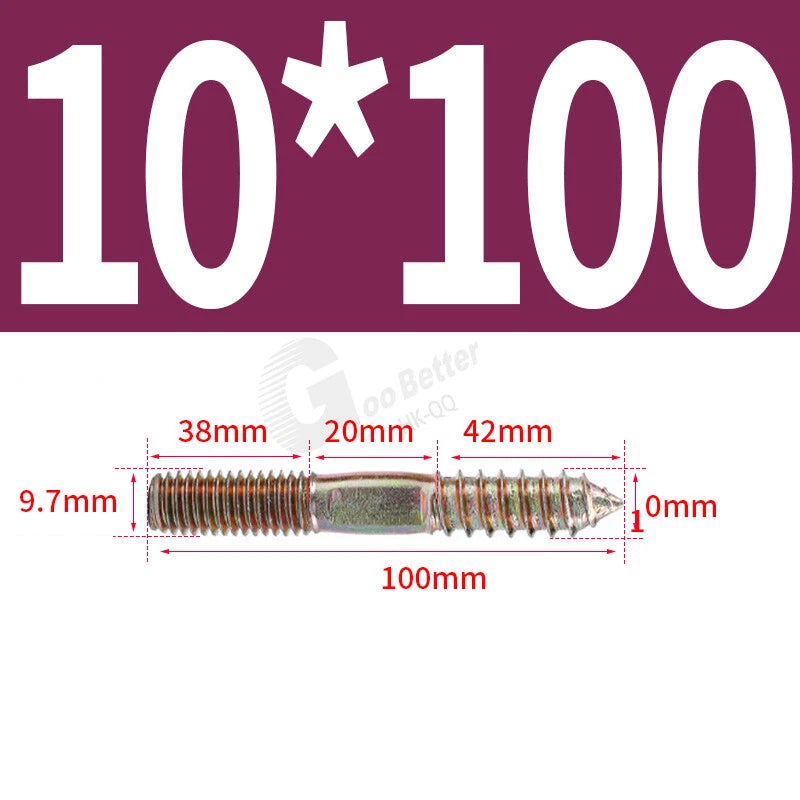
Need to fasten a wooden leg to a metal bracket? Or attach a wood panel to a steel frame? Regular screws won't work – you need a dual thread dowel screw (also called a hanger bolt). One end has a coarse wood thread that bites into timber; the other end has a standard machine thread that screws into a pre-tapped metal hole or a nut. These M6, M8, and M10 carbon steel hanger bolts are grade 4.8 strength with a color zinc finish. They're perfect for furniture assembly, machinery mounting, or any project that calls for joining wood to metal without exposed hardware. No more complicated brackets or messy adhesives – just drill, thread, and tighten.
🔩 Key Features of These Dual Thread Dowel Screws (Hanger Bolts)
Dual thread design – wood on one end, machine thread on the other – The coarse, self-tapping wood screw end grips securely into lumber, plywood, or particle board. The machine thread end fits standard metric nuts or tapped holes in metal.
Available in M6, M8, and M10 diameters – Choose the right size for your load requirements. M6 for light-duty furniture, M8 for general joining, M10 for heavy structural connections.
Grade 4.8 carbon steel construction – Provides good tensile strength for most indoor and protected outdoor applications. Strong enough for bed frames, table legs, and machinery feet.
Color zinc finish for corrosion resistance – The galvanized coating helps resist rust and tarnish. While not as robust as stainless steel, it's perfectly fine for indoor use or covered outdoor areas (porches, workshops, garages).
Works as a hidden fastener – Once installed, the dowel screw is completely invisible. Your project looks clean and professional – no screw heads showing on the surface.
📐 Technical Specifications – Wood to Metal Hanger Bolts
| Product Type |
Dowel Screws / Hanger Bolts (Dual Thread) |
| Material |
Carbon Steel |
| Strength Grade |
4.8 |
| Surface Finish |
Color Zinc (Galvanized) |
| Thread Type – Wood End |
Coarse, self-tapping wood screw thread |
| Thread Type – Metal End |
Standard metric machine thread |
| Available Sizes (Metric) |
M6, M8, M10 |
| Overall Length |
Varies by size (contact for specific lengths) |
| System of Measurement |
Metric |
| Quantity per Pack |
Sold individually (select size) |
| Packaging |
Plastic bag / carton |
❓ Frequently Asked Questions
Q: How do I install a dowel screw into wood?
A: First, drill a pilot hole into the wood that matches the wood screw end's root diameter (slightly smaller than the thread). Then thread the wood end into the wood using a hex nut locked onto the machine thread end (double-nut method), or use a specialized dowel screw driver bit. Once the wood end is fully seated, you can screw the metal end into a pre-tapped hole or secure it with a nut.
Q: Can I use these hanger bolts for outdoor furniture?
A: The color zinc finish offers basic rust protection, but it's not as durable as stainless steel or hot-dip galvanized. For covered outdoor areas like a porch or workshop, they'll be fine. For direct rain, ground contact, or coastal environments, we recommend upgrading to stainless steel hanger bolts. For indoor furniture or garage use, these are perfect.
Q: What is the difference between a dowel screw and a regular lag bolt?
A: A lag bolt has a head (usually hex) on one end and a single wood thread along the entire shank. A dowel screw (hanger bolt) has no head – both ends are threaded: one with a coarse wood thread, the other with a machine thread. You screw the wood end into timber, leaving the machine end protruding to accept a nut or to screw into a metal bracket. This creates a hidden, double-sided fastener.
Q: Will the wood thread strip if I over-tighten?
A: As with any wood screw, over-torquing can strip the wood hole. The key is to drill an appropriate pilot hole (not too small, not too large). For softwoods, go slightly smaller; for hardwoods, a slightly larger pilot hole. Stop turning once the wood end is fully seated – you shouldn't feel resistance increase dramatically. The 4.8 grade steel is strong, but the wood itself will give way first.
Q: Do I need to pre-drill the metal side?
A: The machine thread end is not self-tapping – it requires a pre-tapped hole (threaded insert) or a nut. If you're screwing into a metal bracket that has a smooth hole, you'll need to thread it first using a tap, or use a nut on the backside. For wood-to-metal applications, typically the metal part already has a threaded hole (like a welded nut or a tapped plate). If not, just use a hex nut to secure the bolt.