🔩 M4–M10 Pan Head Phillips Machine Screws – A2 Stainless Steel (304), DIN 7985
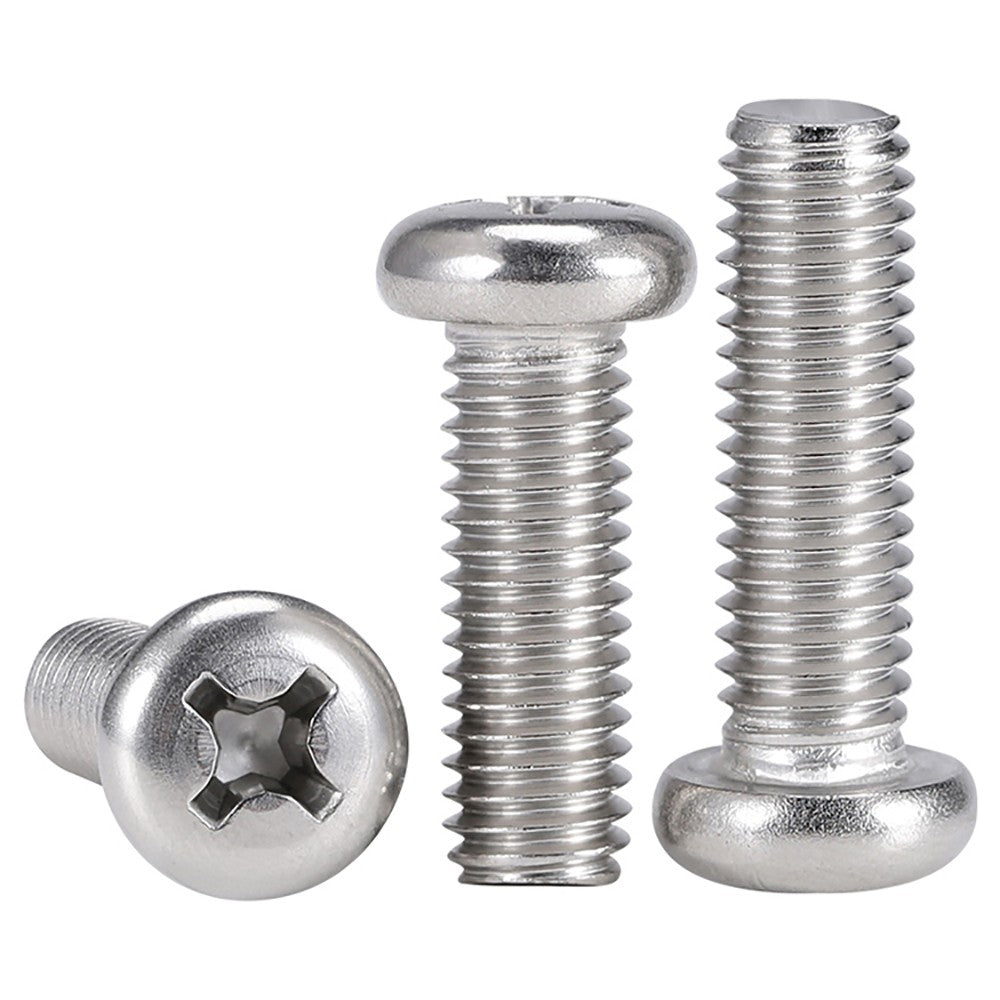
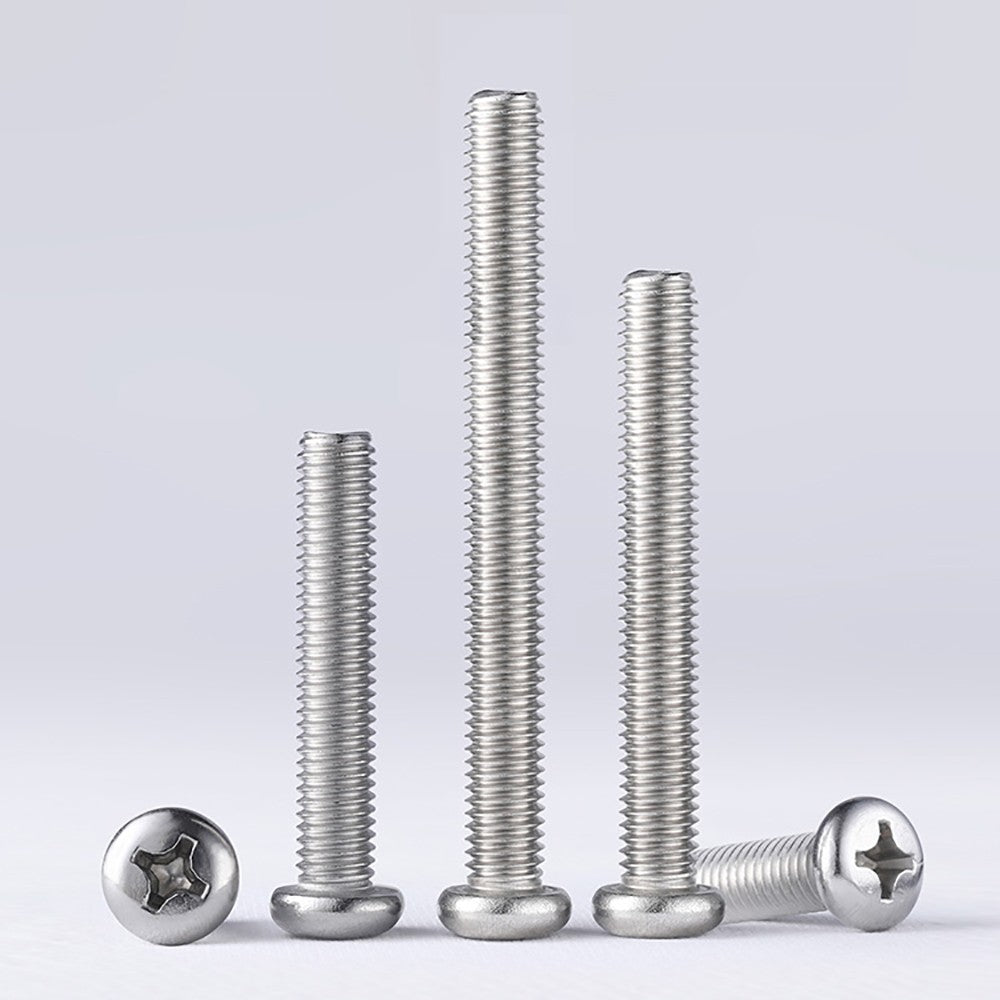
Whether you’re assembling kitchen cabinets, building a 3D printer, or repairing outdoor furniture, these A2 stainless steel pan head machine screws give you reliable holding power without rust. Made to DIN 7985 standards, they feature a clean Phillips drive, smooth burr‑free threads, and a neat pan head that sits flush or slightly proud. Available in M4, M5, M6, M8, and M10 diameters, with lengths from 4mm up to 200mm. The A2‑70 (304) grade offers excellent corrosion resistance for both indoor and outdoor use – from electronics to automotive trim. Pick the size you need, no forced multi‑packs.
✨ Why These A2 Stainless Pan Head Screws Belong in Your Hardware Drawer
Genuine A2 stainless steel (304 / 18‑8) – Contains 18% chromium, 8% nickel. Rust‑resistant, easy to clean, and widely used in food, marine, and outdoor applications. Grade A2‑70 means 700 N/mm² tensile strength.
DIN 7985 pan head design – Low profile with a slightly domed top and flat bearing surface. Ideal for counterbored holes or where the head sits above the material. Looks clean and professional.
Phillips drive for easy tool access – Universal cross‑head design works with any Phillips screwdriver or bit. No special bits needed.
Precise, clean threads – Neatly rolled threads without burrs or ragged edges. Uniform force distribution means less slipping and easier installation into tapped holes or nuts.
Wide size & length range – Diameters M4, M5, M6, M8, M10. Lengths from 4mm to 200mm (length measured under the head, does not include head height). Choose exactly what your project needs.
Versatile applications – Perfect for home DIY, kitchen fittings, electronics enclosures, communication equipment, power tools, model making, environmental machinery, and general repair.
💡 Pro tip: While A2 (304) is slightly magnetic due to cold forming (normal), it won’t rust like regular steel. For saltwater or pool chemical exposure, consider upgrading to A4 (316) stainless.
💬 Frequently Asked Questions – M4–M10 A2 Stainless Machine Screws
Why does my new stainless screw stick to a magnet? I thought stainless wasn’t magnetic.
It’s completely normal. A2 (304) is austenitic stainless and usually non‑magnetic. However, the cold heading process used to form the screw head and roll threads can transform some austenite into martensite, which is magnetic. So the screw may show mild magnetism, especially near the head. This does not affect corrosion resistance or strength. If you need completely non‑magnetic fasteners, look for specially annealed 304 or 316, but they are less common.
What’s the difference between A2‑70 and regular 304 stainless?
A2‑70 is simply the standard grade designation for 304 stainless steel fasteners. The “70” indicates a minimum tensile strength of 700 N/mm². It’s the most common grade for general purpose stainless screws – corrosion resistant, strong enough for most DIY and industrial applications. No special handling required.
Will these screws rust outdoors or near the ocean?
A2 (304) is highly corrosion resistant for most outdoor environments – rain, humidity, and even mild coastal air. However, if you’re right on the ocean (constant salt spray) or installing into pool equipment with chlorine, we recommend A4 (316) stainless steel, which has added molybdenum. For typical garden furniture, sheds, or BBQ equipment, A2 is perfectly fine.
What size Phillips bit do I need for M4, M5, M6, etc.?
General guideline: M4 uses PH2, M5 also PH2, M6 uses PH2 or PH3 (PH2 works), M8 and M10 use PH3. For best fit, PH2 covers M4–M6 well; for M8/M10, a PH3 gives better torque without stripping. Always use a good quality bit that fits snugly.
Can I use these screws with nuts, or do I need to tap holes?
Both work. These are standard machine screws, so they’re designed to be used with matching M4–M10 nuts or into pre‑tapped holes. They can also be used as set screws in some applications. Do not use them as self‑tapping screws into hard materials – pre‑drill and tap for best results.
What’s the difference between pan head and countersunk (flat head) screws?
Pan heads are domed and sit above the surface. Countersunk (flat head) screws are designed to sit flush with the surface when used in a tapered hole. If your application has a counterbored hole or you don’t mind a slightly raised head, pan head is a great choice. For flush mounting (e.g., hinges), choose flat head screws.