The chain is fine...but I ordered the wrong size. Nine links of the chain I ordered equals six of the size I wanted. My error...
How can I straighten out the springs? I can't use them coil uo as is.
Your payment information is processed securely. We do not store credit card details nor have access to your credit card information.
Get fitment advice & recommendations
When a worn or undersized drive chain causes slippage, noise, or premature sprocket wear on your conveyor, feeder, or small-machine drivetrain, you need a dimensionally accurate replacement you can trust. The 04C-1 single row roller chain is engineered for makers, maintenance technicians, and light-industrial builders who demand consistent pitch accuracy and reliable tensile strength in compact drive systems.
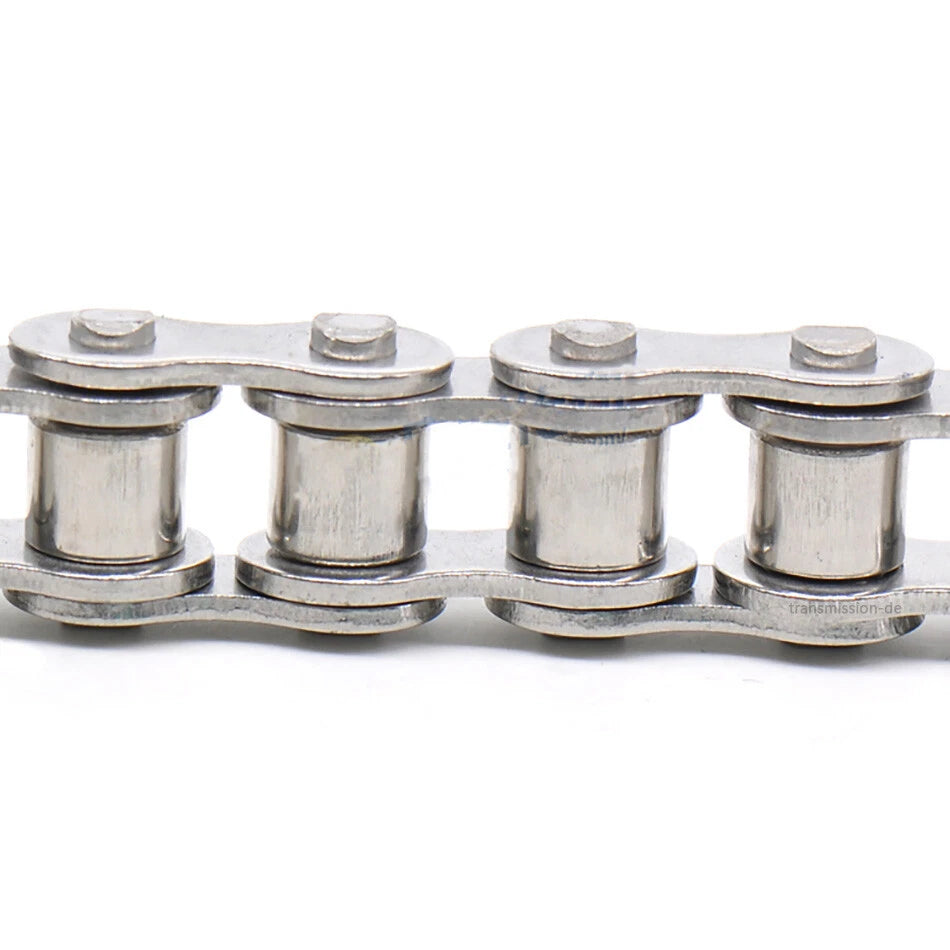
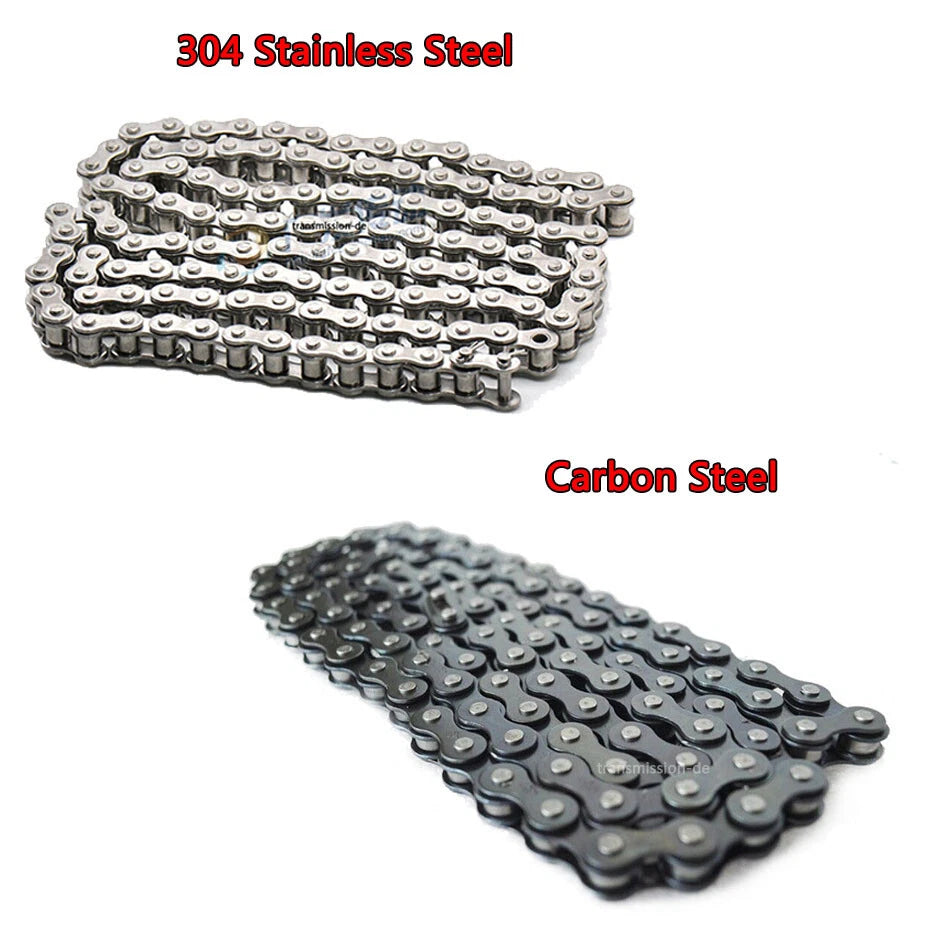
This chain conforms to the 04C-1 (ISO/DIN) standard with a pitch of 6.35 mm (1/4 in). Each link assembly consists of inner plates, outer plates, rollers, bushings, and pins. Available in carbon steel and 304 stainless steel variants, with roller diameters typically in the 3.3–4.0 mm range and inner width typically 3.18 mm (0.125 in). Cut lengths range from 0.5 m to 5 m (approx. 1.6 ft to 16.4 ft), with a separate connecting link available for easy joining.
Typical applications include small conveyor systems requiring a compact 1/4-inch pitch roller chain, DIY automation rigs and CNC axis drives needing a lightweight 04C-1 drive chain, and food-adjacent or corrosion-prone environments where a 304 stainless steel roller chain replacement is required.
| Chain Standard | ISO/DIN 04C-1 |
|---|---|
| Pitch | 6.35 mm (1/4 in) |
| Chain Type | Single Row (Simplex) |
| Roller Diameter | Typically 3.3–4.0 mm |
| Inner Width | Typically 3.18 mm (0.125 in) |
| Plate Height | See variant options |
| Pin Diameter | See variant options |
| Tensile Strength | See variant options |
| Material Options | Carbon Steel; 304 Stainless Steel |
| Surface Finish | Carbon Steel: natural / lightly oiled; Stainless: brushed |
| Available Lengths | 0.5 m, 1 m, 1.5 m, 5 m (approx. 1.6–16.4 ft) |
| Connecting Link | Available as separate variant |
Carbon steel is the right choice for dry, indoor drives where cost efficiency matters — it offers solid tensile strength at a lower price point. Choose 304 stainless steel if your application involves moisture, humidity, mild chemicals, or occasional washdown. Stainless resists rust and oxidation, extending service life in corrosive environments without requiring frequent lubrication.
Measure the required chain run between your drive and driven sprockets, then add enough length to account for the wrap on both sprockets plus any tensioner travel. We offer 0.5 m, 1 m, 1.5 m, and 5 m cuts. If your required length falls between options, order the next size up and trim to fit. Use the connecting link variant to join the ends after cutting.
The 04C-1 chain shares the same 6.35 mm (1/4 in) pitch as the ANSI #25 / 25H standard, and in most cases the sprockets are interchangeable. However, minor dimensional differences in roller diameter and inner width can exist between ISO and ANSI versions. Always verify the sprocket's tooth profile and pitch against the chain's actual dimensions before finalizing your selection.
The 04C-1 is designed for light-duty drives. Typical minimum tensile strength for carbon steel variants is in the range of 3.5–4.5 kN (approximately 785–1,010 lbf), while stainless steel variants may be slightly lower due to material properties. For exact tensile ratings, refer to the variant specifications or contact us to confirm before use in safety-critical applications.
Yes — all roller chains benefit from regular lubrication to reduce wear on pins, bushings, and rollers. For carbon steel chains in normal indoor use, apply a light machine oil or chain lubricant every 50–100 operating hours, or whenever the chain appears dry. Stainless steel chains in wet environments may require less frequent lubrication but should still be inspected regularly for elongation and debris buildup.
The connecting link (also called a master link) is a special outer link with a removable clip or cotter pin that allows you to join two chain ends without pressing. If you are installing a closed loop — for example, around two sprockets — you will need one connecting link per loop. Select the "Roller Chain Connecting Link" variant in the Types option to add it to your order.
Roller chains wear primarily through pin and bushing elongation. A chain is typically due for replacement when it has stretched by 1–2% of its original length (measurable with a chain wear gauge or ruler over 12 links). Other signs include visible rust pitting on carbon steel variants, stiff or binding links, or audible rattling during operation. Replacing a worn chain promptly prevents accelerated sprocket wear.