The chain is fine...but I ordered the wrong size. Nine links of the chain I ordered equals six of the size I wanted. My error...
How can I straighten out the springs? I can't use them coil uo as is.
Your payment information is processed securely. We do not store credit card details nor have access to your credit card information.
Get fitment advice & recommendations
When a roller chain snaps mid-project or wears out a master link, every minute of downtime counts. Whether you're a bicycle mechanic, a maintenance technician keeping conveyor lines running, or a DIY builder assembling a drive system, having the right roller chain connecting link on hand is the difference between a quick fix and a costly delay. These connecting links are engineered to match standard ANSI/ISO roller chain specifications, giving you a drop-in replacement that restores full chain function without special tools.
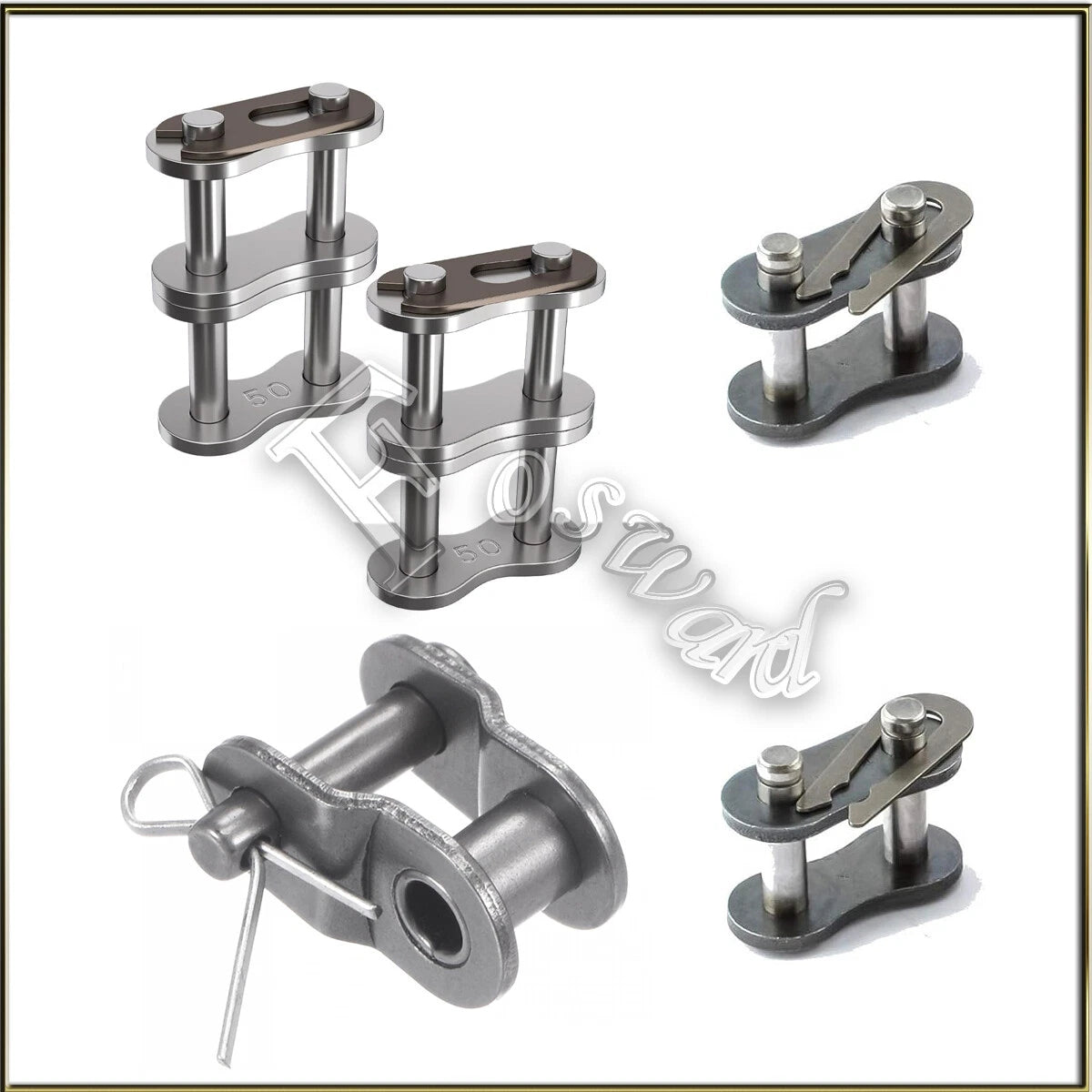
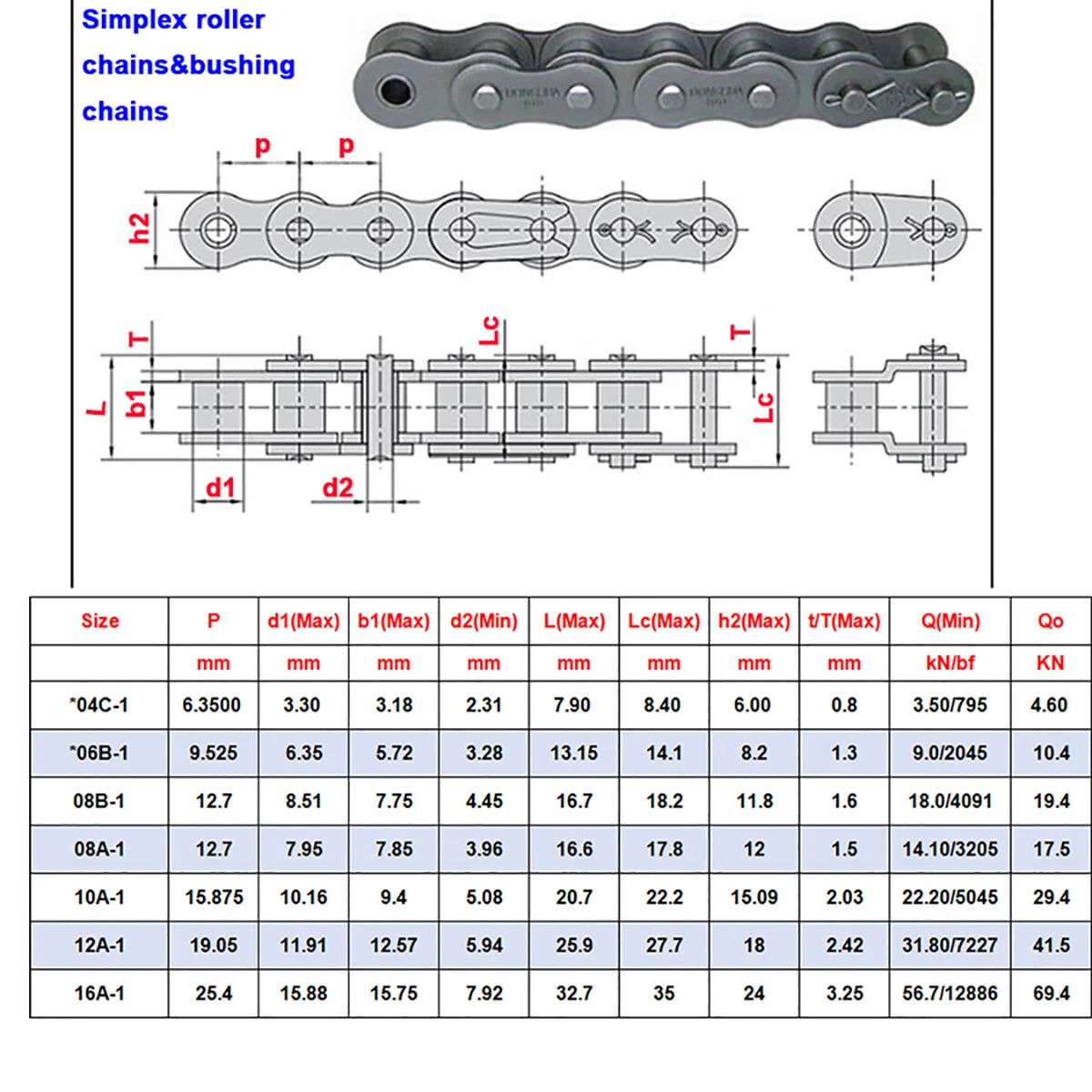
Each connecting link consists of a side plate, two pins, and a spring clip or cotter pin closure (buckle style varies by type — full link or half link). Available in 304 stainless steel for corrosion-resistant applications and carbon steel for general-purpose heavy-duty use. Chain sizes range from #25 (04C-1) with a 1/4 inch (6.35 mm) pitch up to #140 (28B-2) with a 1-3/4 inch (44.45 mm) pitch, covering both simplex (single-strand) and duplex (double-strand) configurations.
Typical use cases include bicycle chain repair and replacement, agricultural equipment drive chains, industrial conveyor and elevator chain maintenance, and go-kart or small engine power transmission systems. Long-tail applications include roller chain master link replacement for #40 chain, stainless steel connecting link for food-grade conveyor, and duplex roller chain buckle for industrial machinery.
| Chain Standard | ANSI / ISO Roller Chain |
|---|---|
| Chain Numbers Available | #25, #35, #40, #50, #60, #80, #100, #140 |
| Pitch Range | 1/4 inch (6.35 mm) — 1-3/4 inch (44.45 mm) |
| Strand Types | Simplex (single-strand), Duplex (double-strand) |
| Buckle Styles | Full Link Buckle, Half Link Buckle |
| Material Options | 304 Stainless Steel / Carbon Steel |
| Closure Type | Spring clip (snap-on buckle) |
| Surface Finish | See variant options |
| Tensile Strength | See variant options |
| Package Quantity | 1 connecting link per unit (sold individually) |
Match the chain number stamped on your existing chain or listed in your equipment manual. The chain number (e.g., #40, #50) directly corresponds to the pitch and roller dimensions. For example, #40 chain has a 1/2 inch (12.7 mm) pitch. If you're unsure, measure the distance between the centers of three consecutive pins and divide by two — that gives you the pitch in inches.
A Full Link Buckle (also called a master link) replaces one complete link in the chain and keeps the total chain length the same. A Half Link Buckle adds or removes half a pitch length, allowing you to fine-tune chain length when a full link would make the chain too long or too short. Half links are commonly used on single-speed bicycles and some conveyor applications where exact chain length is critical.
Choose 304 Stainless Steel if your application involves moisture, humidity, outdoor exposure, or occasional washdown — such as bicycle chains used in wet conditions, food-adjacent conveyors, or marine equipment. Choose Carbon Steel if your application is indoors, well-lubricated, and primarily load-bearing — such as industrial drive chains, go-karts, or agricultural machinery in dry environments. Carbon steel typically offers a lower cost per link for high-volume maintenance.
Yes. The chain numbers listed (e.g., #25, #35, #40) follow ANSI standards, which are dimensionally equivalent to their ISO counterparts (04C, 06B, 08A/08B, etc.). The variant names include both designations — for example, "#40 (08B-1)" — so you can cross-reference your ISO chain number directly. Always verify the pitch and roller diameter match your existing chain before installing.
Yes, for single-speed and multi-speed bicycles that use standard roller chain sizes. #25 chain is commonly used on small bikes and go-karts, while #35 and #40 are found on heavier-duty single-speed setups. Modern derailleur bicycle chains (e.g., 8/9/10/11-speed) use narrower, proprietary chains that require brand-specific master links — these connecting links are designed for standard roller chain, not narrow derailleur chain.
Thread the two pins of the connecting link through the open ends of the chain. Slide the side plate over both pins. Then press the spring clip (buckle) onto the grooves at the end of the pins — the closed end of the clip should face the direction of chain travel so it doesn't catch and pop off during operation. No special tools are required, though needle-nose pliers can help seat the clip firmly.
The suffix indicates the number of strands: "-1" denotes simplex (single-strand) chain, and "-2" denotes duplex (double-strand) chain. For example, "08B-1" is a single-strand #40 chain connecting link, while "08B-2" is the duplex version for double-strand #40 chain. Make sure to match the suffix to your chain's strand count.