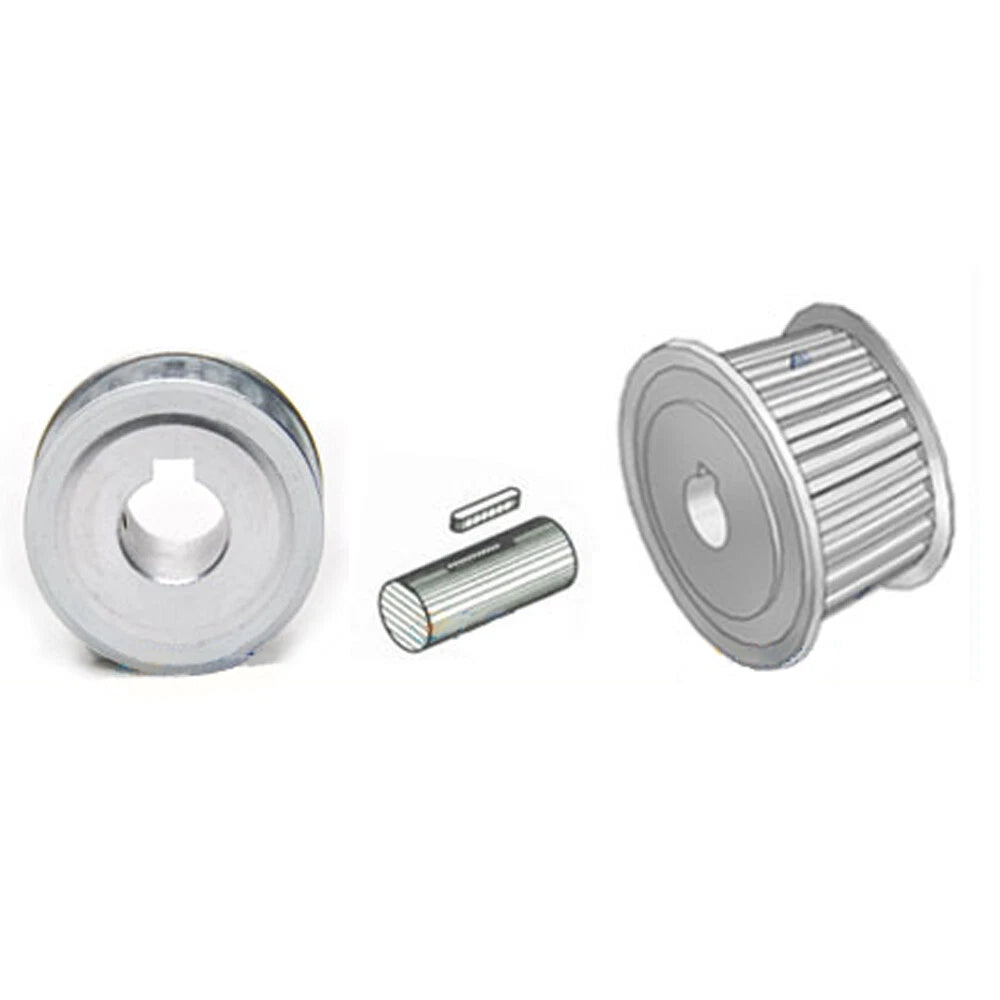
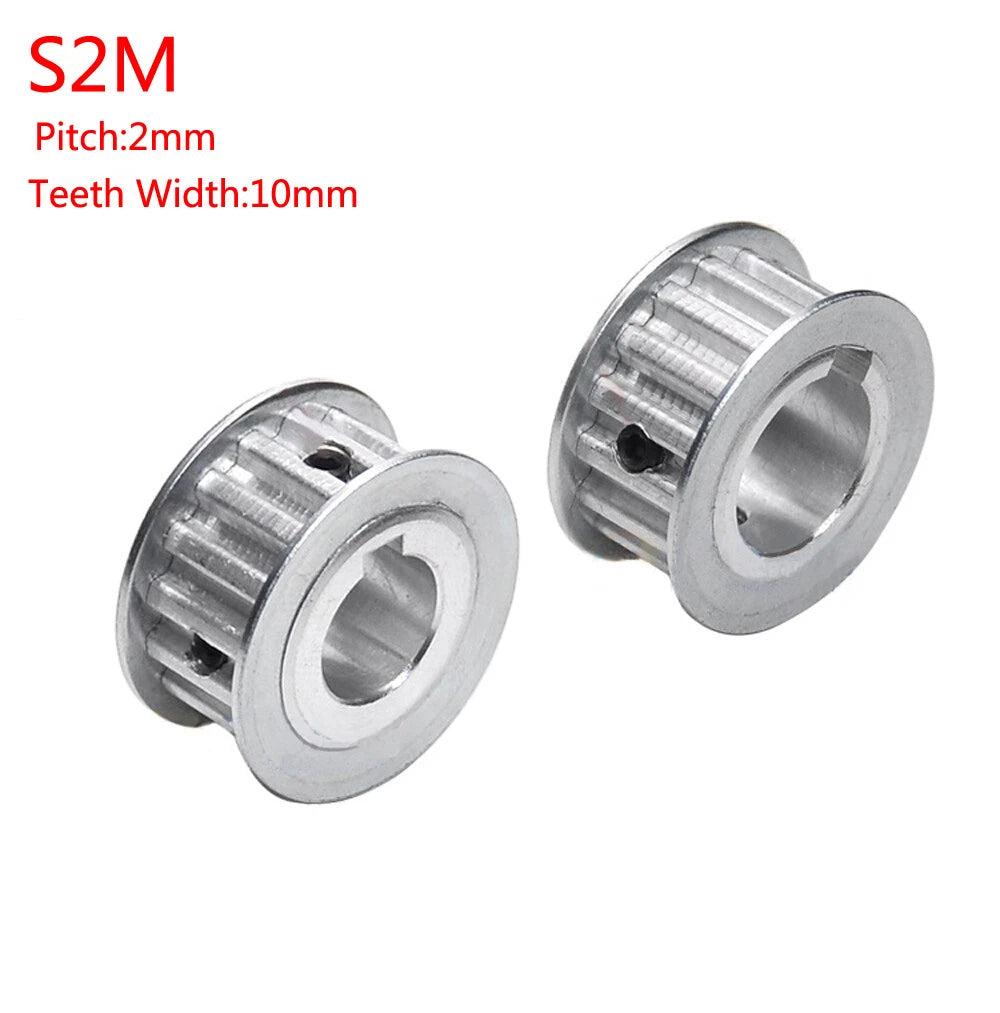
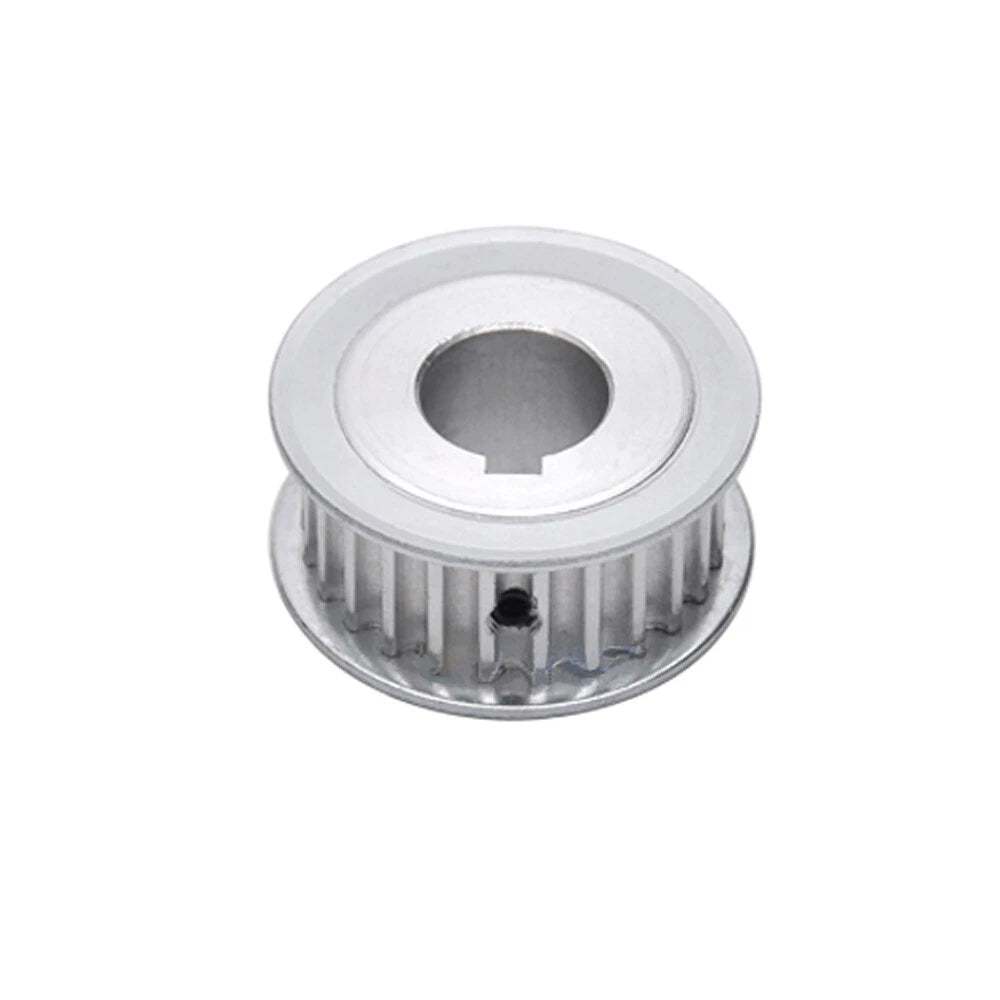
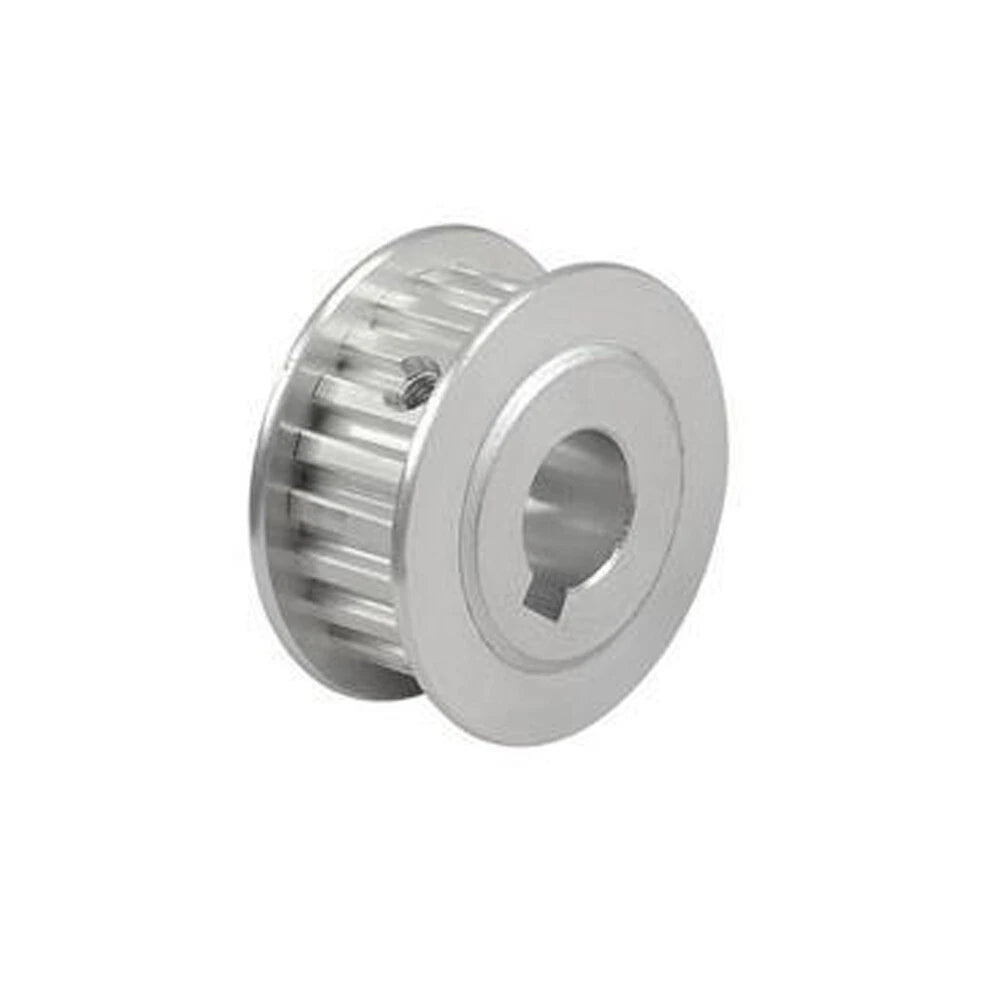
S2M Timing Belt Pulleys 26-80Teeth Pitch 2mm AF-type With Keyway Width 11mm

No reviews

Price:
Sale price$11.82 USD
Stock:
In stock (500 units), ready to be shipped

Payment & Security

Ach Direct Debit Amazon American Express Apple Pay Bancontact BLIK Diners Club Discover EPS Google Pay iDEAL Wero JCB Maestro Mastercard Multibanco MobilePay PayPal Przelewy24 Shop Pay Twint Union Pay USDC Visa

Your payment information is processed securely. We do not store credit card details nor have access to your credit card information.

Limited Offer — Spend More, Save More
Spend $55+
Save $5
Spend $100+
Save $10
Spend $200+
Save $25
HomeDIYer DIY Expert Support

DIY Expert Support

Get fitment advice & recommendations

Mon–Fri  8:30 AM – 8:00 PM
24-Hour Fast Ship
Arrives in 3–14 Days
Worldwide Shipping
30-Day Returns
1 tree planted with every purchase

Description

S2M Timing Belt Pulleys — Precision AF-Type Drive Components for DIY Automation

When your motion-control build demands slip-free synchronization and repeatable positioning, choosing the right S2M timing belt pulley is critical. Hobbyists, makers, and small-workshop engineers working on 3D printers, CNC routers, laser cutters, and conveyor systems often struggle to find pulleys that combine accurate tooth geometry with a secure shaft fit — this AF-type S2M pulley series is engineered to solve exactly that problem.

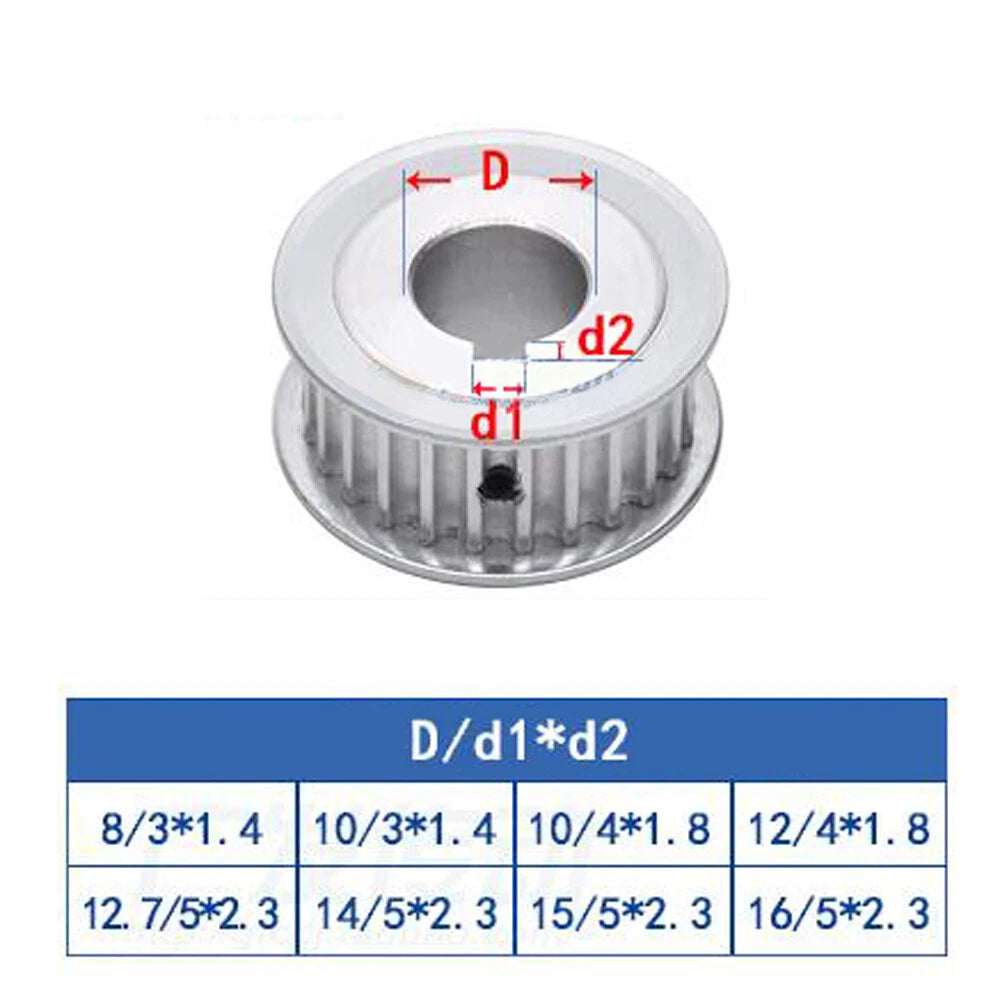
Each pulley is machined from aluminum alloy with an anodized finish, covering a tooth range of 26T to 80T and a 2mm pitch (S2M standard). The belt-contact width is 11mm, with flanges on both sides to keep the belt tracking true. Bore options span 8mm to 15mm (including 12.7mm / 0.5 in for imperial shafts), and each variant ships with a pre-cut keyway — 3×1.4mm, 4×1.8mm, or 5×2.3mm — to lock the pulley firmly to the shaft without slippage.

Typical use cases include S2M timing belt pulley replacement for desktop 3D printer X/Y axes, synchronous drive upgrades for DIY CNC routing tables, and lightweight power-transmission stages in educational robotics and lab automation rigs where low backlash and quiet operation are required.

⚙️ Compatible with: S2M open-end and closed-loop timing belts, 11mm belt width, 2mm pitch. Verify bore diameter and keyway size against your shaft spec before ordering.

✅ Key Features of These S2M Timing Belt Pulleys

🦷 Wide Tooth Range (26T–80T)

Fifteen tooth counts from 26T to 80T let you dial in the exact gear ratio your drive system needs without custom machining.

📐 2mm Pitch S2M Standard

Conforms to the S2M synchronous belt profile — 2mm tooth pitch, 11mm belt width — ensuring full engagement and minimal backlash across the entire tooth range.

🔩 Pre-Cut Keyway for Secure Shaft Lock

Each pulley includes a machined keyway (3×1.4mm, 4×1.8mm, or 5×2.3mm depending on bore) so the pulley locks positively to the shaft and resists rotational slip under load.

⚖️ Aluminum Alloy Construction

Lightweight aluminum alloy body keeps rotating inertia low — ideal for high-acceleration axes in 3D printers and CNC machines where motor torque is limited.

🎯 Dual Flanges for Belt Retention

AF-type flanges on both sides of the pulley prevent lateral belt walk, reducing wear and maintaining consistent belt tension over long duty cycles.

🔄 Multiple Bore Sizes (8–15mm)

Six bore options — 8mm, 10mm, 12mm, 12.7mm, 14mm, and 15mm — cover the most common motor and shaft diameters used in DIY automation and light industrial drives.

📐 Technical Specifications — S2M Timing Belt Pulley

Belt Profile S2M (Synchronous, 2mm pitch)
Pitch 2mm
Belt Width 11mm
Pulley Type AF-type (Aluminum Flanged, both sides)
Number of Teeth 26T, 30T, 32T, 34T, 35T, 36T, 38T, 40T, 45T, 48T, 50T, 55T, 60T, 70T, 80T
Bore Diameter 8mm / 10mm / 12mm / 12.7mm / 14mm / 15mm
Keyway Dimensions 3×1.4mm / 4×1.8mm / 5×2.3mm (varies by bore)
Material Aluminum alloy
Outer Diameter See variant options
Hub Length See variant options
Weight (per piece) See variant options
Quantity 1 piece per order

❓ Frequently Asked Questions

How do I choose the right number of teeth for my application?

The number of teeth determines the pulley's pitch diameter and, combined with your belt length and the mating pulley's tooth count, sets your drive ratio. For 3D printer axes, 20T–40T is typical; for higher-torque or lower-speed drives, 50T–80T gives more contact area and smoother load distribution. Use the formula: Pitch Diameter (mm) = (Teeth × Pitch) ÷ π to calculate the resulting diameter for your design.

Which bore size and keyway should I select for my motor shaft?

Match the bore to your motor or drive shaft diameter exactly. The keyway size is paired to the bore: 8mm and 10mm bores use a 3×1.4mm keyway; 12mm and 10mm bores also offer a 4×1.8mm option; 12.7mm, 14mm, and 15mm bores use a 5×2.3mm keyway. Check your shaft's existing keyway slot dimensions before ordering to ensure a proper fit.

Is this pulley compatible with standard S2M timing belts?

Yes. These pulleys conform to the S2M synchronous belt standard — 2mm tooth pitch, 11mm belt width. They are compatible with any S2M open-end or closed-loop timing belt of the same width. Do not use with S2M belts of different widths (e.g., 6mm or 15mm) as the flanges are sized for 11mm.

How strong is the aluminum alloy, and will it handle my load?

The aluminum alloy construction is well-suited for light-to-medium duty applications such as 3D printer axes, small CNC machines, laser cutters, and lab automation. For heavy industrial loads or high-shock environments, consider steel pulleys instead. The keyway connection significantly improves torque transmission compared to set-screw-only designs.

Will the pulley corrode or oxidize over time?

Aluminum alloy naturally forms a thin oxide layer that provides basic corrosion resistance in normal indoor environments. For humid or mildly corrosive environments, the anodized finish adds an additional protective layer. These pulleys are not recommended for submerged or highly corrosive chemical environments.

What is the difference between AF-type and standard (non-flanged) pulleys?

AF-type means the pulley has aluminum flanges on both sides of the tooth section. These flanges act as guides that keep the timing belt centered on the pulley and prevent it from walking off the edge during operation — especially important on long or lightly tensioned belt runs. Non-flanged pulleys rely on the mating pulley or idler to provide belt guidance.

Can I use this pulley without a key (set screw only)?

The pulley is designed for keyway-and-key installation for maximum torque transmission. While you could theoretically use a set screw alone in very low-torque applications, the keyway slot is already machined and a matching key is recommended for reliable, slip-free operation. Keys are standard metric sizes and are widely available at hardware suppliers.

How do I decide between this S2M pulley and an MXL or GT2 pulley?

S2M (2mm pitch, trapezoidal tooth) is an older synchronous belt standard. GT2 (2mm pitch, curvilinear tooth) offers lower backlash and is now more common in 3D printers. Choose S2M if you are replacing an existing S2M belt drive or if your belt is specifically rated S2M. If starting a new build, verify which belt profile your belt supplier stocks for your width and length requirements.

🛒 Select your Number of Teeth, Bore, and Keyway & Amount above, then add to cart.

You may also like

Recently viewed