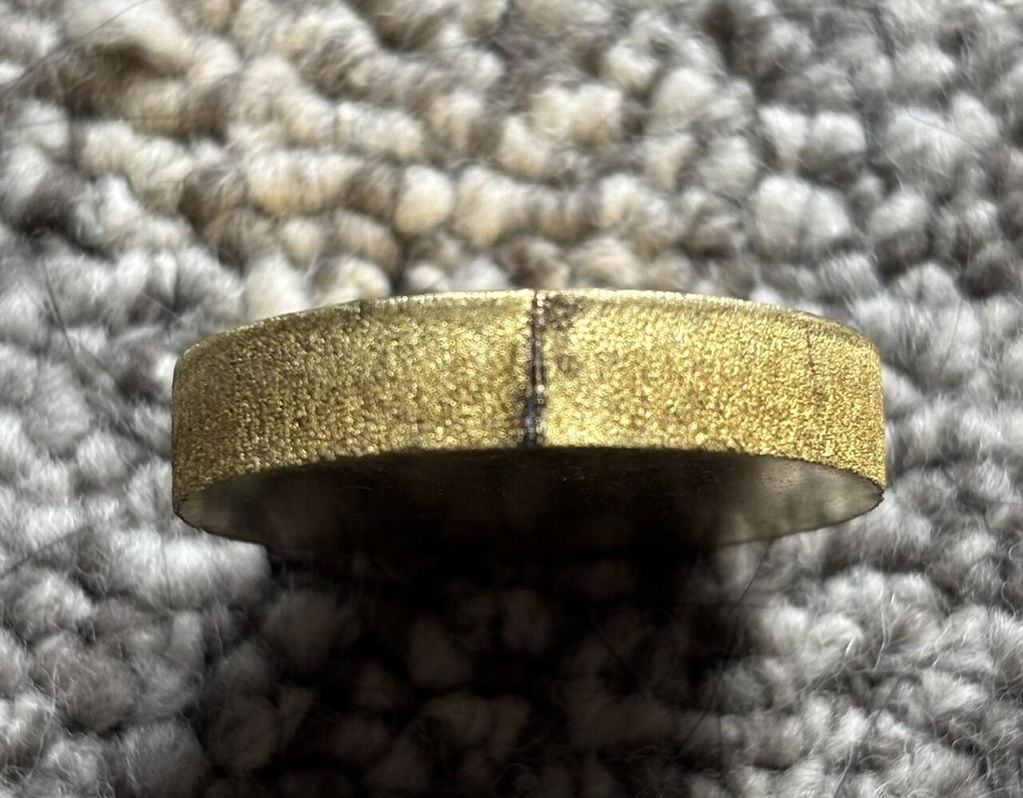
The chain is fine...but I ordered the wrong size. Nine links of the chain I ordered equals six of the size I wanted. My error...
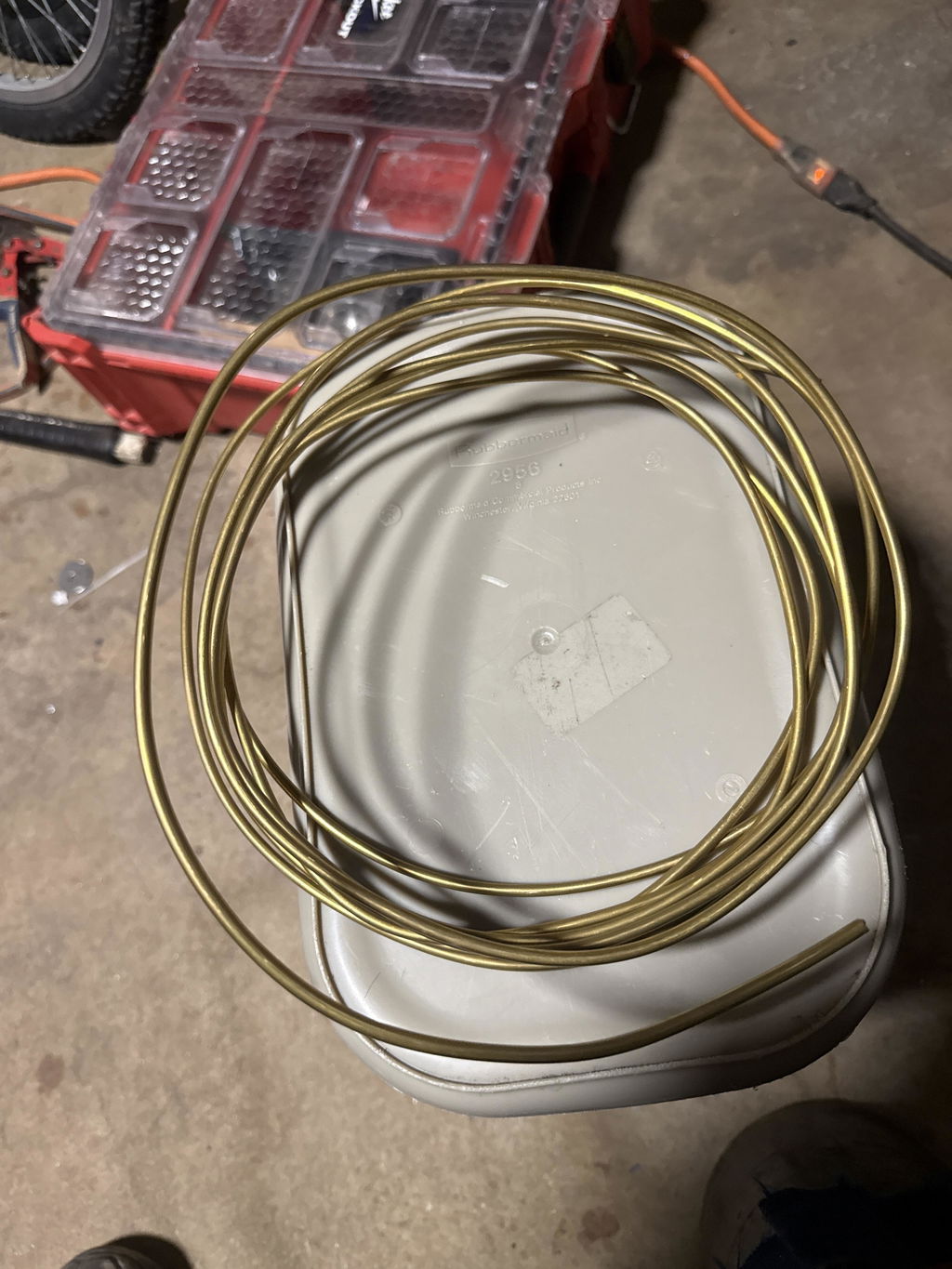
How can I straighten out the springs? I can't use them coil uo as is.
Your payment information is processed securely. We do not store credit card details nor have access to your credit card information.
Get fitment advice & recommendations
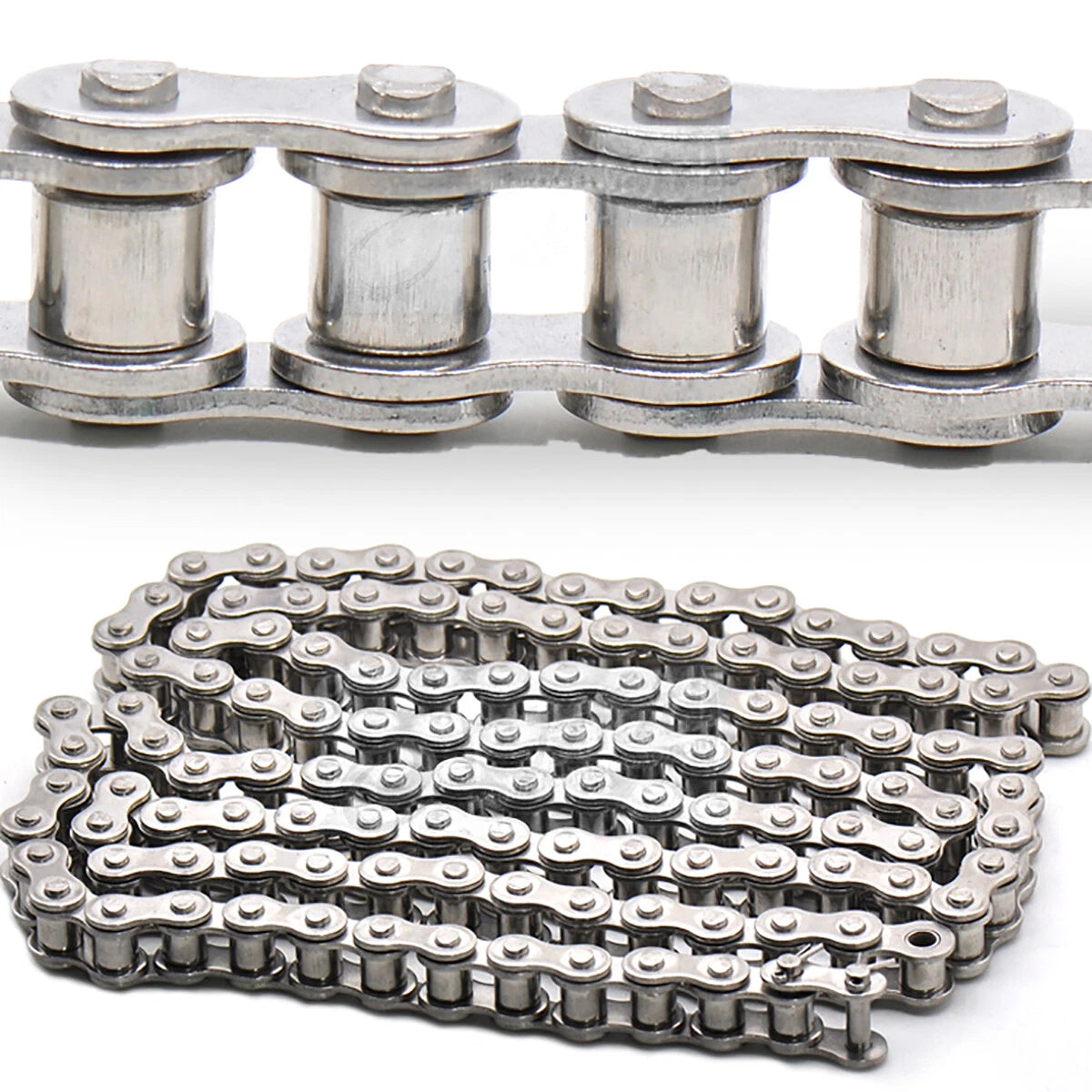
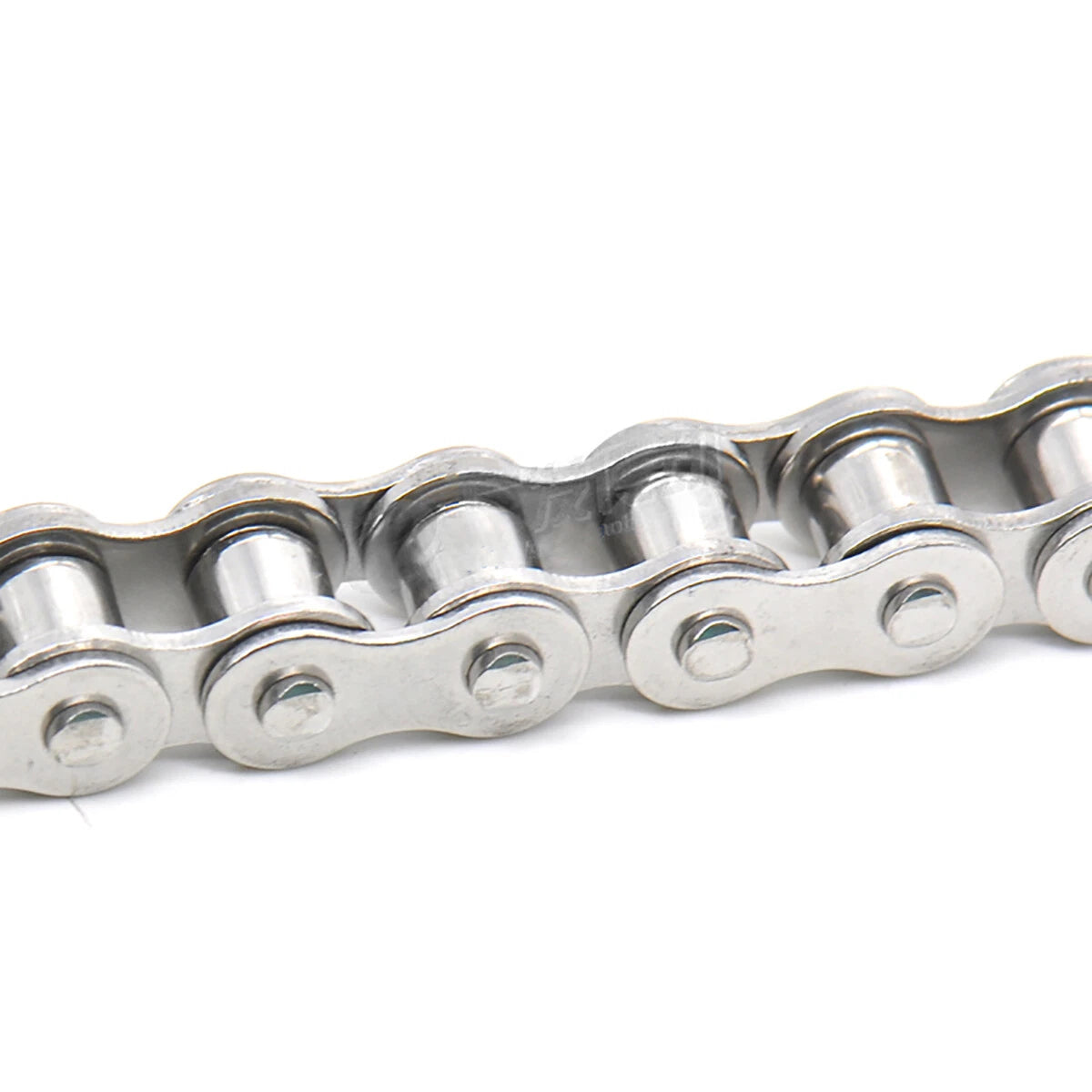
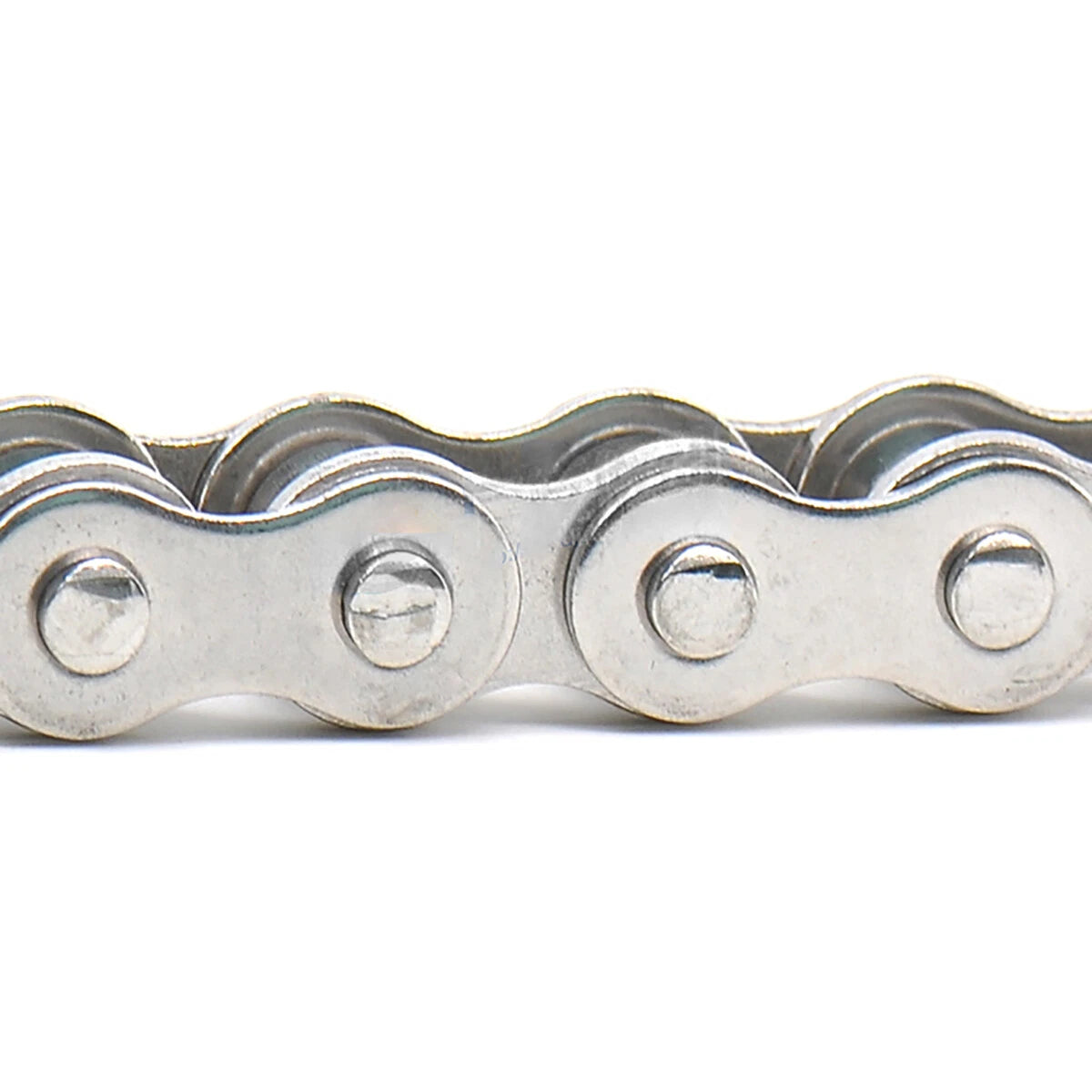
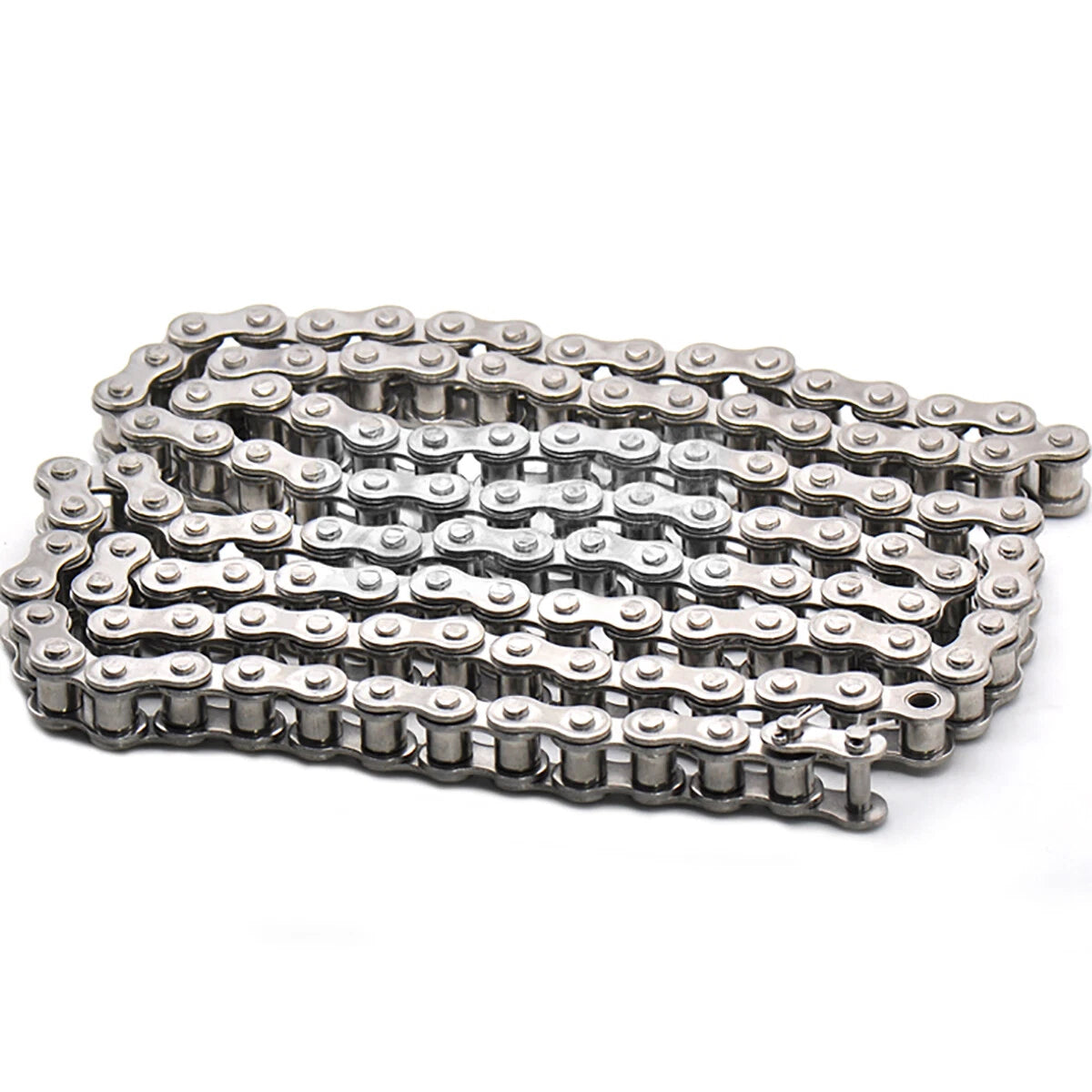
When standard carbon-steel chains corrode, seize, or contaminate the process, engineers and makers reach for a stainless steel alternative. This simplex roller chain is designed for DIYers, maintenance technicians, and OEM builders who need reliable power transmission in wet, chemical-exposed, or hygiene-critical settings where ordinary chains fail within months.
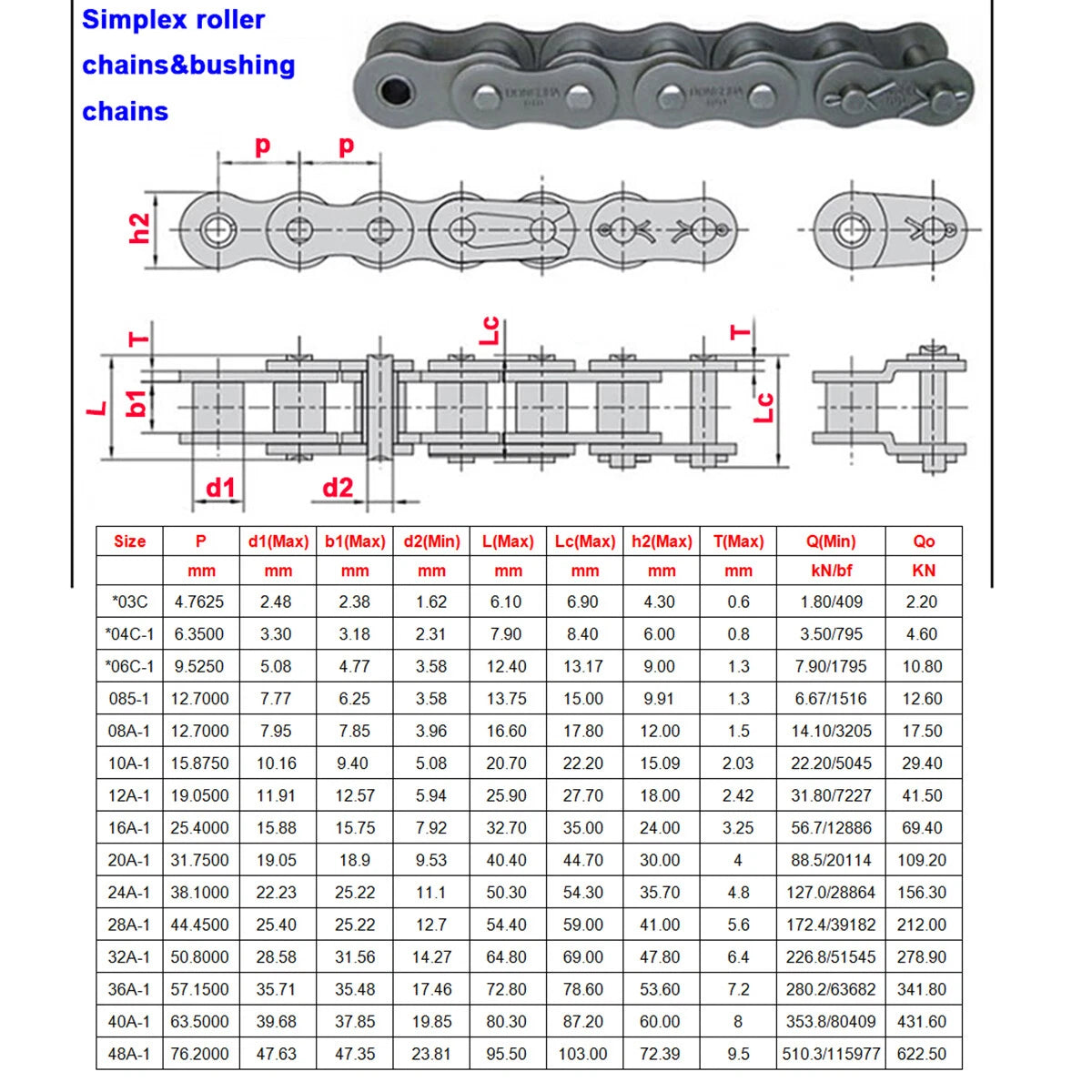
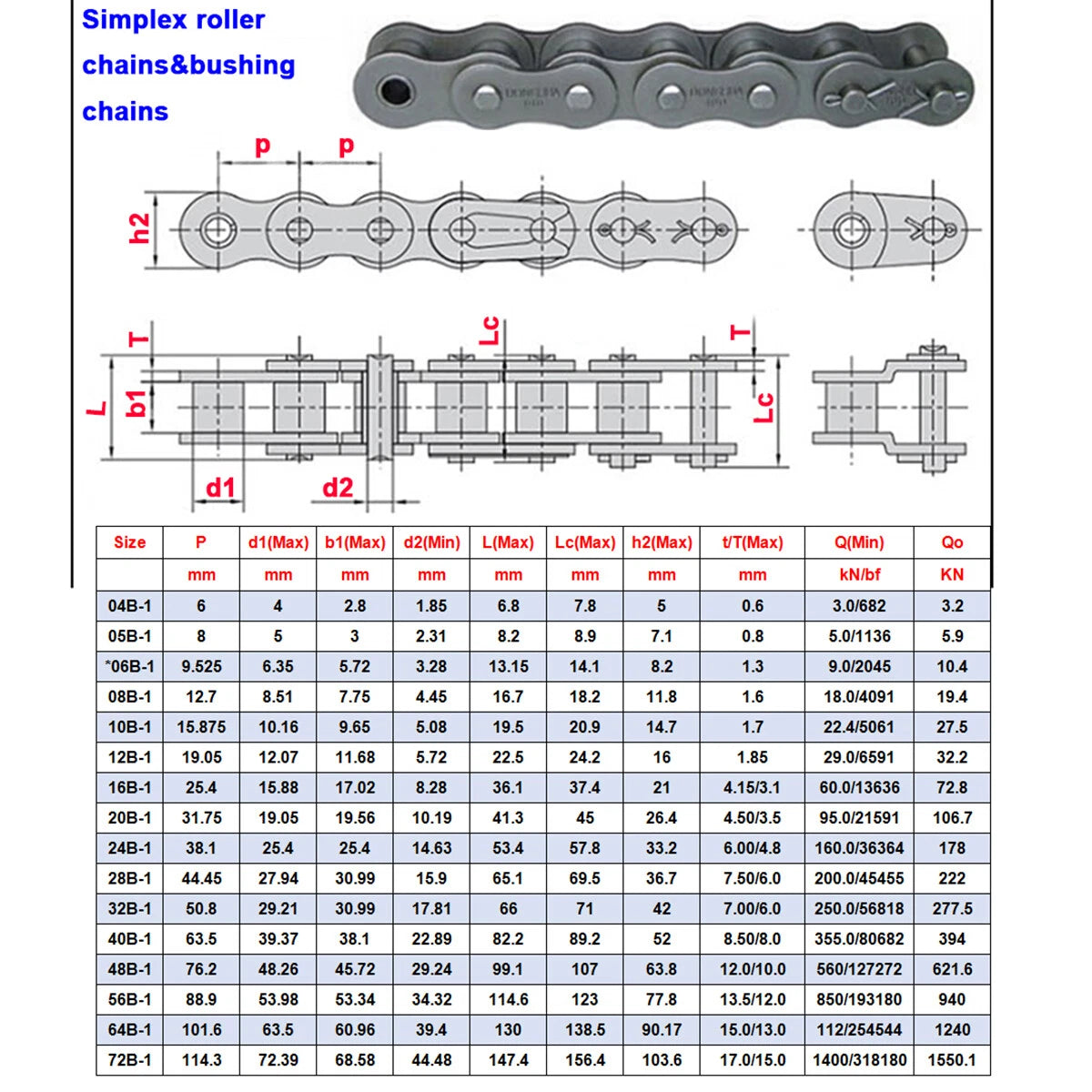
Each chain is constructed from 304 / A2 stainless steel plates, pins, bushings, and rollers. Available chain numbers span 04C-1, 06B-1, 08B-1, and 12A-1, covering pitch ranges from approximately 6 mm (0.24 in) up to 38.1 mm (1.50 in). Cut lengths are offered in 1 m, 1.5 m, and 5 m sections to suit both short-run prototypes and longer conveyor or drive runs.
Typical applications include food-processing conveyor lines where washdown resistance is mandatory, marine deck machinery and boat-lift drives exposed to salt spray, pharmaceutical packaging equipment requiring non-reactive drive components, and agricultural machinery operating in muddy or fertilizer-rich environments.
| Chain Standard | ISO 606 / DIN 8187 Simplex (Single-Strand) |
|---|---|
| Available Chain Numbers | 04C-1, 06B-1, 08B-1, 12A-1 |
| Pitch Range | Approx. 6 mm – 38.1 mm (0.24 in – 1.50 in) depending on chain number |
| Material | 304 / A2 Stainless Steel (plates, pins, bushings, rollers) |
| Finish | Natural stainless (no coating) |
| Strand Configuration | Simplex (1 strand) |
| Available Lengths | 1 Meter / 1.5 Meter / 5 Meter |
| Breaking Load | See variant options |
| Weight per Meter | See variant options |
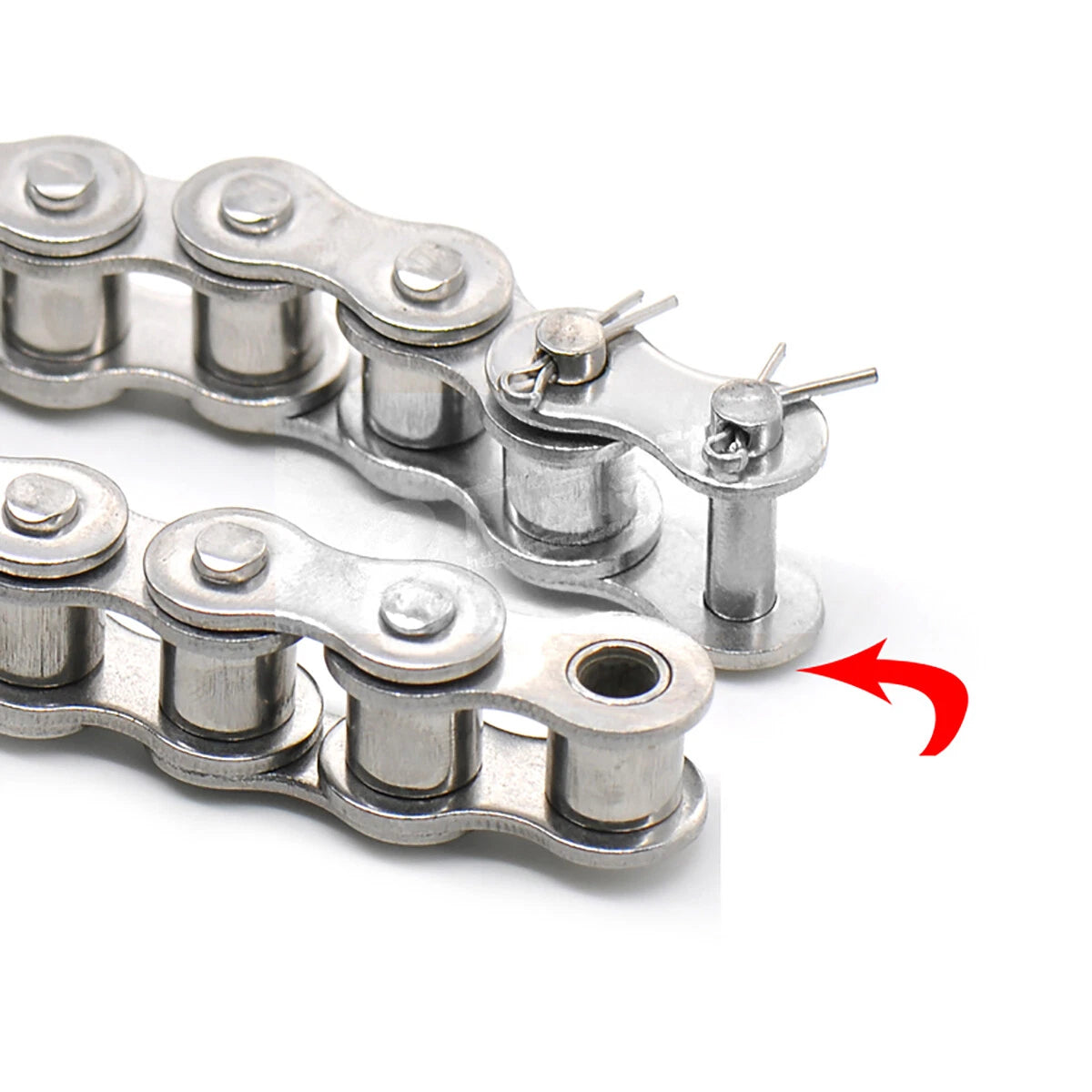
| Connecting Link | Sold separately; use matching chain-number link |
| Lubrication | Pre-lubricated at assembly; periodic re-lubrication recommended |
| Operating Temperature | Approx. −20 °C to +300 °C (−4 °F to +572 °F) for 304 SS |
Match the chain number to your existing sprocket. The number encodes the pitch: 04C-1 has a 6 mm pitch, 06B-1 has a 9.525 mm pitch, 08B-1 has a 12.7 mm pitch, and 12A-1 has a 19.05 mm pitch. Check the sprocket's stamped designation or measure the center-to-center distance between two adjacent teeth to confirm the pitch before ordering.
Measure the required chain run and add at least 10–15% for tensioner travel and connecting-link overlap. The 1 m length suits compact drives and prototypes; 1.5 m covers most mid-range conveyor spans; the 5 m length is ideal for longer runs or when you want spare links on hand. All lengths can be shortened with a standard chain breaker tool.
304 stainless steel has a lower tensile strength than hardened carbon steel of the same pitch, so the breaking load is typically 20–30% less than an equivalent carbon-steel chain. For most light-to-medium duty conveyor and drive applications this is more than adequate. If your application is near the rated load of a carbon-steel chain, consult the specific breaking-load data for the chain number you need or consider upsizing one chain number.
304 / A2 stainless steel offers good resistance to fresh water, mild salt spray, steam, and dilute acids. It is widely used in food processing, marine deck hardware, and agricultural equipment for this reason. In highly concentrated chloride environments (e.g., continuous seawater immersion), 316 / A4 stainless would be a better choice. For typical washdown and outdoor marine use, 304 performs reliably with periodic re-lubrication.
Yes — provided your sprocket is rated for the same chain number and conforms to ISO 606 / DIN 8187 dimensions. Stainless simplex chains share identical pitch, roller diameter, and inner-plate width with carbon-steel chains of the same designation, so they drop straight onto compatible sprockets without modification.
Yes. You will need a simplex connecting link (also called a master link) that matches your chain number — for example, a 06B-1 connecting link for a 06B-1 chain. For stainless steel applications, use a stainless steel connecting link to avoid galvanic corrosion between dissimilar metals. Connecting links are sold separately.
Apply a light machine oil or food-grade lubricant (where applicable) to the inner link plates and rollers every 50–100 operating hours, or more frequently in wet or dirty environments. Periodically check chain elongation — replace the chain when it has stretched more than 2% of its nominal pitch length. Keep the chain tension within the sprocket manufacturer's recommended range to avoid accelerated wear on pins and bushings.