
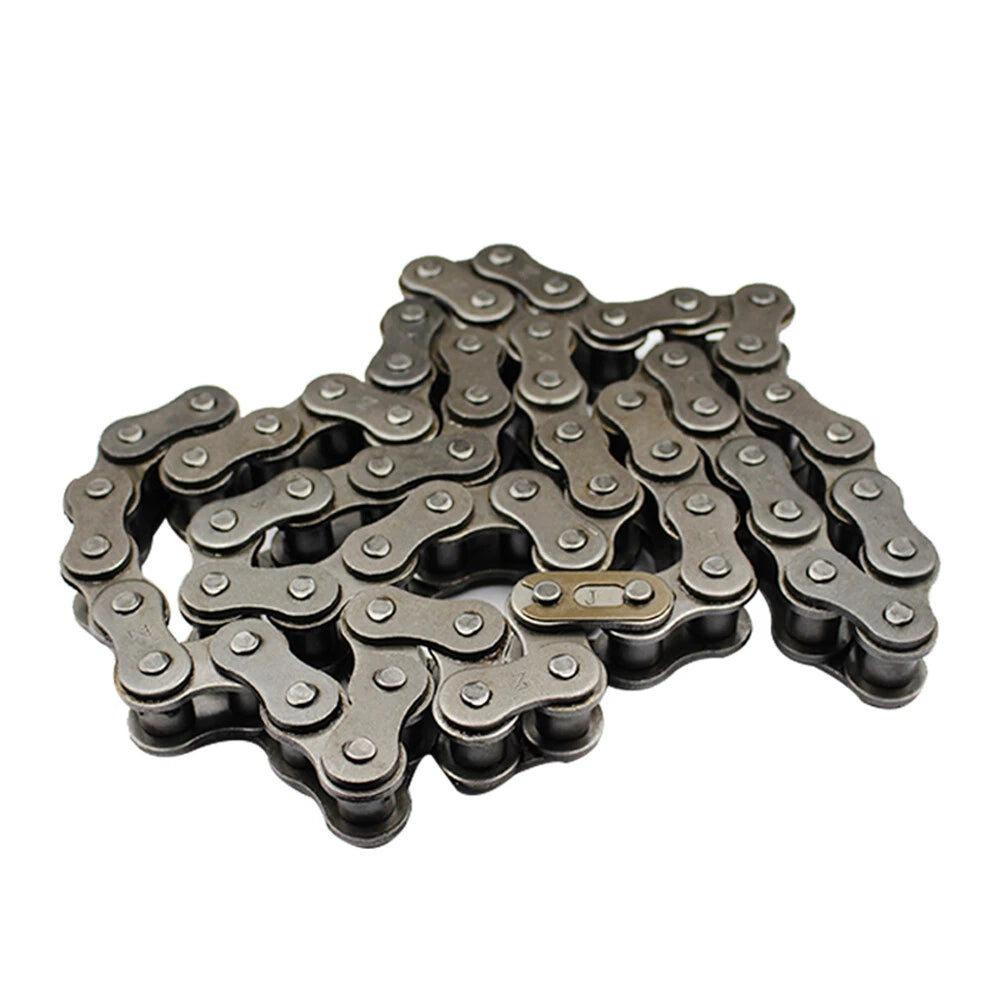
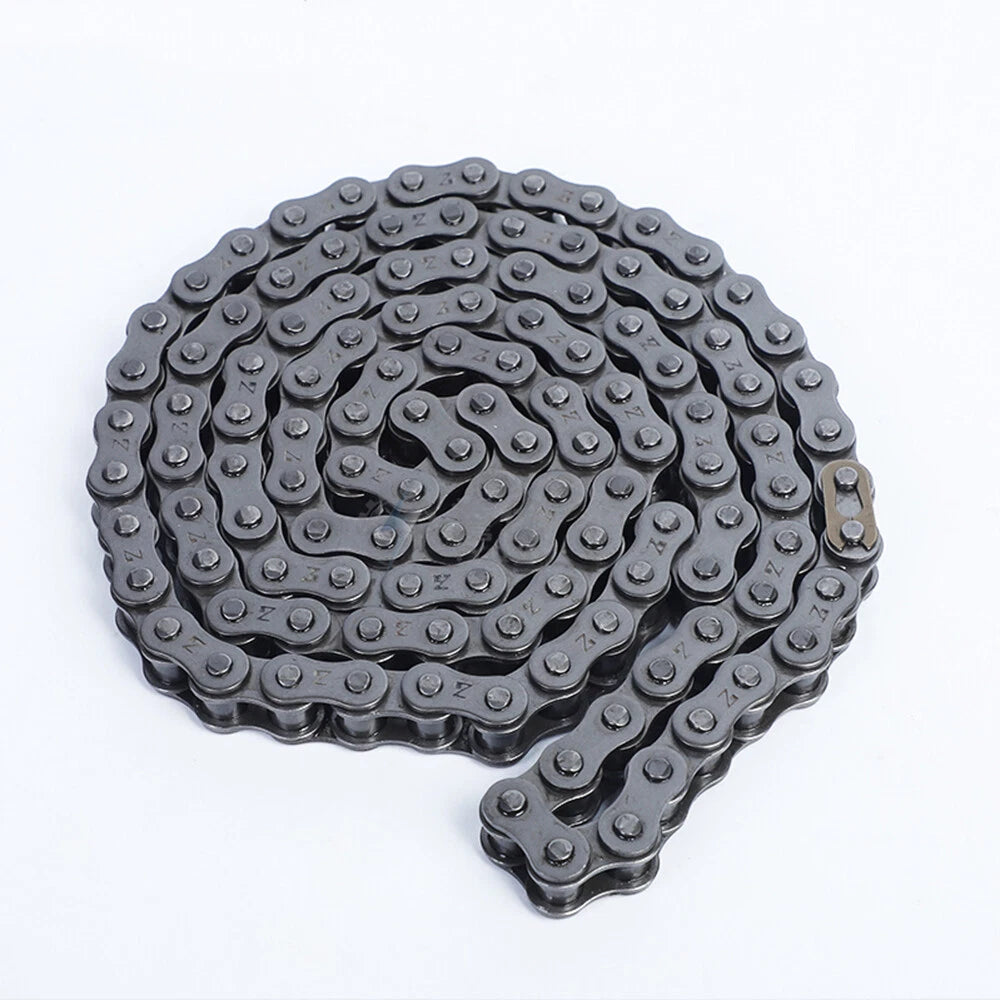
The chain is fine...but I ordered the wrong size. Nine links of the chain I ordered equals six of the size I wanted. My error...
How can I straighten out the springs? I can't use them coil uo as is.
Your payment information is processed securely. We do not store credit card details nor have access to your credit card information.
Get fitment advice & recommendations
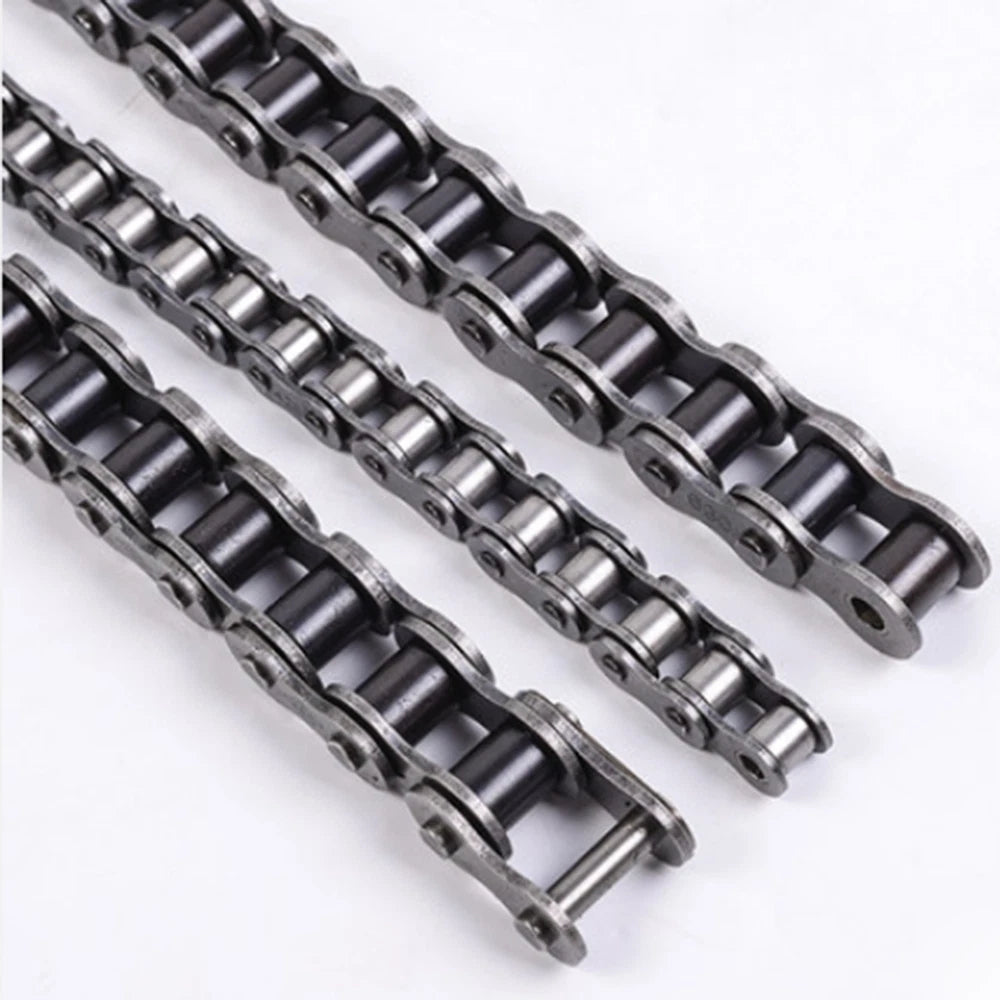
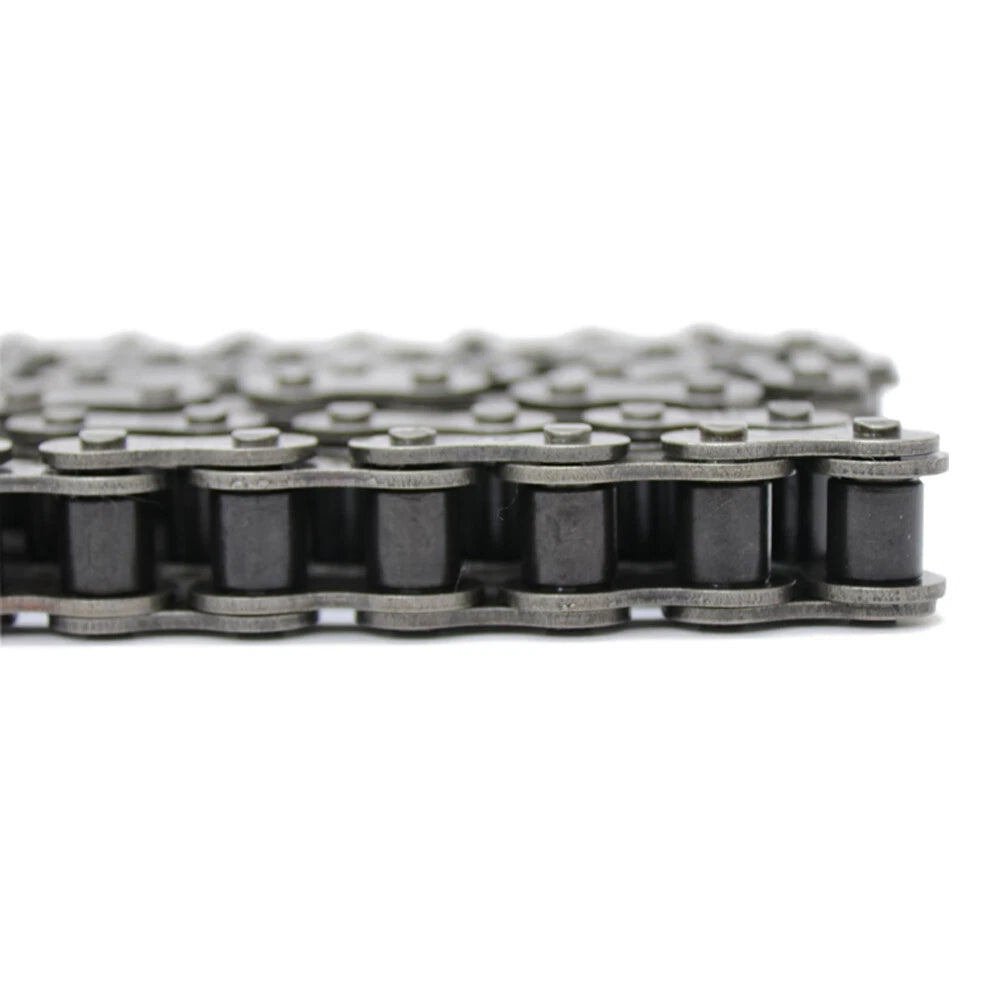
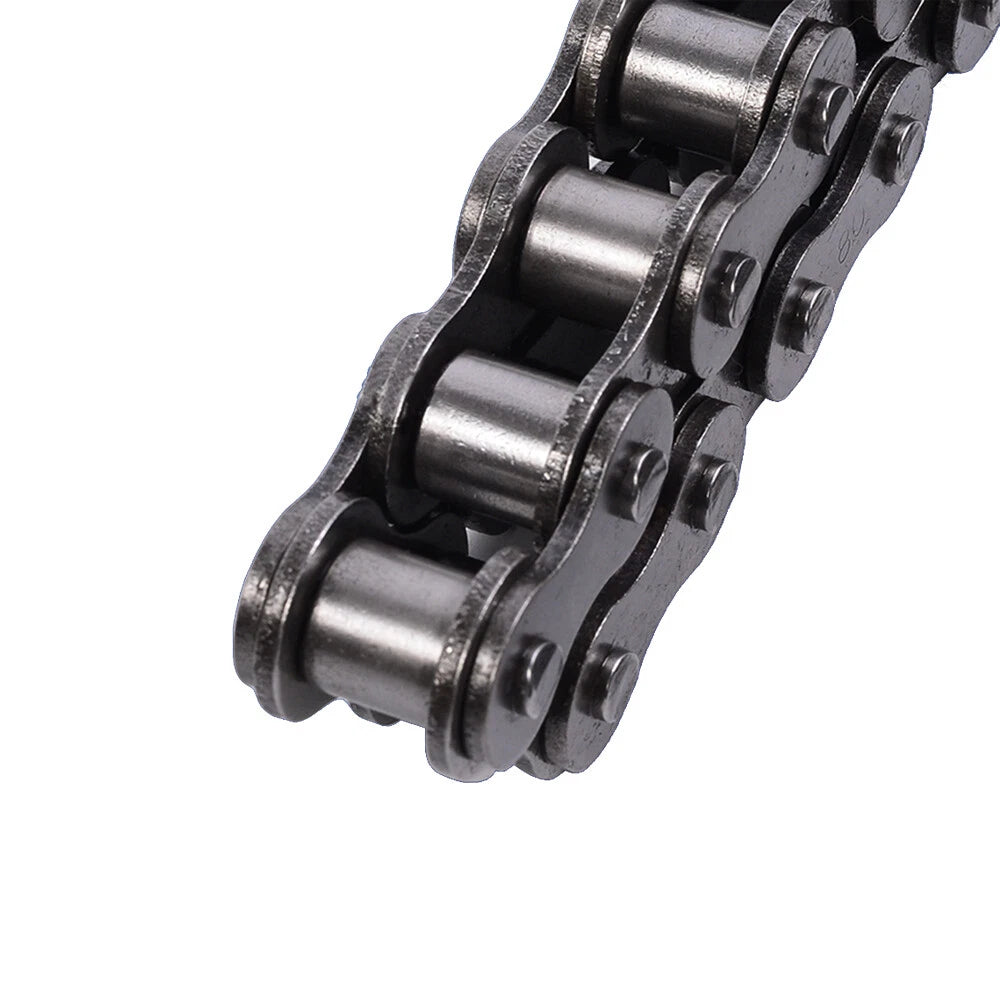
When a worn or undersized drive chain causes slippage, noise, or unexpected downtime, the right replacement makes all the difference. Whether you are a hobbyist maintaining a go-kart, a fabricator building a conveyor, or a technician servicing agricultural equipment, this ANSI simplex roller chain delivers consistent pull and long service life across a wide range of loads.
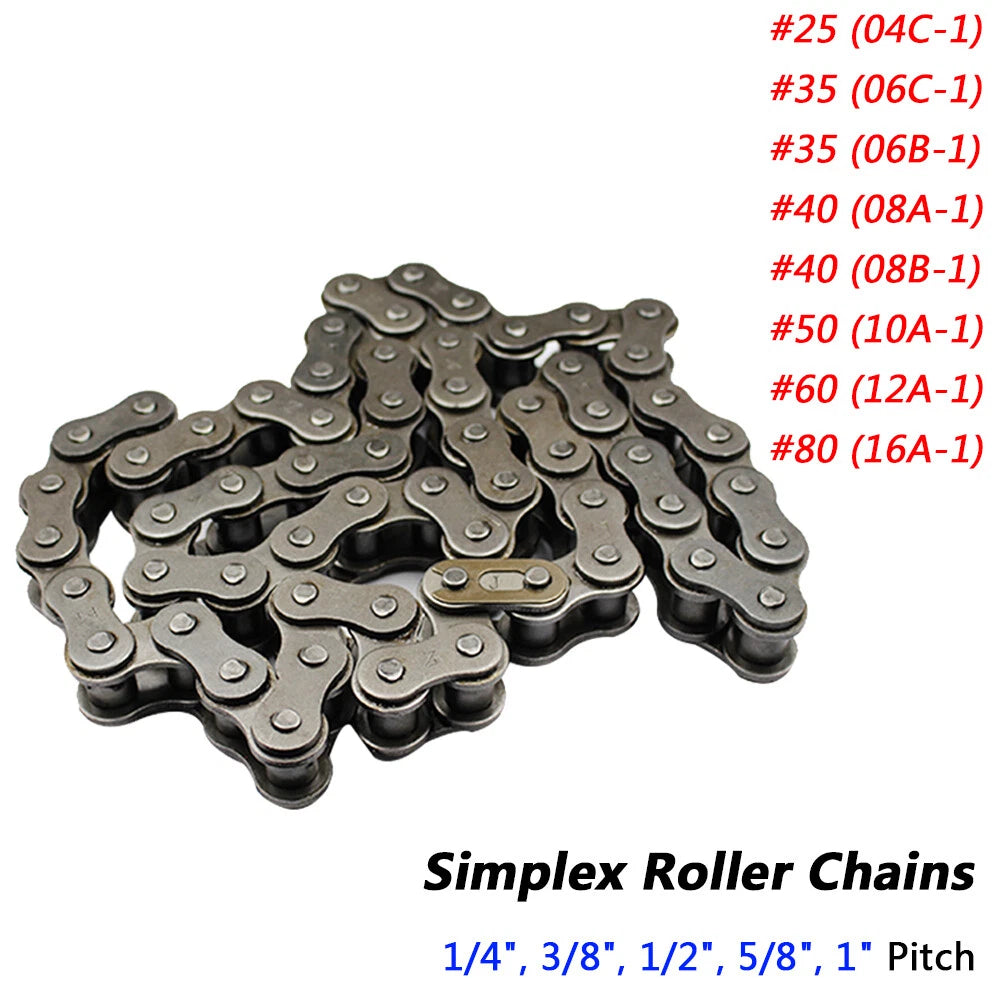
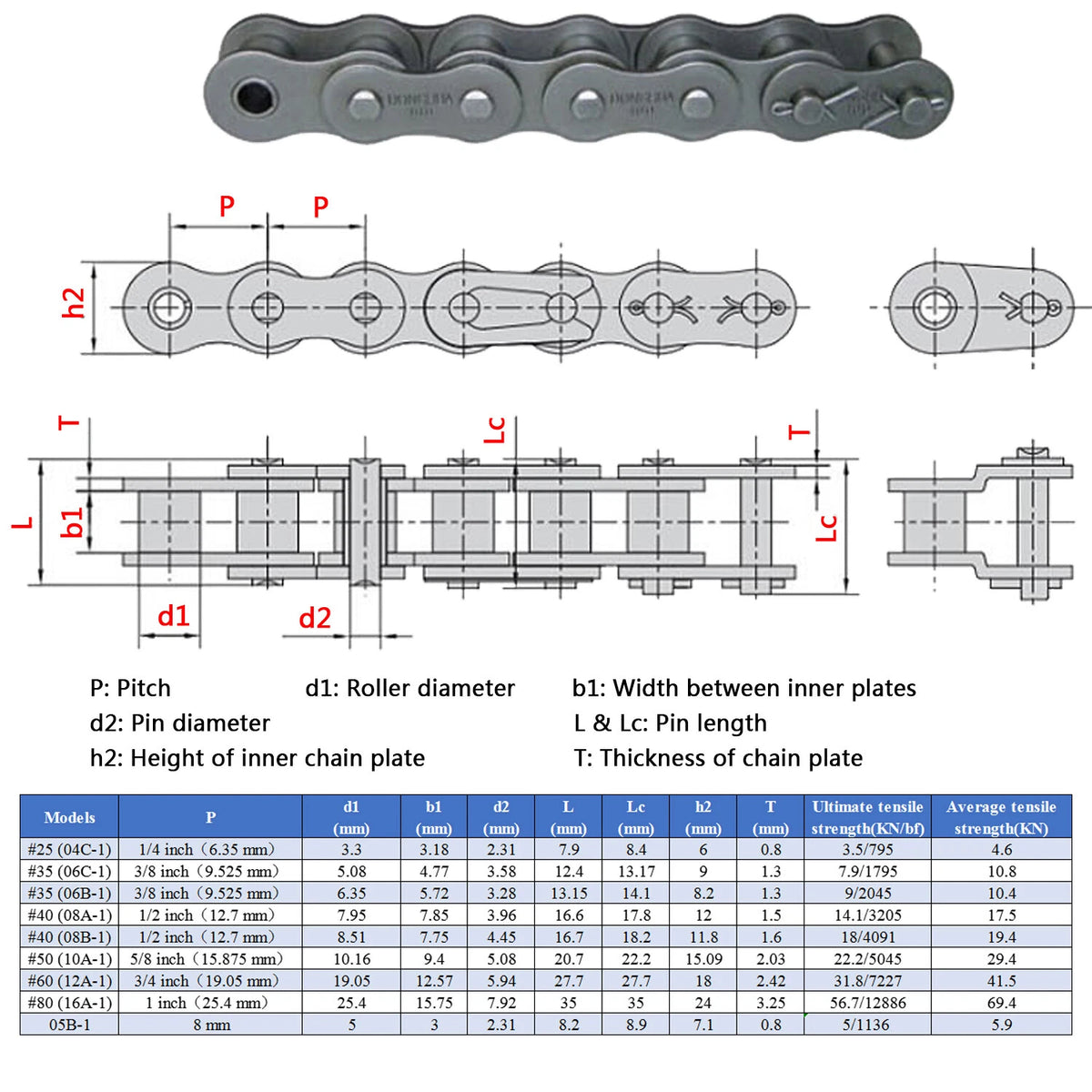
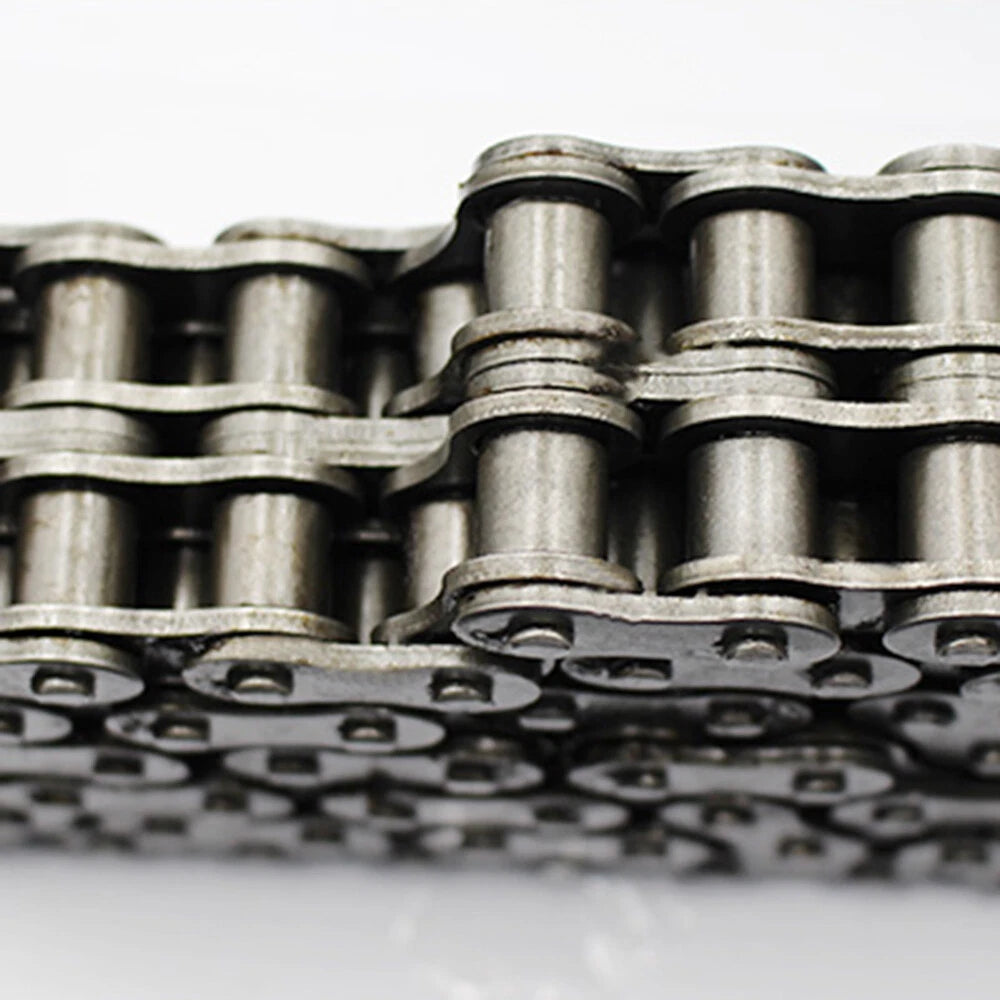
Each chain is a single-strand (simplex) roller chain manufactured to ANSI/ISO standards. Available models span #25 (04C-1) through #80 (16A-1) plus metric 05B-1, covering pitches from 1/4 inch (6.35 mm) up to 1 inch (25.4 mm). Cut lengths are offered in 0.5 m, 1.524 m (5 ft), and 5 m coils to suit both short repair jobs and longer drive runs.
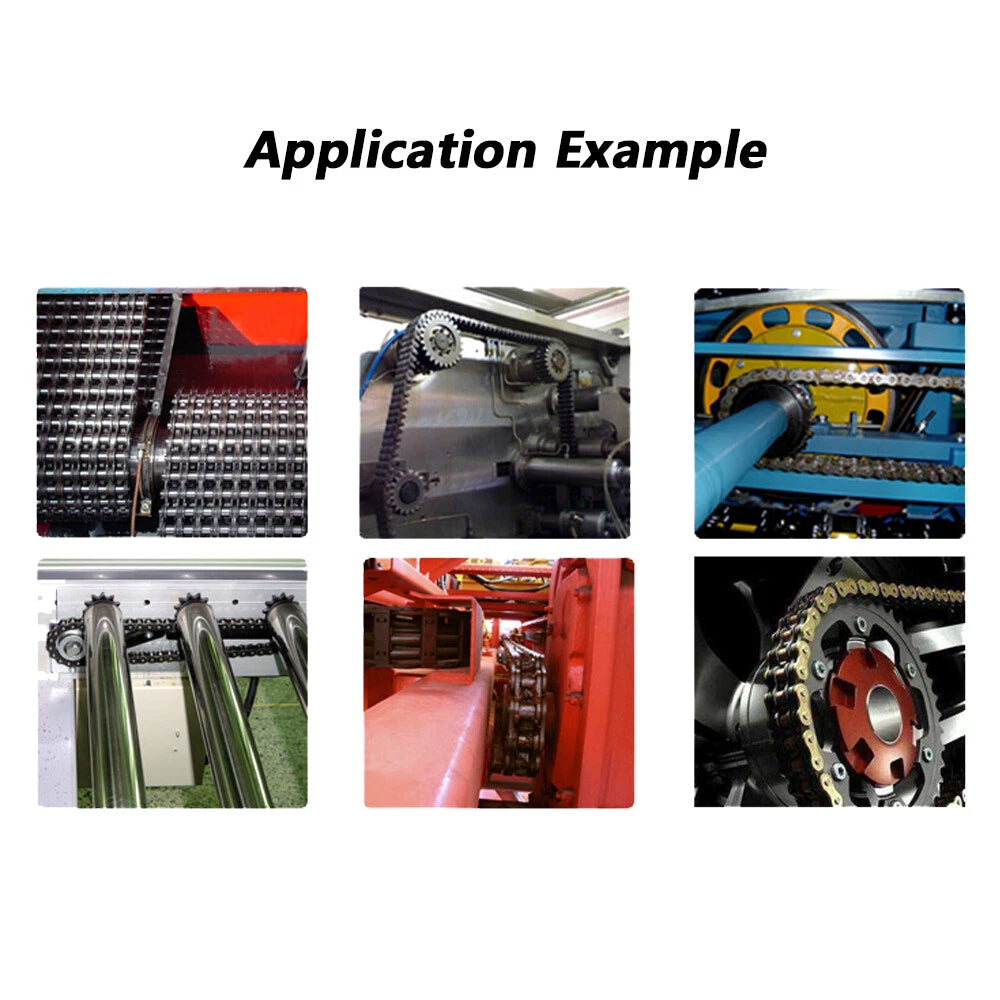
Typical use cases include go-kart and mini-bike final drives (#35 / #40), light conveyor and feeder systems (#40 / #50), agricultural machinery power take-offs (#50 / #60), and industrial gearbox output drives (#60 / #80). Long-tail search terms such as "ANSI #40 roller chain by the foot" and "replacement #35 chain for go-kart" describe exactly what this listing covers.
| Chain Standard | ANSI B29.1 / ISO 606 |
|---|---|
| Strand Configuration | Simplex (single-strand) |
| Available Models | #25 (04C-1), #35 (06C-1), #35 (06B-1), #40 (08A-1), #40 (08B-1), #50 (10A-1), #60 (12A-1), #80 (16A-1), 05B-1 |
| Pitch Range | 6.35 mm (1/4") — 25.4 mm (1") | 8 mm metric |
| Available Lengths | 0.5 m / 1.524 m / 5 m |
| Roller Diameter | See variant options |
| Inner Plate Width | See variant options |
| Tensile Strength | See variant options |
| Material | Carbon steel (heat-treated rollers, pins, and bushings) |
| Finish | Natural / lightly oiled |
| Weight per Meter | See variant options |
| Connection Link | Contact us to confirm |
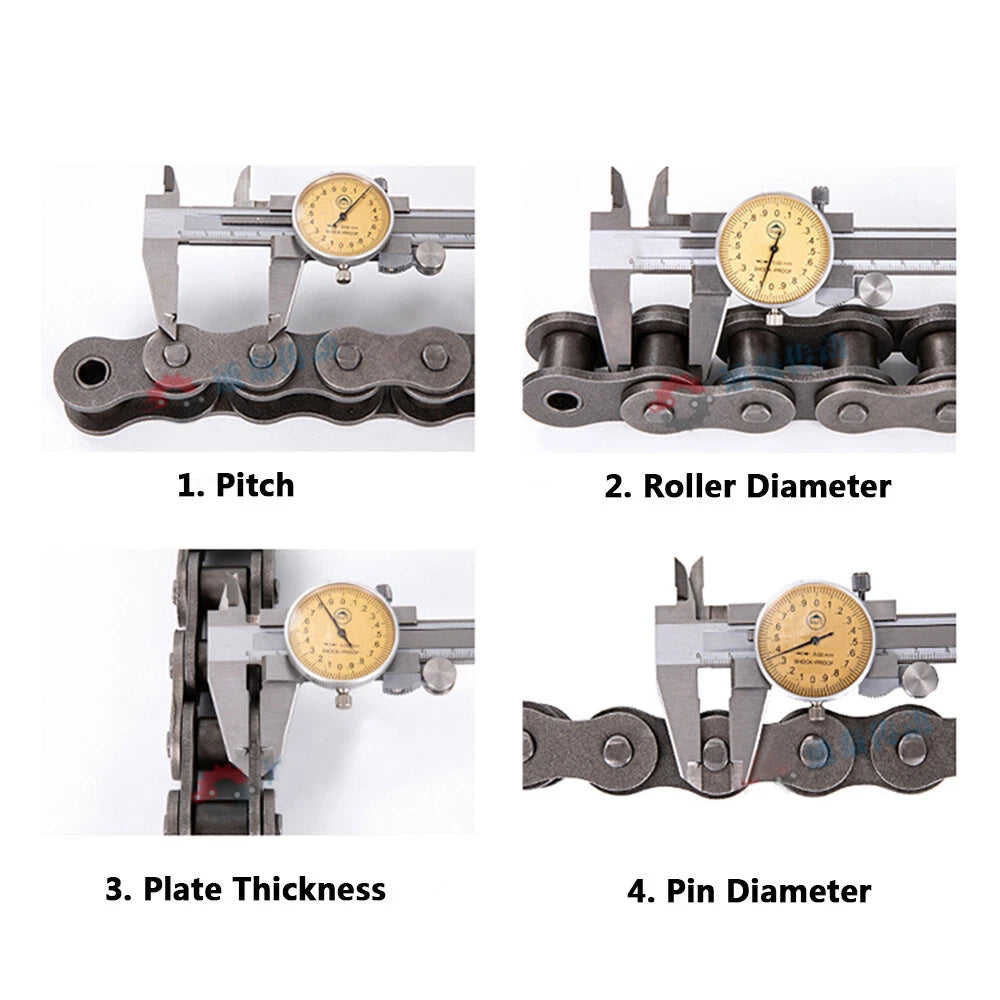
Match the chain model to your existing sprocket. The model number (e.g., #40 / 08A-1) encodes the pitch and strand count. Measure the centre-to-centre distance between roller pins on your old chain — that is the pitch. Common pairings: #35 for go-karts and mini-bikes, #40 for light conveyors and small machinery, #50–#60 for heavier industrial drives.
Both refer to the same pitch (1/2 inch / 12.7 mm) but use different naming conventions. ANSI #40 is the North American standard; 08A-1 is the ISO/metric equivalent. Dimensional tolerances are nearly identical, so they are generally interchangeable on matching sprockets. Always verify the sprocket tooth profile before mixing standards.
Yes. Use a standard connecting link (also called a master link) of the same model and pitch. The connecting link includes an outer plate, a clip or cotter pin, and two pins. Contact us to confirm the correct connecting link part number for your selected model.
Standard carbon-steel simplex chains are lightly oiled from the factory, which provides short-term corrosion protection during storage and initial use. For outdoor, wet, or washdown environments, apply a chain lubricant rated for your conditions after installation. If you need stainless-steel or nickel-plated chains for harsh environments, contact us for availability.
Tensile strength scales with pitch and model number. As a general reference: #25 chains are rated around 3.1 kN (700 lbf), #35 around 8 kN (1,800 lbf), #40 around 14 kN (3,100 lbf), #50 around 22 kN (5,000 lbf), #60 around 31 kN (7,000 lbf), and #80 around 58 kN (13,000 lbf). Confirm exact ratings for your specific variant before use in safety-critical applications.
Most go-kart and mini-bike rear drives use between 0.6 m and 1.2 m of chain depending on wheelbase and sprocket centre distance. The 1.524 m (5 ft) option gives you enough length to cut to size and still have spare links. Use a chain breaker tool to remove excess links and a master link to close the loop.
Yes. While the chains arrive pre-lubricated, ongoing lubrication is essential for long service life. Apply a dedicated chain oil or spray lubricant to the inner plates and rollers at regular intervals — typically every 8–10 hours of operation for high-speed drives, or monthly for low-speed applications. Avoid using WD-40 as a long-term lubricant; it displaces moisture but does not provide lasting film protection.





