The chain is fine...but I ordered the wrong size. Nine links of the chain I ordered equals six of the size I wanted. My error...
How can I straighten out the springs? I can't use them coil uo as is.
Your payment information is processed securely. We do not store credit card details nor have access to your credit card information.
Get fitment advice & recommendations
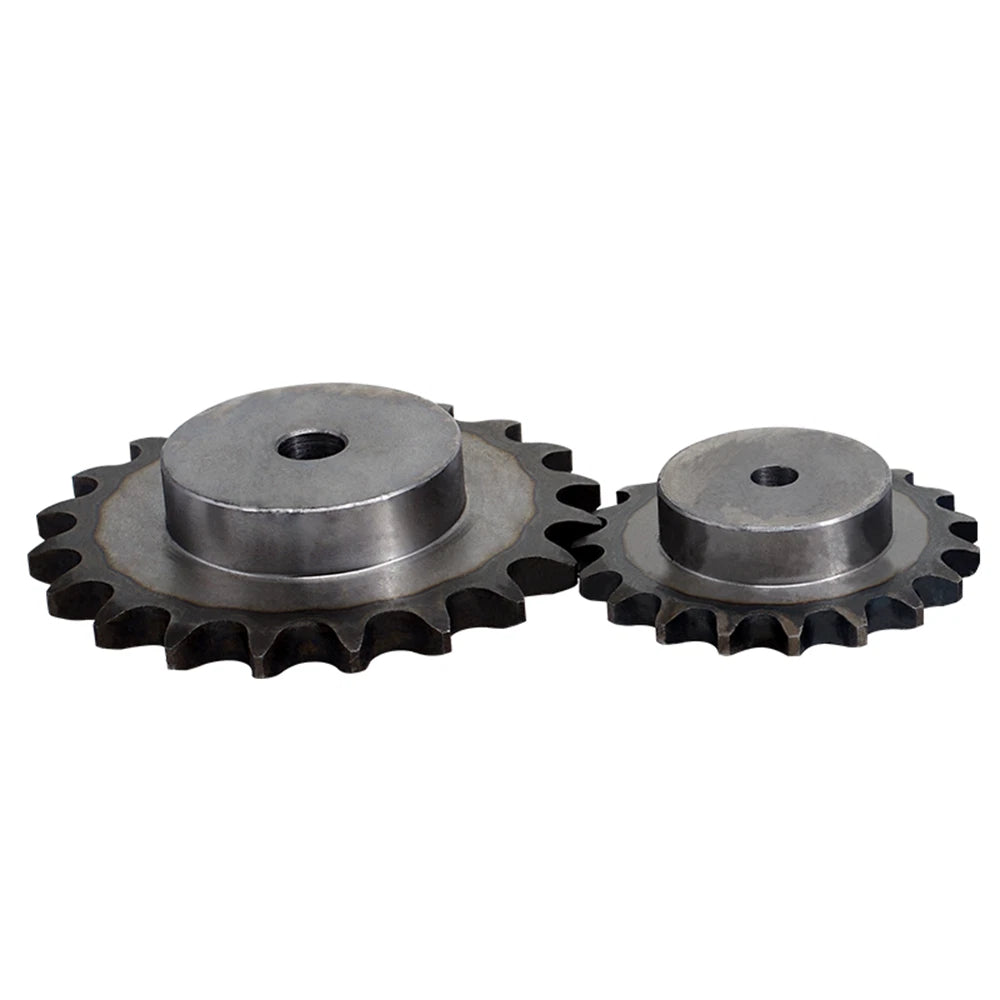
When your drivetrain slips, skips, or simply won't fit the shaft you have on hand, the problem is almost always a mismatched sprocket. Hobbyists, robotics builders, and light-industrial equipment designers who rely on #25 (04C) roller chain need a sprocket that locks onto the shaft cleanly, meshes with the chain without play, and holds up through thousands of cycles without loosening. This simplex sprocket wheel is engineered specifically for that job.
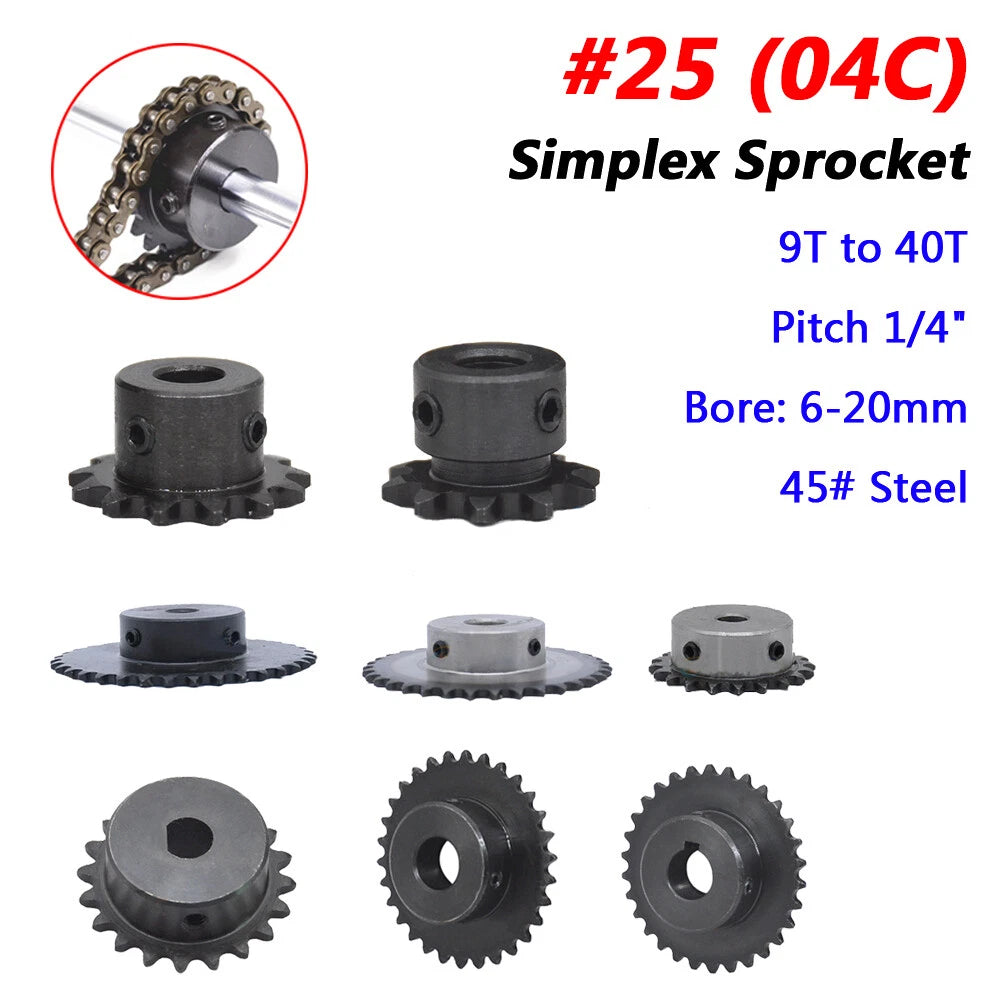
Each sprocket is machined from carbon steel and finished to close tolerances for the #25 (04C) roller chain standard — pitch 1/4 inch (6.35 mm). The range covers 9 to 40 teeth and bore sizes from 5 mm to 20 mm (approximately 0.20" to 0.79"), with four hub configurations: K-type plain bore, BF-type plain bore, keyway bore (with standard DIN keyway slots), and D-bore (flat-sided shaft engagement). Matching #25 roller chain in 0.5 m and 5 m lengths is also available as a bundle option.
Typical use cases include small conveyor drives and indexing tables where a #25 chain sprocket replacement is needed, DIY go-kart and mini-bike chain drive builds requiring a compact 1/4-inch pitch sprocket, and robotics or automation rigs that need a keyed or D-bore sprocket for positive shaft engagement without set-screw slip.
| Chain Standard | #25 / ANSI 25 / ISO 04C-1 Simplex Roller Chain |
|---|---|
| Chain Pitch | 1/4 inch (6.35 mm) |
| Tooth Count Range | 9T – 40T (see variant options) |
| Bore Size Range | 5 mm – 20 mm (see variant options) |
| Hub / Bore Type | K-type plain bore / BF-type plain bore / Keyway bore / D-bore (see variant options) |
| Keyway Slot Sizes | 3×1.4 mm, 4×1.8 mm, 5×2.3 mm, 6×2.8 mm (keyway variants only) |
| Material | Carbon steel |
| Surface Finish | See variant options |
| Simplex / Duplex | Simplex (single-strand) |
| Compatible Chain Length Options | 0.5 m / 5 m (sold separately as bundle variant) |
| Weight | See variant options |
The tooth count determines your drive ratio. Divide the driven sprocket teeth by the driver sprocket teeth to get the reduction ratio. For example, a 9T driver paired with a 40T driven sprocket gives roughly a 4.4:1 reduction. Use a smaller tooth count on the motor side for more torque, or a larger count for higher output speed. If you are replacing an existing sprocket, match the tooth count exactly.
Measure your shaft diameter with a caliper. Select the bore size that matches your shaft — the bore should be a close sliding fit, not loose. For keyway variants, also confirm your key stock dimensions match one of the listed slot sizes (3×1.4 mm, 4×1.8 mm, 5×2.3 mm, or 6×2.8 mm). For D-bore variants, measure both the shaft diameter and the flat-to-round dimension.
Both K-type and BF-type are plain bore (no keyway, no flat). The difference is in hub geometry: K-type typically has a shorter, narrower hub profile suited to compact assemblies, while BF-type has a wider flange face that provides more bearing surface against the chain plate. Check your available shaft engagement length and side clearance before choosing.
Yes. These sprockets are machined to the ANSI #25 / ISO 04C-1 standard with a 6.35 mm (1/4 inch) pitch. They are compatible with any simplex #25 or 04C-1 roller chain from any manufacturer that conforms to that standard. The matching chain variants listed in this product (0.5 m and 5 m) are also #25 (04C-1) and will mesh correctly.
The carbon steel construction provides solid rigidity for light-to-medium duty continuous operation typical of conveyors, go-karts, mini-bikes, and robotics platforms. For heavy shock-load or high-speed industrial applications beyond the #25 chain's rated working load, consider upgrading to a larger chain pitch series. Always ensure your chain tension and lubrication are within the chain manufacturer's recommendations.
Carbon steel sprockets are not inherently corrosion resistant. For indoor or dry environments, standard carbon steel performs well with periodic lubrication. For damp, outdoor, or washdown environments, apply a chain lubricant or anti-rust coating, or consider stainless steel alternatives if your application demands it.
No. These are simplex (single-strand) sprockets designed for single-strand #25 / 04C-1 roller chain only. Using them with duplex chain will result in misalignment and accelerated wear. If you need duplex chain compatibility, you will need a duplex-rated sprocket with the correct plate spacing.