The chain is fine...but I ordered the wrong size. Nine links of the chain I ordered equals six of the size I wanted. My error...
How can I straighten out the springs? I can't use them coil uo as is.
Your payment information is processed securely. We do not store credit card details nor have access to your credit card information.
Get fitment advice & recommendations
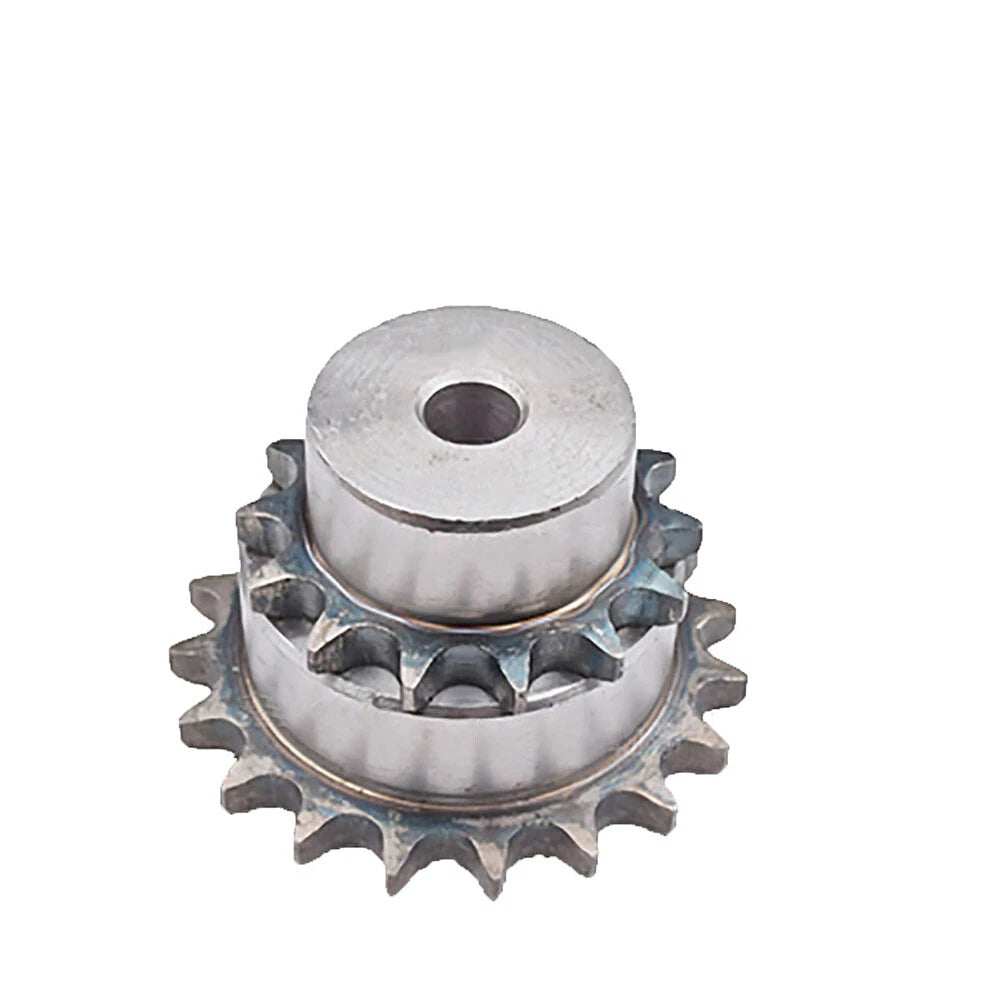
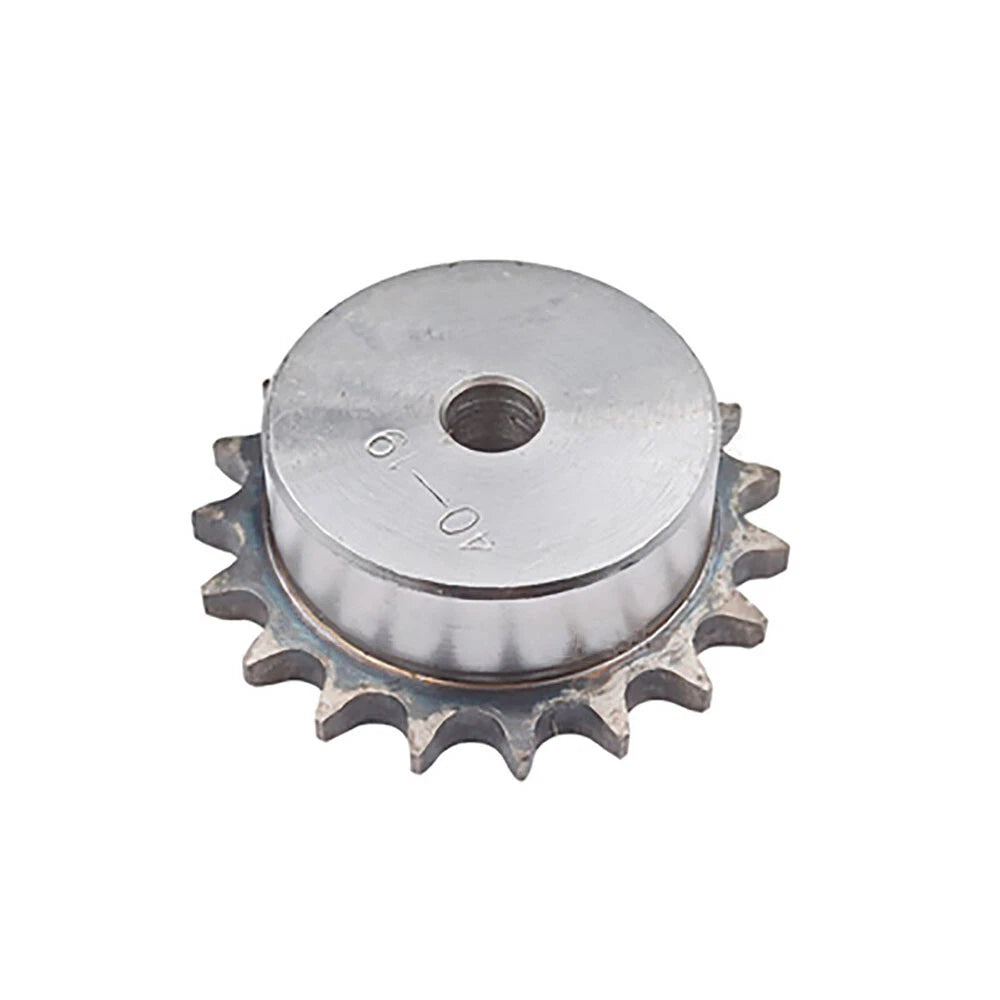
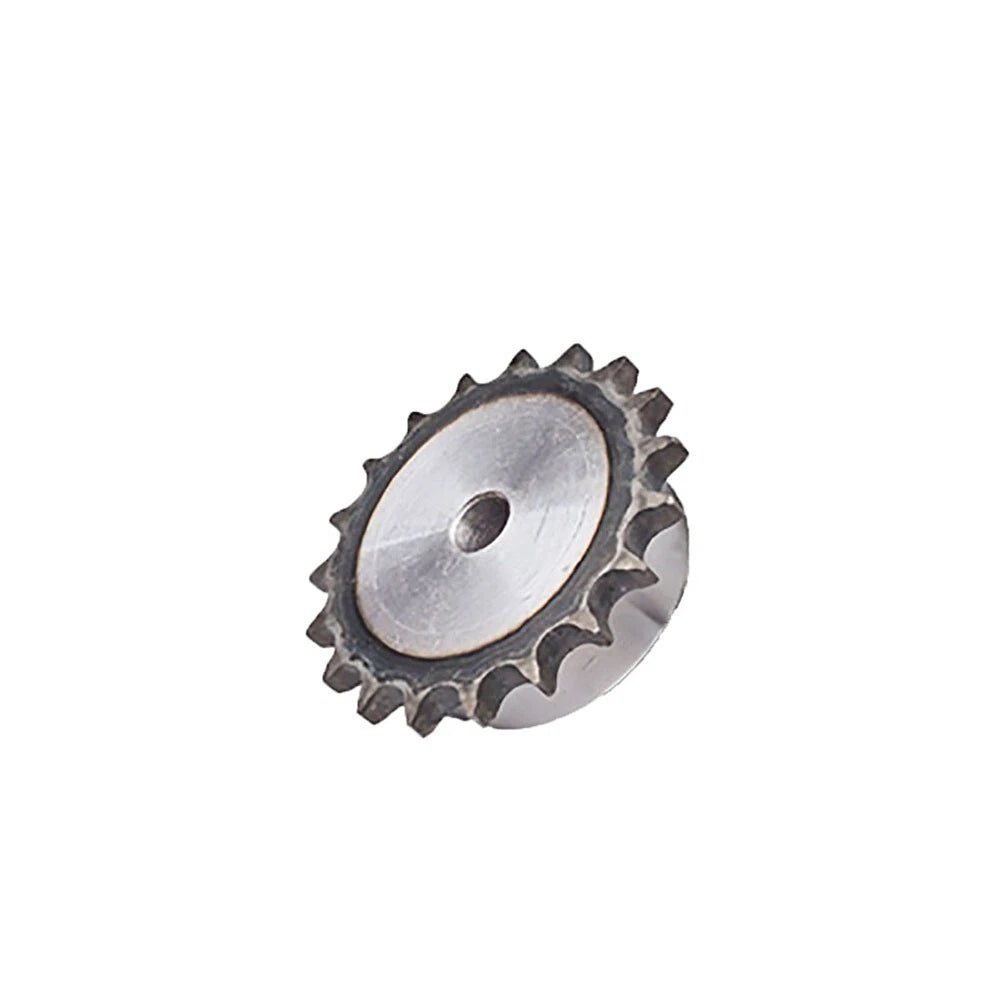
When a mismatched or worn sprocket causes chain skip, vibration, or premature wear, the entire drivetrain suffers — costing makers, machine builders, and maintenance engineers both time and money. This stepped-hub sprocket is engineered specifically for #60 (12A) simplex roller chains, giving hobbyists and professionals a direct-fit solution that installs cleanly and runs quietly from day one.
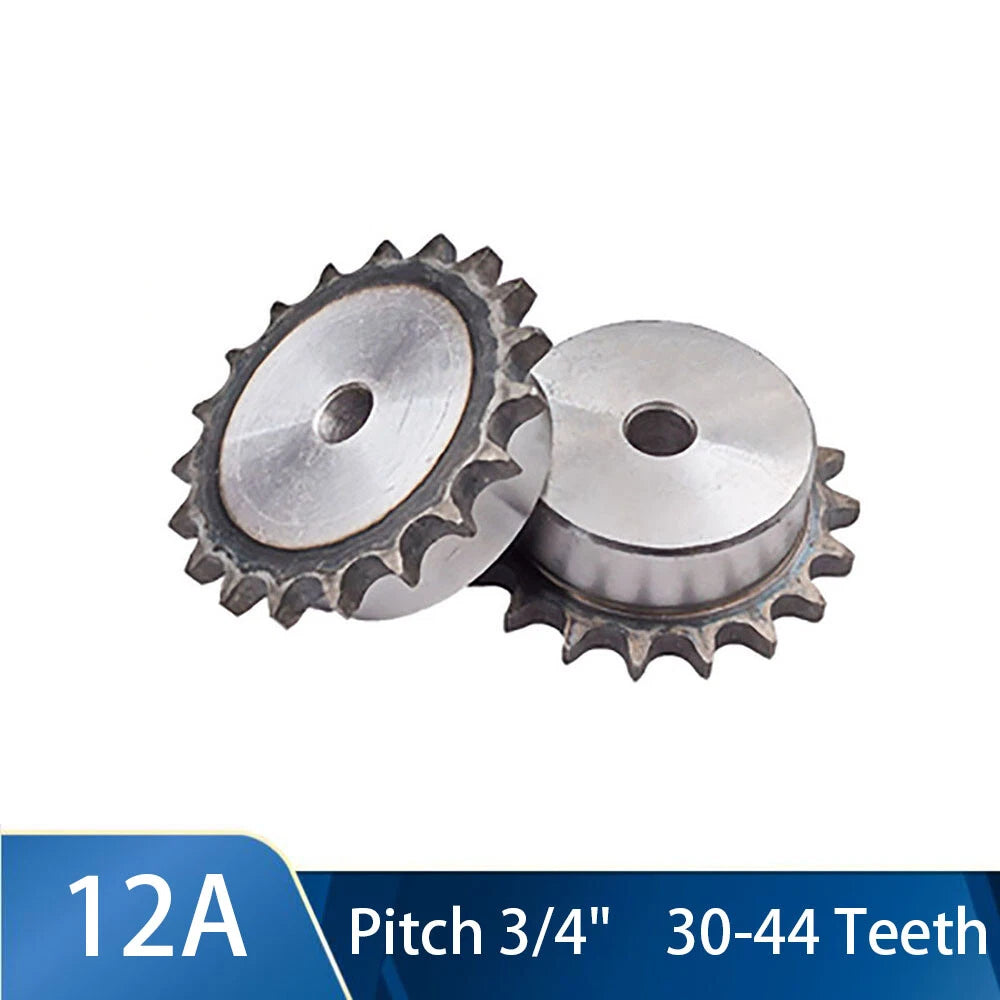
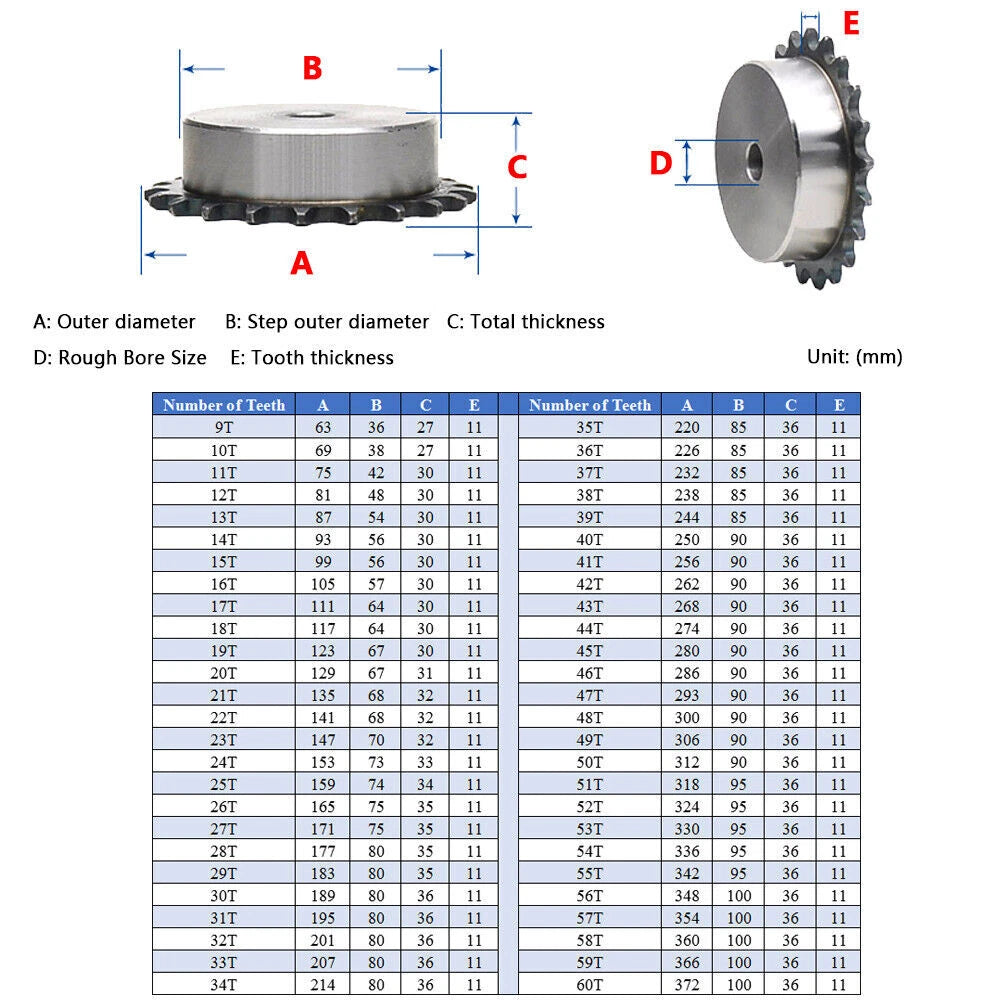
Each sprocket is precision-machined from medium-carbon steel with a hardened tooth profile, available in tooth counts from 30T to 40T. The pitch is 3/4" (19.05 mm), matching the ANSI #60 / ISO 12A chain standard. The integrated step hub provides a positive shaft shoulder for accurate axial positioning, with a bore diameter that can be finish-machined to your shaft size. Overall sprocket diameter ranges from approximately 73 mm (2.87") for the 30T up to approximately 97 mm (3.82") for the 40T.
Typical applications include conveyor drive systems requiring a #60 chain sprocket replacement, go-kart and mini-bike rear axle sprocket upgrades, industrial automation indexing tables using 12A simplex chain drives, and agricultural equipment power take-off assemblies where a 3/4" pitch roller chain sprocket with step hub ensures precise shaft alignment.
Tooth geometry is machined to ANSI #60 / ISO 12A tolerances, ensuring full engagement with every chain link and eliminating the chain hop that plagues undersized or worn sprockets.
The machined step shoulder seats firmly against a shaft collar or bearing face, locking axial position without additional spacers — a critical detail for high-cycle conveyor and automation drives.
Induction-hardened tooth surfaces resist the rolling contact fatigue and abrasive wear that shorten sprocket life in dusty or high-load environments, keeping your chain drive running longer between replacements.
Eleven tooth-count options let you dial in the exact speed ratio your application needs — from the faster output of a 30T drive sprocket to the torque-multiplying effect of a 40T driven sprocket.
The pilot bore can be enlarged and keyway-cut to match your exact shaft diameter, giving machine shops and DIY builders the flexibility to fit virtually any drive shaft without sourcing a custom part.
Medium-carbon steel construction keeps rotating mass low while delivering the tensile strength needed for #60 chain loads, reducing bearing side-load and motor starting current in variable-speed drives.
| Chain Standard | ANSI #60 / ISO 12A |
|---|---|
| Chain Type | Simplex (Single-Strand) |
| Pitch | 3/4" (19.05 mm) |
| Tooth Count (T) | 30T, 31T, 32T, 33T, 34T, 35T, 36T, 37T, 38T, 39T, 40T |
| Hub Style | Step Hub |
| Material | Medium-Carbon Steel |
| Surface Treatment | Induction Hardened Tooth Flanks |
| Pitch Diameter Range | Approx. 73 mm – 97 mm (2.87" – 3.82") across variants |
| Bore | See variant options (finish-bore ready) |
| Keyway | See variant options |
| Weight | See variant options |
| Packing Quantity | 1 pc per order |
The tooth count determines your speed ratio. Divide the driven sprocket teeth by the drive sprocket teeth to get the reduction ratio. For example, a 15T drive sprocket paired with a 30T driven sprocket gives a 2:1 reduction — the output shaft turns at half the motor speed with twice the torque. Choose a higher tooth count (e.g., 38T–40T) when you need more torque and lower output speed; choose a lower count (e.g., 30T–32T) for higher output speed with less torque multiplication.
Yes — provided your chain is a standard ANSI #60 or ISO 12A simplex (single-strand) roller chain with a 3/4" (19.05 mm) pitch. Do not use this sprocket with double-strand (#60-2) or triple-strand (#60-3) chains, as the hub width and tooth profile are designed for single-strand engagement only.
These sprockets are supplied in a finish-bore (pilot bore) condition, meaning the bore is undersized and ready for final machining. A local machine shop can bore and keyway the hub to your exact shaft diameter. Please contact us to confirm the maximum bore diameter available for your selected tooth count before ordering.
The medium-carbon steel body provides solid tensile strength suitable for the rated working load of ANSI #60 chain (approximately 8,500 lbf / 37.8 kN breaking load for the chain itself). Actual sprocket service life depends on operating speed, lubrication, alignment, and shock loading. For continuous-duty industrial applications, ensure proper chain lubrication and alignment to maximize service life.
The base material is carbon steel, which is not inherently corrosion-resistant. For outdoor or humid environments, we recommend applying a chain lubricant or anti-rust coating regularly. If your application requires stainless steel or zinc-plated sprockets, please contact us — we may have alternative options available.
A step hub features a machined shoulder (step) on the hub body that acts as a positive stop against a shaft collar, bearing inner race, or housing face. This eliminates axial float — the tendency of a plain-hub sprocket to slide along the shaft — which is especially important in conveyor drives and indexing systems where precise chain alignment is critical to prevent premature wear and chain derailment.
Use the Size dropdown above to select your required tooth count (30T through 40T). If you are replacing an existing sprocket, count the teeth on the worn part or check your equipment's drive specification sheet. If you are designing a new drive, calculate your required ratio first, then select the tooth count that achieves it. Contact us if you need help sizing your drive system.