The chain is fine...but I ordered the wrong size. Nine links of the chain I ordered equals six of the size I wanted. My error...
How can I straighten out the springs? I can't use them coil uo as is.
Your payment information is processed securely. We do not store credit card details nor have access to your credit card information.
Get fitment advice & recommendations
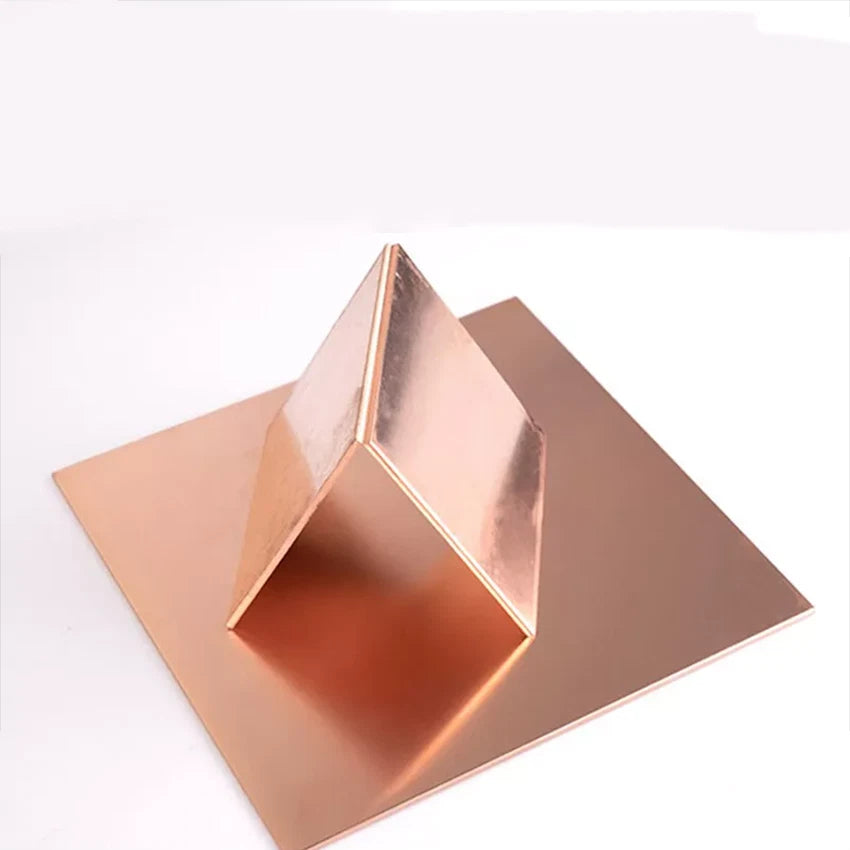
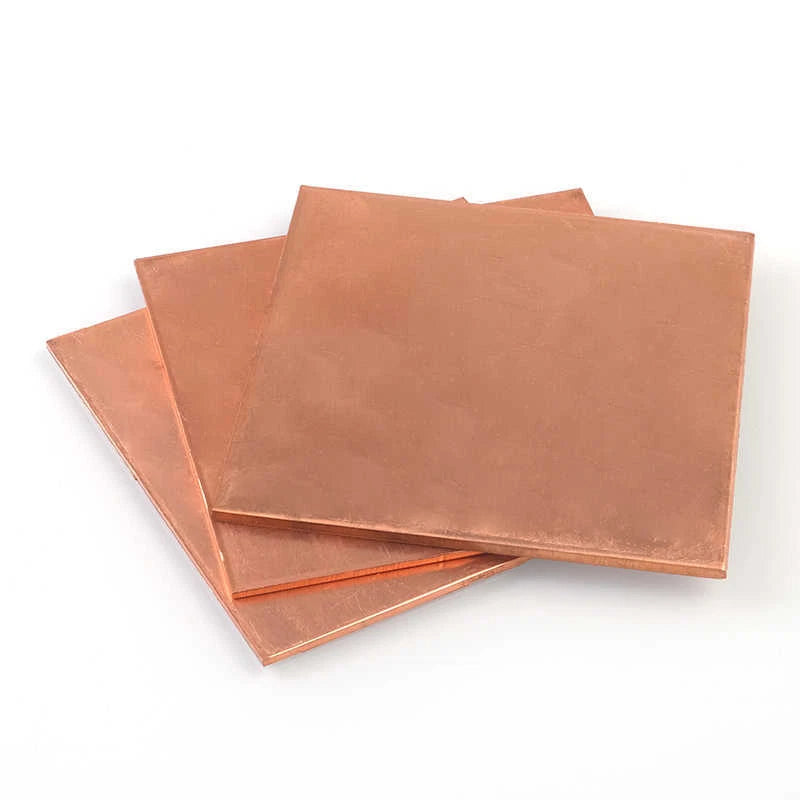
When your project demands reliable electrical conductivity or a material that solders cleanly and bends without cracking, standard hardware-store sheet metal falls short. Makers, electricians, jewelers, and repair technicians who need a consistent, traceable copper alloy turn to T2-grade copper sheet — the same specification used in bus bars, transformer windings, and precision craft work.
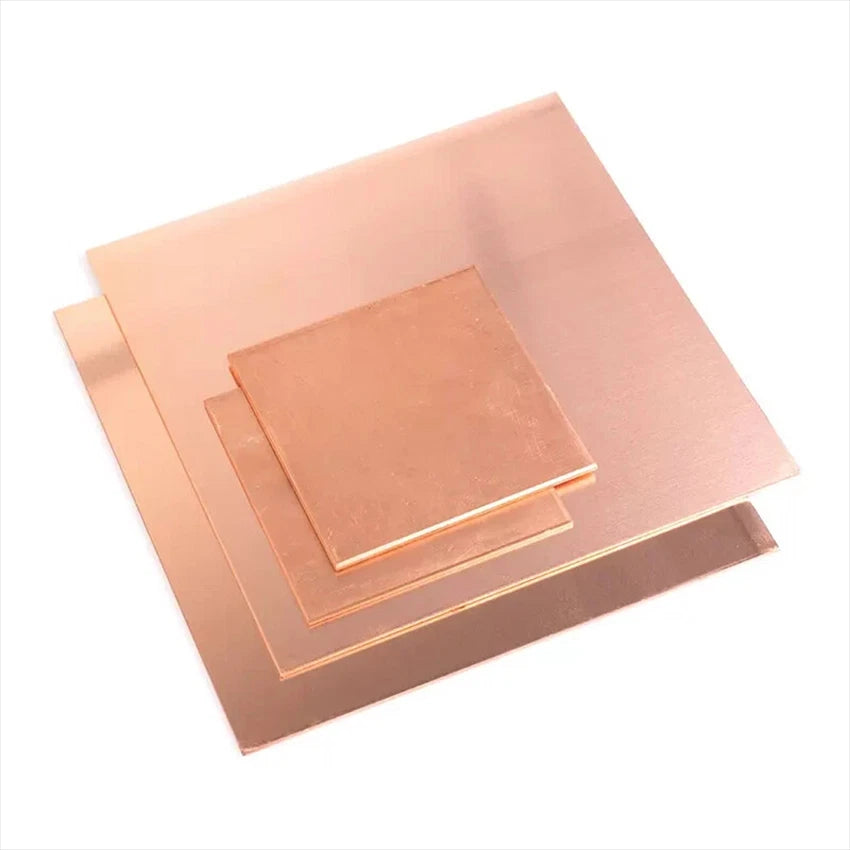
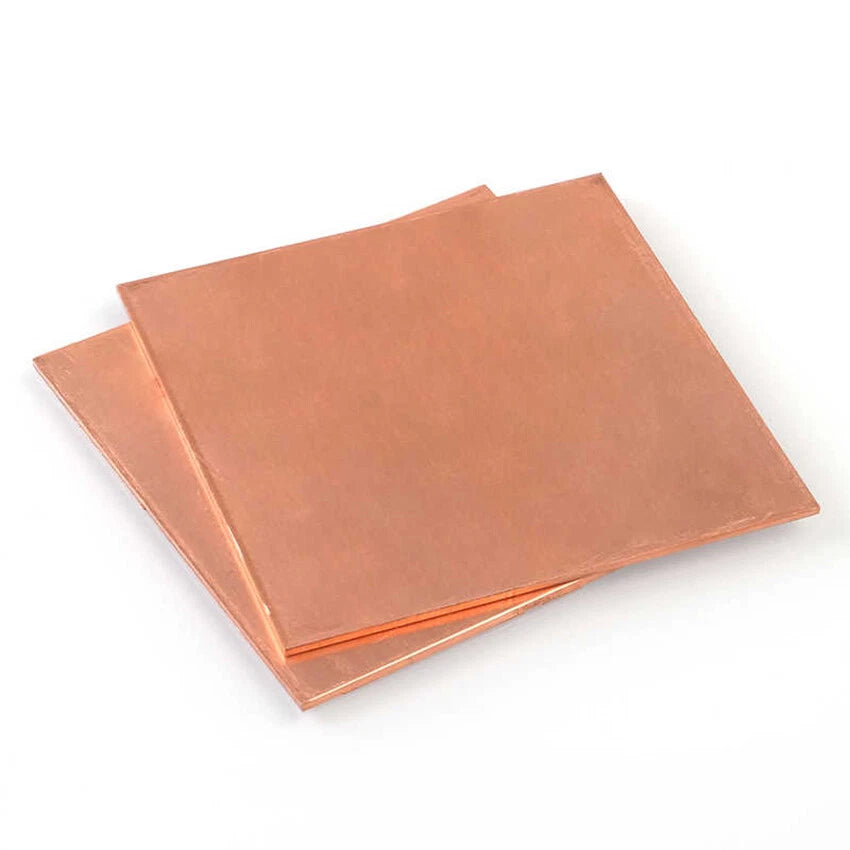
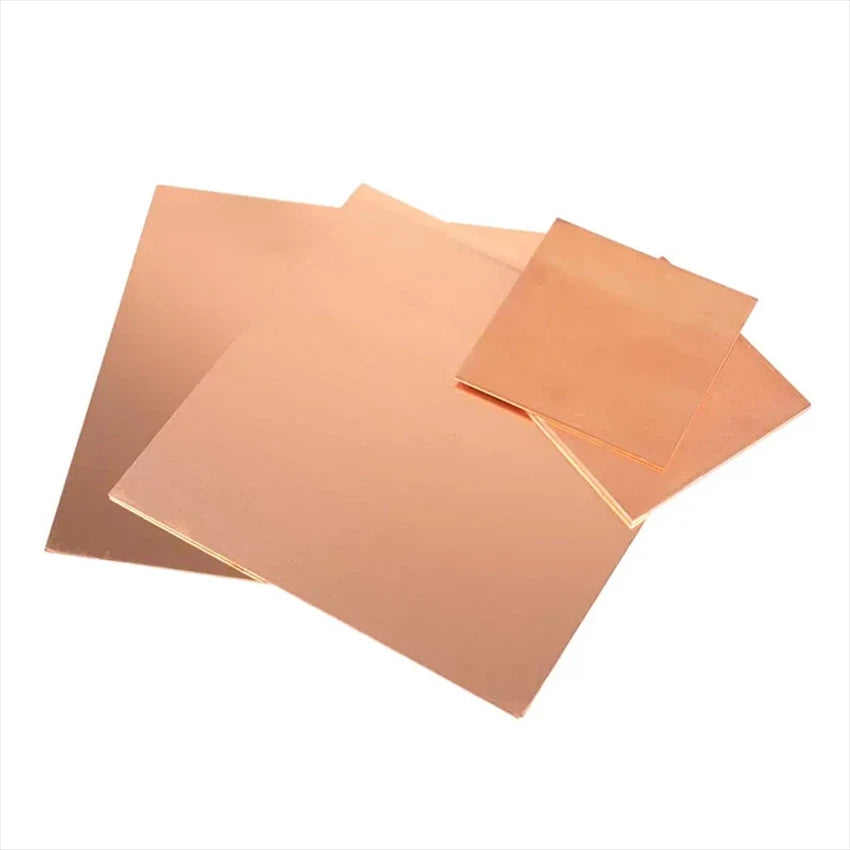
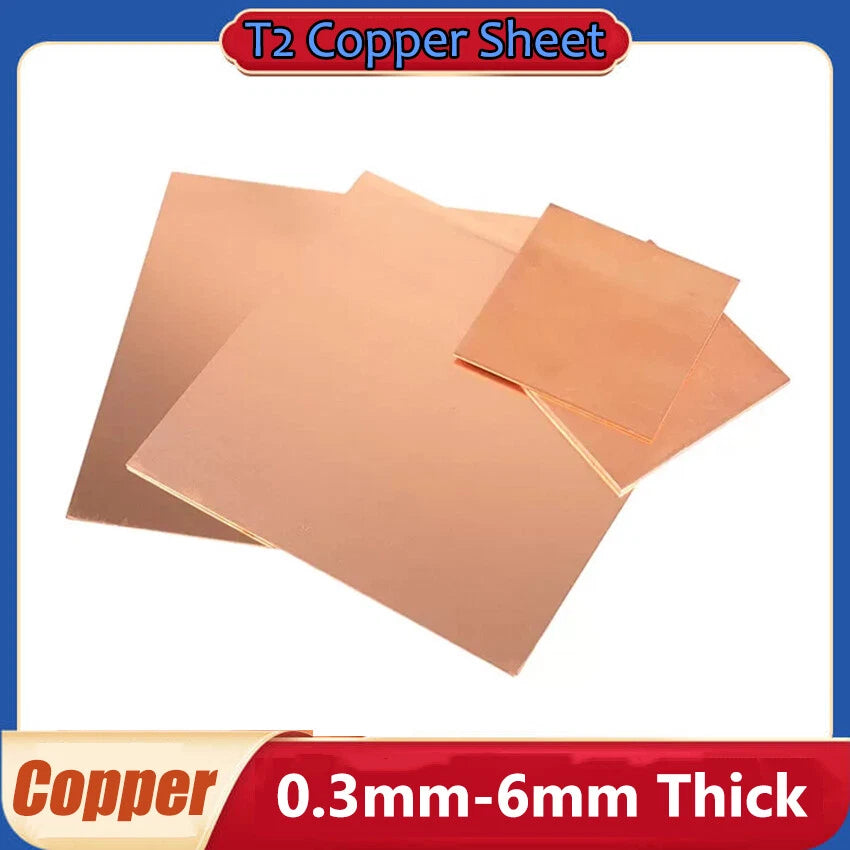
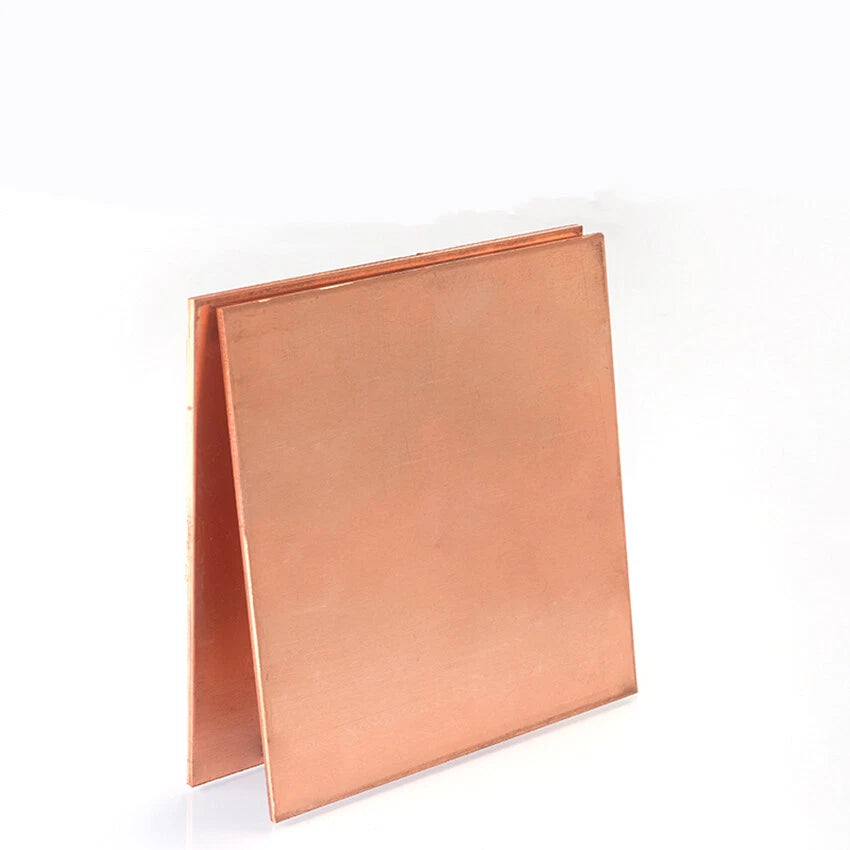
This copper sheet is T2-grade (99.9% purity), available in thicknesses from 0.3 mm to 6 mm (approximately 0.012 in to 0.236 in) and widths/lengths ranging from 10 mm × 10 mm up to 300 mm × 600 mm (approximately 0.39 in × 0.39 in up to 11.8 in × 23.6 in). Each piece is flat-rolled and cut to the selected dimension, with a smooth mill finish on both faces.
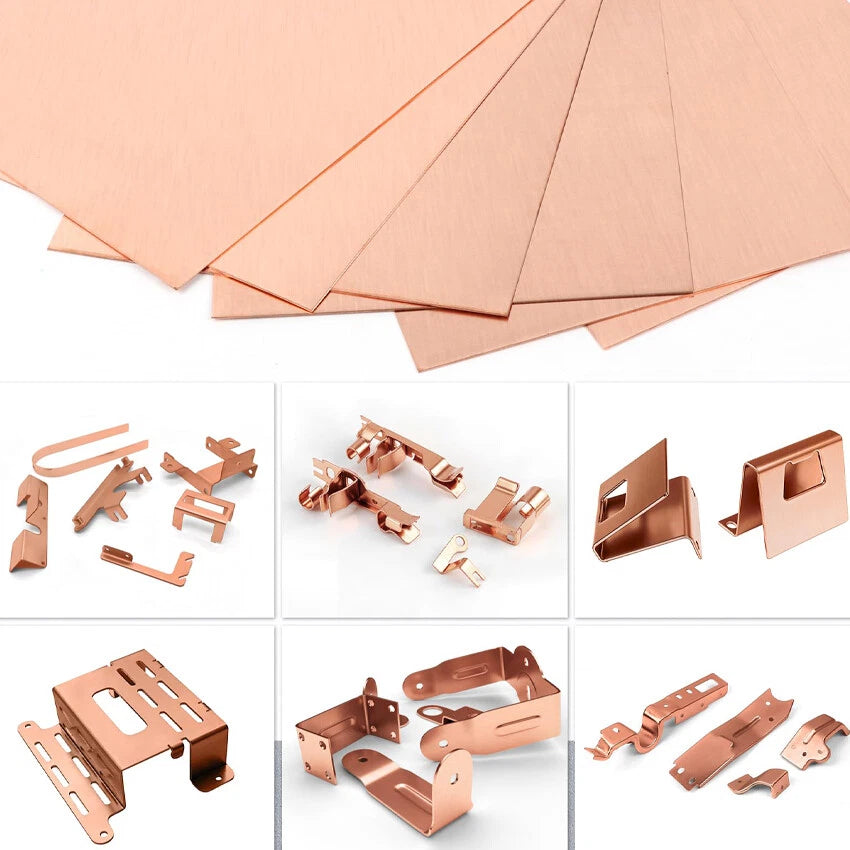
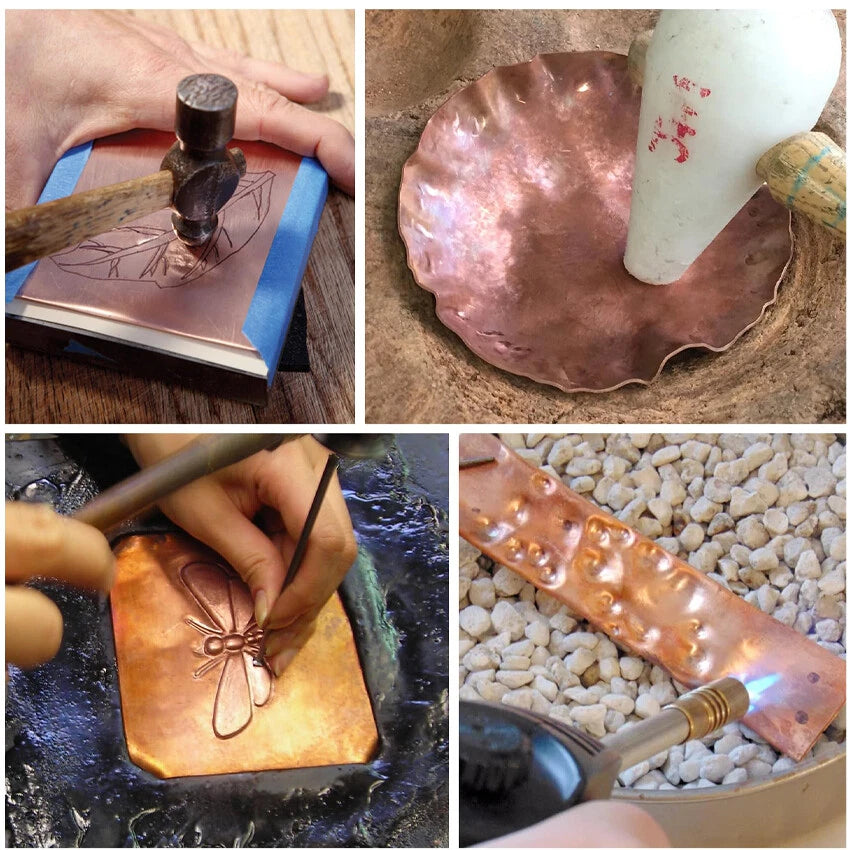
Typical use cases include custom copper bus bar fabrication for electrical panels, shielding blanks for RF enclosures, heat-spreader inserts in DIY electronics cooling builds, and decorative metalwork such as etched pendants or embossed panels. The consistent purity also makes it a reliable choice for copper-to-copper or copper-to-brass brazing and silver-soldering repairs.
T2 copper meets the high-conductivity standard required for electrical contacts, bus bars, and precision craft applications where alloy contamination would degrade performance.
Choose from ultra-thin 0.3 mm foil-weight sheet up to robust 6 mm plate, with widths and lengths from 10 mm square up to 300 mm × 600 mm, covering most bench-scale and panel-scale needs.
Each sheet is flat-rolled to consistent thickness tolerance, giving you a smooth, oxide-free starting surface that accepts flux and solder without pre-cleaning in most workshop conditions.
T2 copper's ductility allows bending, shearing, and drilling with standard workshop tools. Thin gauges (0.3–1 mm) can be cut with heavy-duty scissors or a craft knife; thicker gauges respond well to a hacksaw or angle grinder.
Copper naturally forms a protective patina that slows further oxidation in ambient air. For indoor electrical and decorative applications, no additional coating is required under normal conditions.
Available in 1, 2, or 4-piece packs depending on the selected size, so you can order exactly what your project requires without excess offcuts.
| Material | T2 Copper (99.9% purity) |
|---|---|
| Alloy Grade | T2 (equivalent to C11000 / ETP Copper) |
| Thickness Range | 0.3 mm – 6 mm (0.012 in – 0.236 in) |
| Width Range | 10 mm – 500 mm (0.39 in – 19.7 in) |
| Length Range | 10 mm – 600 mm (0.39 in – 23.6 in) |
| Surface Finish | Flat-rolled, smooth mill finish |
| Electrical Conductivity | ≥ 99% IACS (typical for T2/C11000) |
| Thermal Conductivity | Approx. 385–400 W/(m·K) (typical for T2) |
| Hardness | See variant options |
| Temper | See variant options |
| Quantity per Pack | 1, 2, or 4 pieces (varies by size — see variant options) |
| Weight per Piece | See variant options |
For electrical shielding, grounding straps, or flexible bus connections, 0.3–0.8 mm is typically sufficient. For rigid bus bars or heat spreaders that need structural integrity, 1–3 mm is more common. For heavy-duty mechanical or thermal applications, 4–6 mm provides the mass and rigidity needed. When in doubt, start with a mid-range thickness (1–2 mm) and test fit before committing to a larger order.
Yes. T2-grade copper (99.9% purity) is the standard material for bus bars in electrical panels and distribution boards. Its electrical conductivity of ≥ 99% IACS ensures minimal resistive losses. For bus bar use, select a thickness of 2 mm or above and ensure your bending radius is at least 1× the sheet thickness to avoid cracking.
Yes. T2 copper solders and brazes readily with standard rosin-core or acid-core flux and common silver-solder or tin-lead alloys. Clean the surface with fine abrasive paper or flux before soldering for best adhesion. The high purity means no unexpected alloy reactions that can cause dewetting or porosity.
Copper does not rust (rust is iron oxide). It will develop a natural patina — first darkening to brown, then potentially turning green (verdigris) in humid or outdoor environments. For indoor electrical and decorative applications, this patina is stable and actually protective. If you need a bright finish long-term, apply a clear lacquer or wax after cleaning.
Thin gauges (0.3–1 mm) can be cut with heavy-duty metal shears, a craft knife and straight edge, or a rotary tool with a cutting disc. Thicker gauges (1.5–6 mm) are best cut with a hacksaw, jigsaw with a metal blade, or angle grinder with a thin cutting disc. Always wear eye protection and gloves when cutting metal sheet.
Use the "Thickness × Width × Length" dropdown to select your required dimensions. Thickness is listed first (e.g., 1 mm), followed by width and length (e.g., 100 mm × 200 mm). The quantity per pack (1, 2, or 4 pieces) is shown in the second dropdown and varies by size. If you need a size not listed, contact us to confirm availability of custom cuts.
Yes. T2 copper's high purity and smooth mill finish make it well-suited for etching, stamping, embossing, and forming into jewelry components, decorative panels, or art pieces. Thin gauges (0.3–0.8 mm) are particularly popular for pendant blanks and textured sheet work. The material accepts liver of sulfur and other patination chemicals predictably due to its consistent purity.