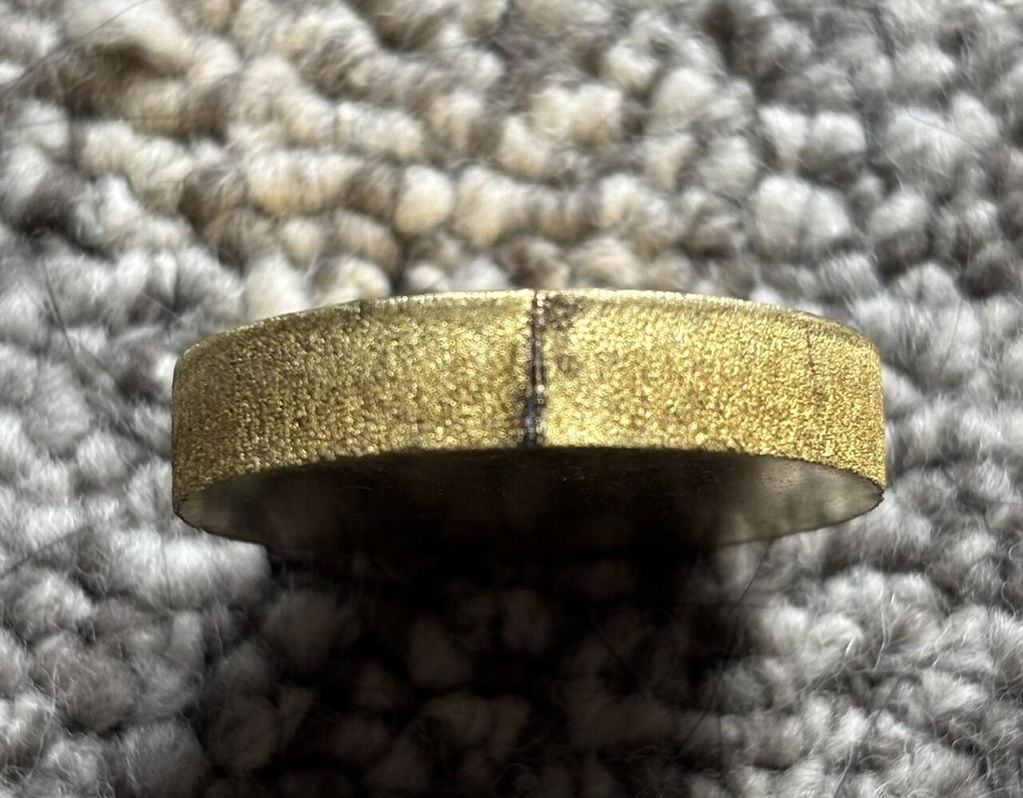
The chain is fine...but I ordered the wrong size. Nine links of the chain I ordered equals six of the size I wanted. My error...
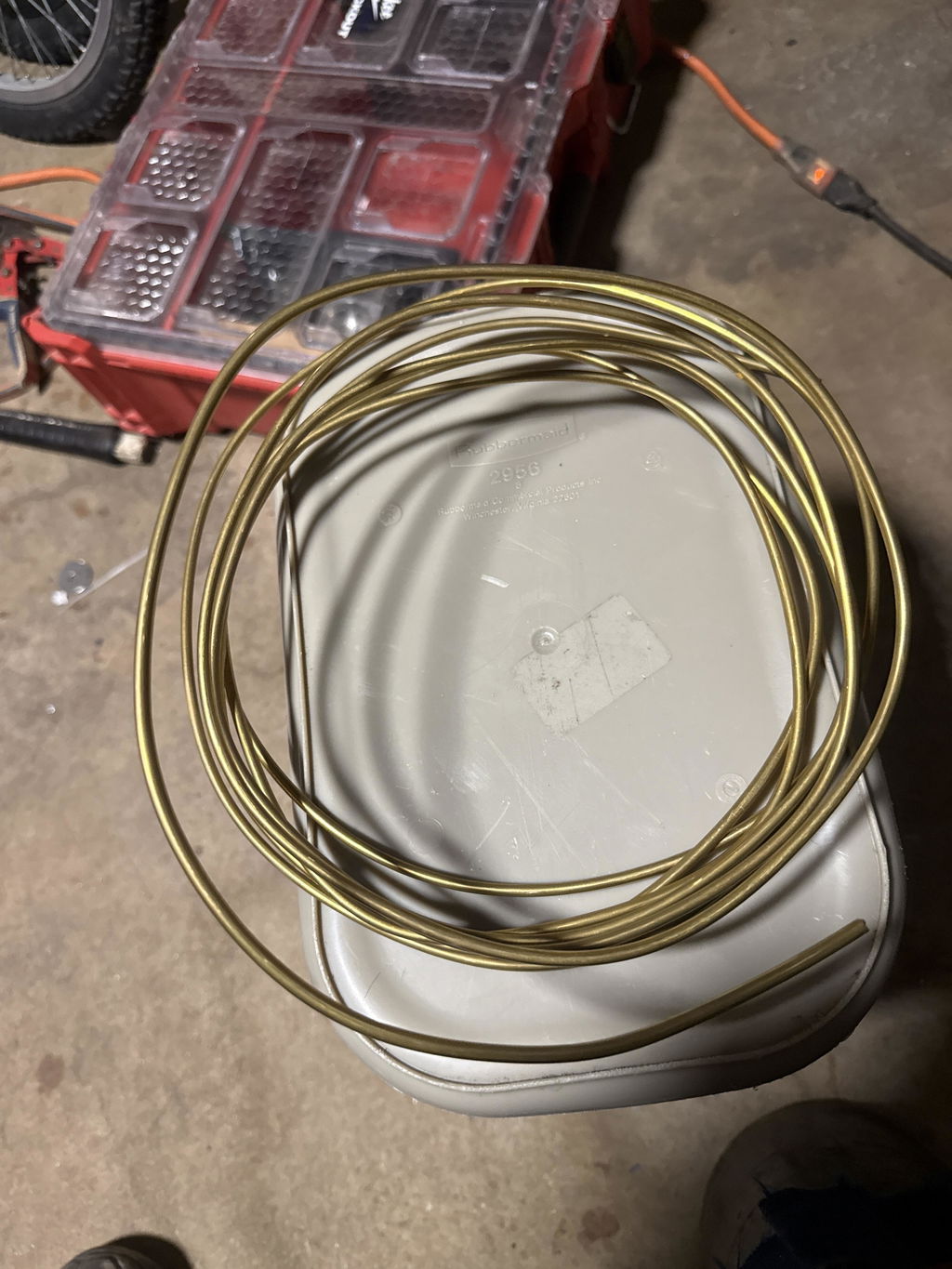
How can I straighten out the springs? I can't use them coil uo as is.
Your payment information is processed securely. We do not store credit card details nor have access to your credit card information.
Get fitment advice & recommendations
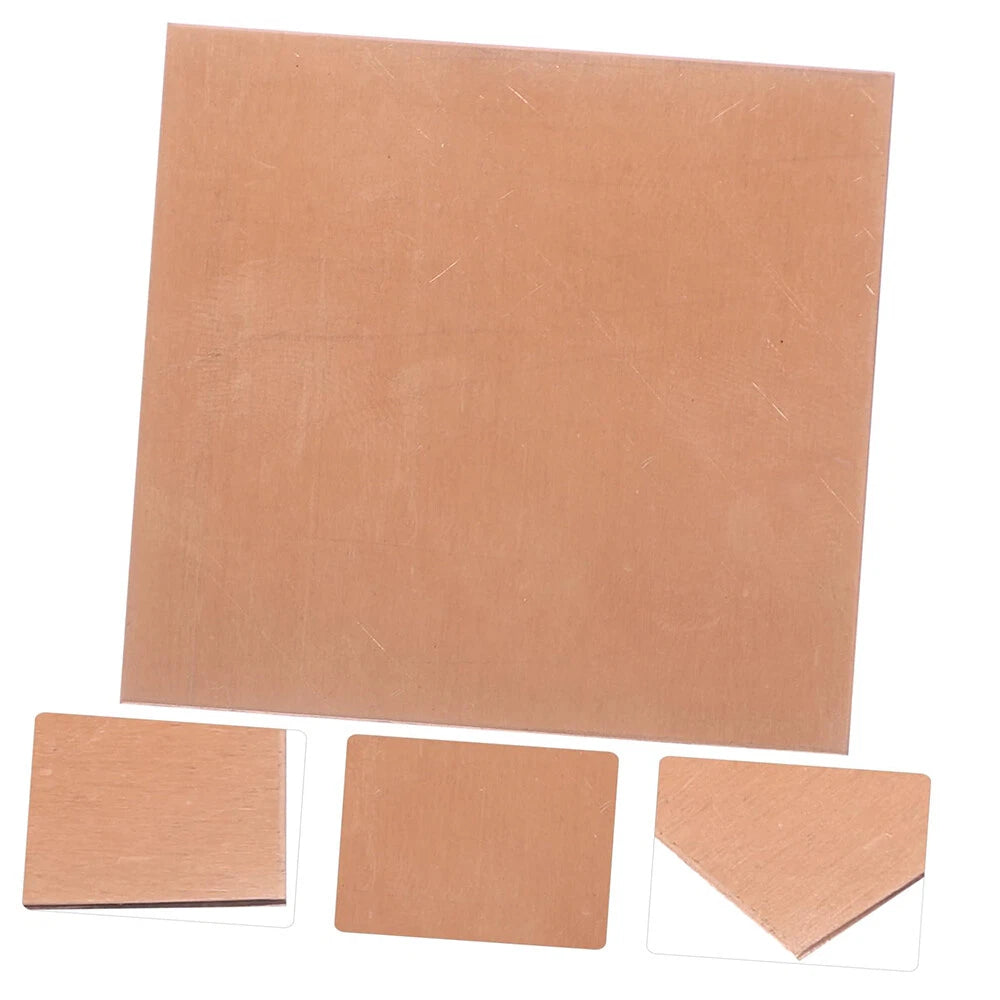
When your project demands reliable conductivity and dimensional accuracy, generic metal sheets fall short. Whether you are a maker building custom bus bars, an electronics hobbyist fabricating shielding panels, or a craftsperson cutting intricate copper inlays, you need a flat stock that holds tight tolerances and machines cleanly without delaminating or warping.
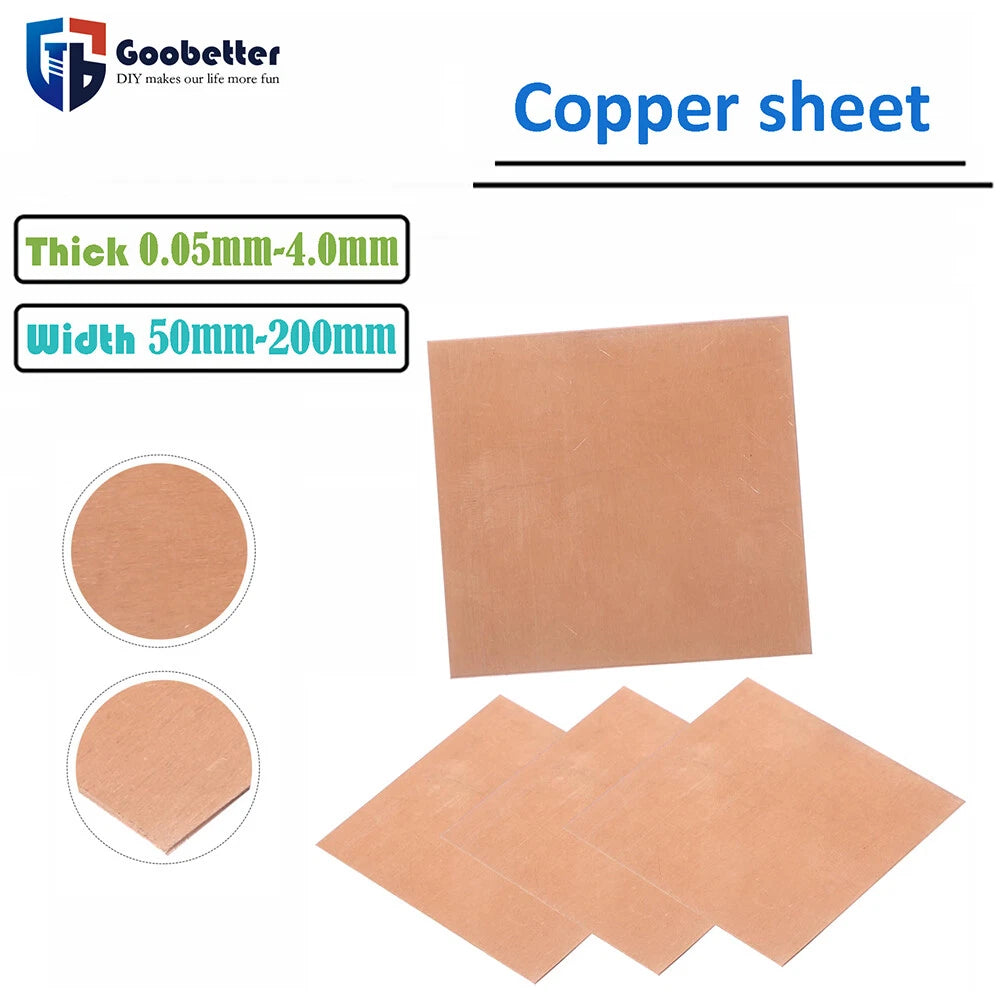
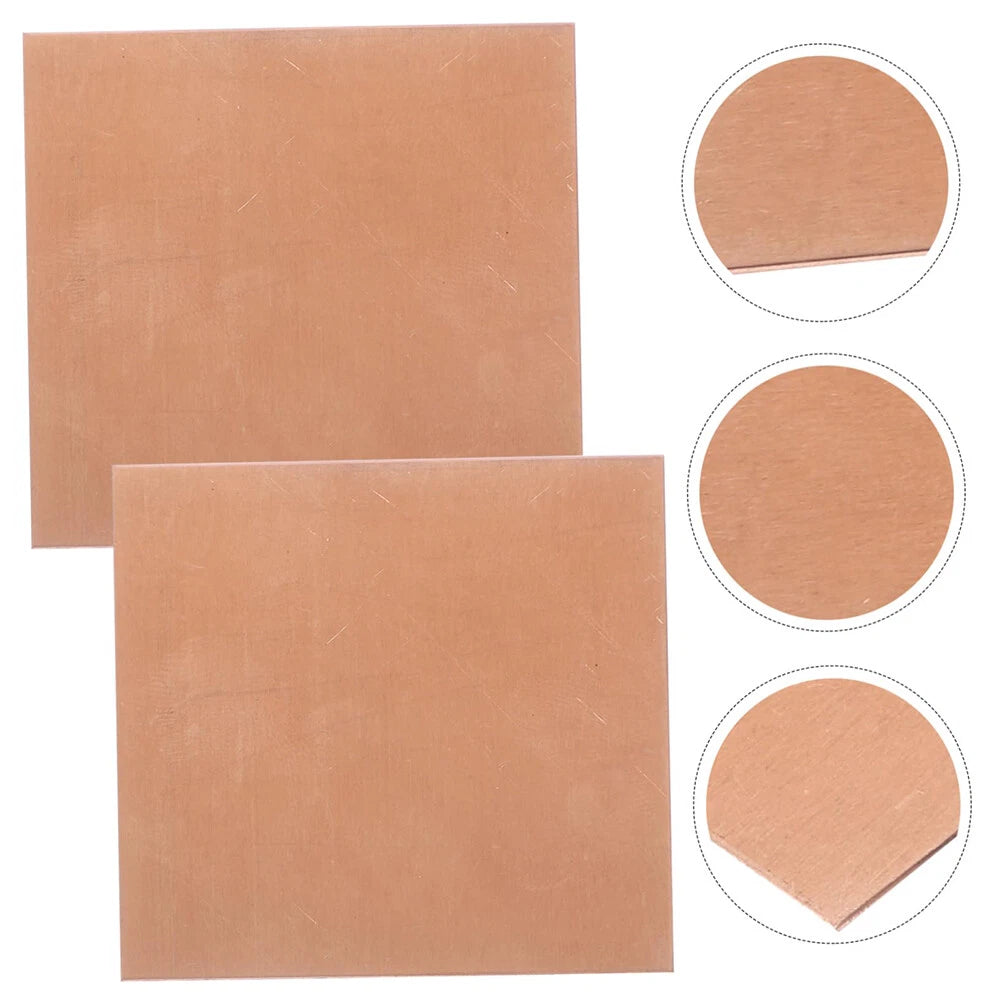
These T2 pure copper plate sheets are composed of 99.9%+ electrolytic copper (T2 / C11000 grade), laser-cut to flat, burr-minimized blanks. Thickness options span 0.05 mm to 4.0 mm (approximately 0.002 in to 0.157 in), and sheet sizes range from 50×50 mm up to 200×200 mm (approximately 1.97×1.97 in to 7.87×7.87 in). Each variant is sold in packs of 1, 2, or 4 pieces depending on the size selected.
Typical applications include DIY electrical bus bars and grounding straps, RF shielding and Faraday enclosure panels, copper inlay woodworking and resin art, heat-spreader shims for electronics repair, and gasket or shim stock for mechanical assemblies requiring a soft, conformable metal layer.
99.9%+ copper purity delivers outstanding electrical conductivity (typically ≥58 MS/m) and thermal conductivity, making these sheets ideal for bus bars, grounding, and heat-spreading applications.
Thirteen thickness steps from 0.05 mm to 4.0 mm paired with three sheet sizes (50×50, 100×100, 200×200 mm) let you select exactly the stock you need without over-buying or machining down thicker plate.
Each piece is laser-cut for consistent dimensions and minimized burrs, reducing bench prep time and giving you a clean starting surface for further machining, etching, or forming.
Copper forms a stable oxide patina that slows further corrosion in most indoor and light outdoor environments, extending service life in electrical enclosures, decorative panels, and shim applications.
T2 copper is soft and ductile, allowing cold-bending, stamping, and hand-cutting with tin snips on thinner gauges. Thicker variants (2.0–4.0 mm) are well-suited for milling and turning on standard hobby CNC equipment.
Available in 1 pc, 2 pcs, or 4 pcs per order depending on the variant, so you can stock up for batch projects or order a single piece for prototyping without paying for excess material.
| Material | T2 Electrolytic Pure Copper (C11000 equivalent, ≥99.9% Cu) |
|---|---|
| Thickness Range | 0.05 mm – 4.0 mm (0.002 in – 0.157 in) |
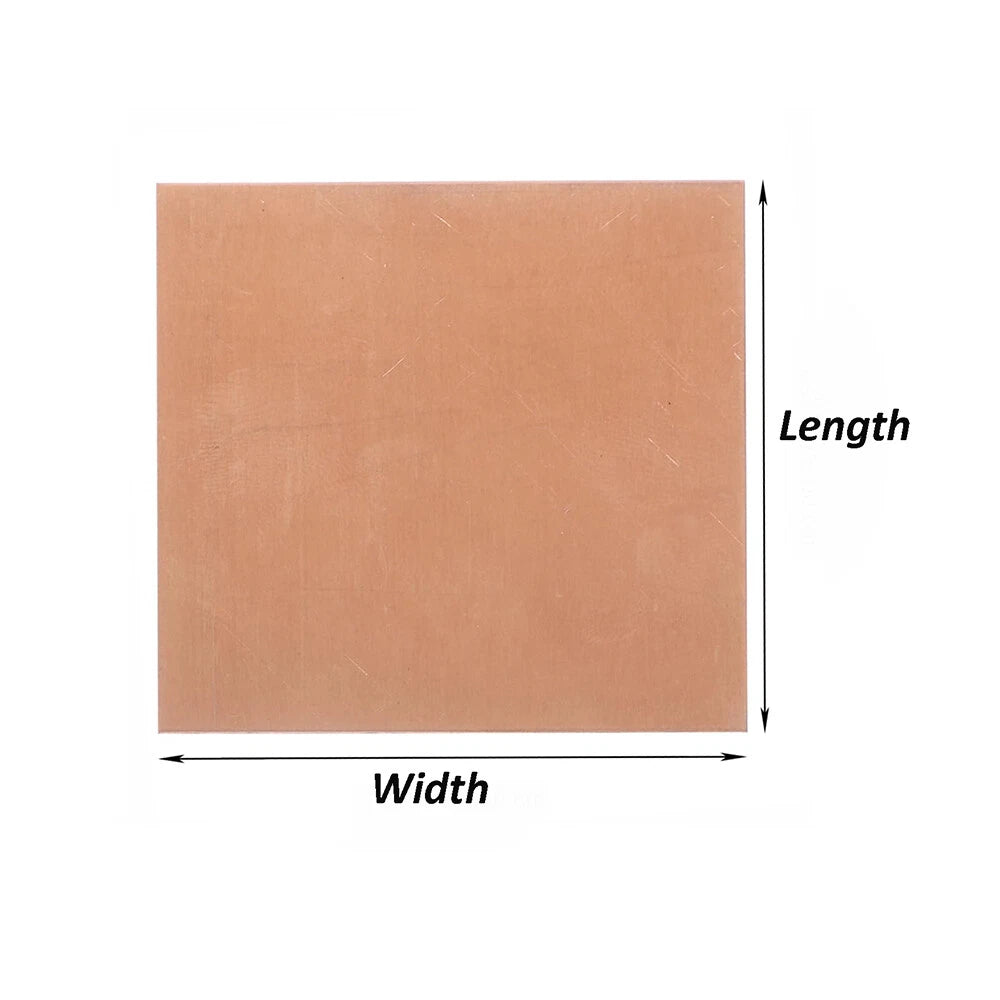
| Sheet Width | 50 mm / 100 mm / 200 mm (1.97 in / 3.94 in / 7.87 in) |
| Sheet Length | 50 mm / 100 mm / 200 mm (1.97 in / 3.94 in / 7.87 in) |
| Cutting Method | Laser cut |
| Surface Finish | Mill finish (bare copper, no coating) |
| Copper Purity | ≥99.9% |
| Electrical Conductivity | Typically ≥58 MS/m (100% IACS) |
| Hardness | Typically 40–65 HV (annealed to half-hard, varies by thickness) |
| Packing Quantity | See variant options (1 pcs / 2 pcs / 4 pcs) |
| Weight per Piece | See variant options |
For flexible shims, gaskets, or foil-style shielding, choose 0.05–0.3 mm. For general-purpose bus bars, grounding straps, and decorative inlays, 0.5–1.5 mm is the most versatile range. For structural brackets, heat spreaders requiring rigidity, or machined parts, select 2.0–4.0 mm. If you are unsure, 1.0 mm is a good all-around starting point for most DIY electrical and craft work.
Yes. T2 electrolytic copper (equivalent to C11000) has electrical conductivity of approximately 100% IACS, making it one of the most conductive commercially available copper grades. It is widely used for bus bars, grounding lugs, and conductive straps in electrical panels and battery systems.
Bare copper naturally oxidizes and develops a patina (darkening or greening) when exposed to air and moisture. This oxide layer is stable and actually slows further corrosion. For applications requiring a bright finish, apply a clear lacquer or wax after cleaning. For outdoor or high-humidity environments, consider a protective coating or periodic polishing.
Yes. T2 pure copper solders and brazes readily with standard rosin-core or acid-core solder and common silver brazing alloys. Clean the surface with isopropyl alcohol or fine abrasive before soldering to remove any oxide layer for best joint quality.
For small RF shields and PCB cans, the 50×50 mm or 100×100 mm sheets in 0.2–0.5 mm thickness are typically sufficient and easy to cut and fold. For larger enclosures or Faraday cage panels, the 200×200 mm sheets provide more coverage per piece. You can also order multiple pieces and overlap or solder them together for larger areas.
Thinner sheets (0.05–0.5 mm) can be cut with sharp scissors, tin snips, or a craft knife and straight edge. Sheets from 0.8–2.0 mm can be cut with aviation snips or a jigsaw with a metal-cutting blade. For 2.5–4.0 mm thickness, a bandsaw, angle grinder with a cutting disc, or CNC mill is recommended for clean, accurate cuts.
The sheets are laser-cut and supplied in a mill-flat condition. Thinner gauges (below 0.3 mm) may have minor curl from handling or packaging; these can be flattened by placing them under a flat weight for a short period or by lightly rolling them on a flat surface. Thicker sheets (0.5 mm and above) are generally flat and ready to use directly.