The chain is fine...but I ordered the wrong size. Nine links of the chain I ordered equals six of the size I wanted. My error...
How can I straighten out the springs? I can't use them coil uo as is.
Your payment information is processed securely. We do not store credit card details nor have access to your credit card information.
Get fitment advice & recommendations
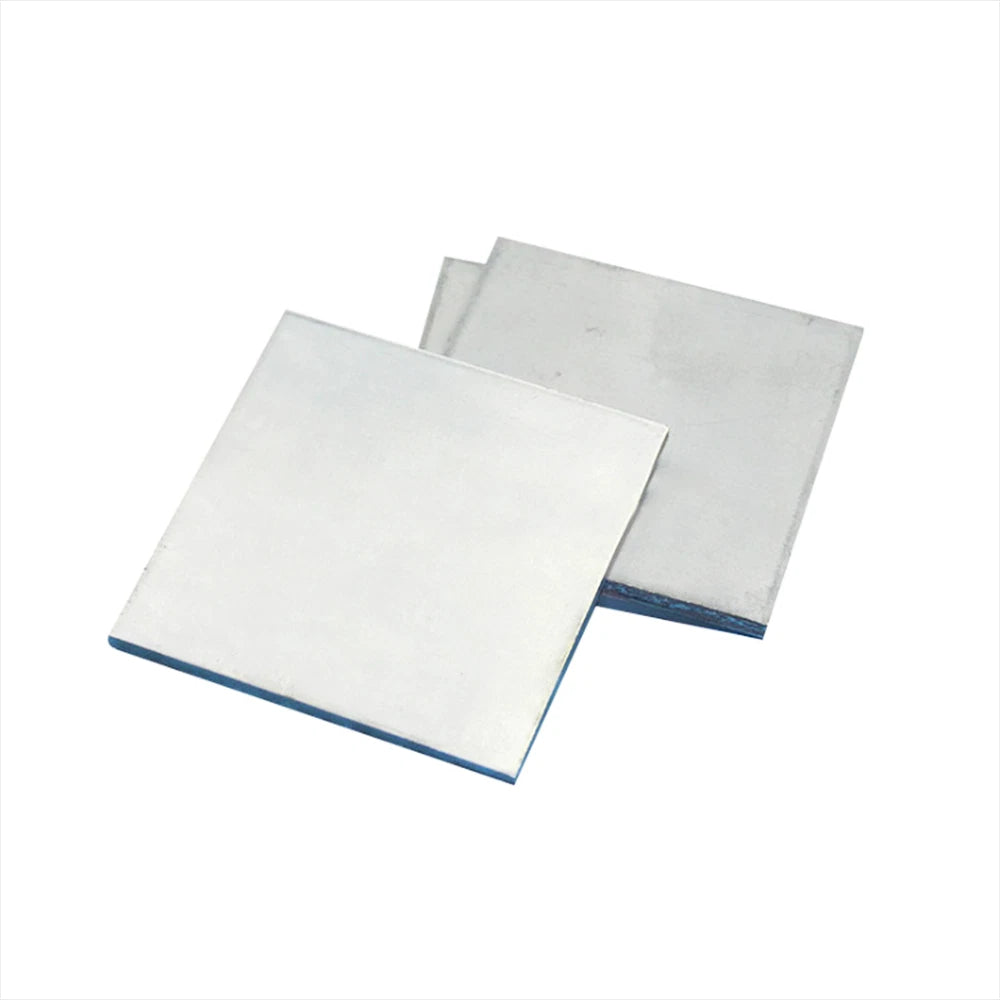
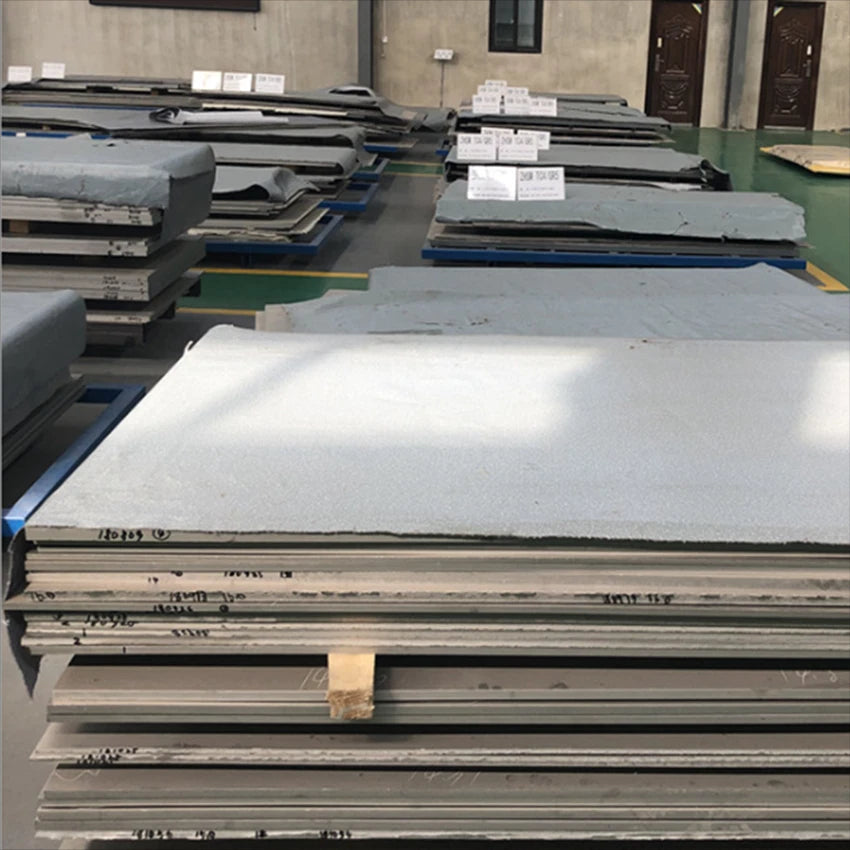
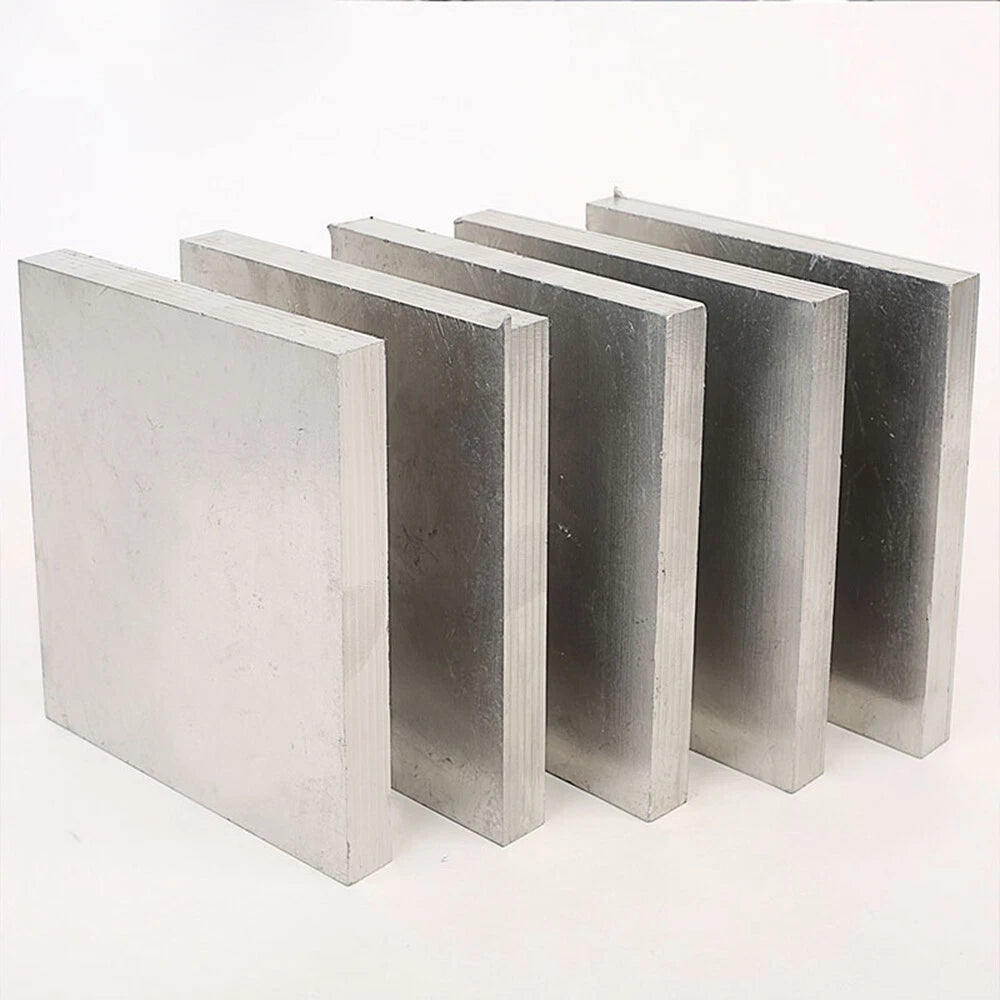
When your project demands a material that won't corrode, won't flex under load, and won't add unnecessary mass, standard steel or aluminum sheets fall short. Makers, hobbyists, RC builders, and light-engineering professionals who need a reliable titanium flat stock will find these TC4 square plates a direct solution — available in multiple thicknesses and two sheet sizes to match your exact cut list.
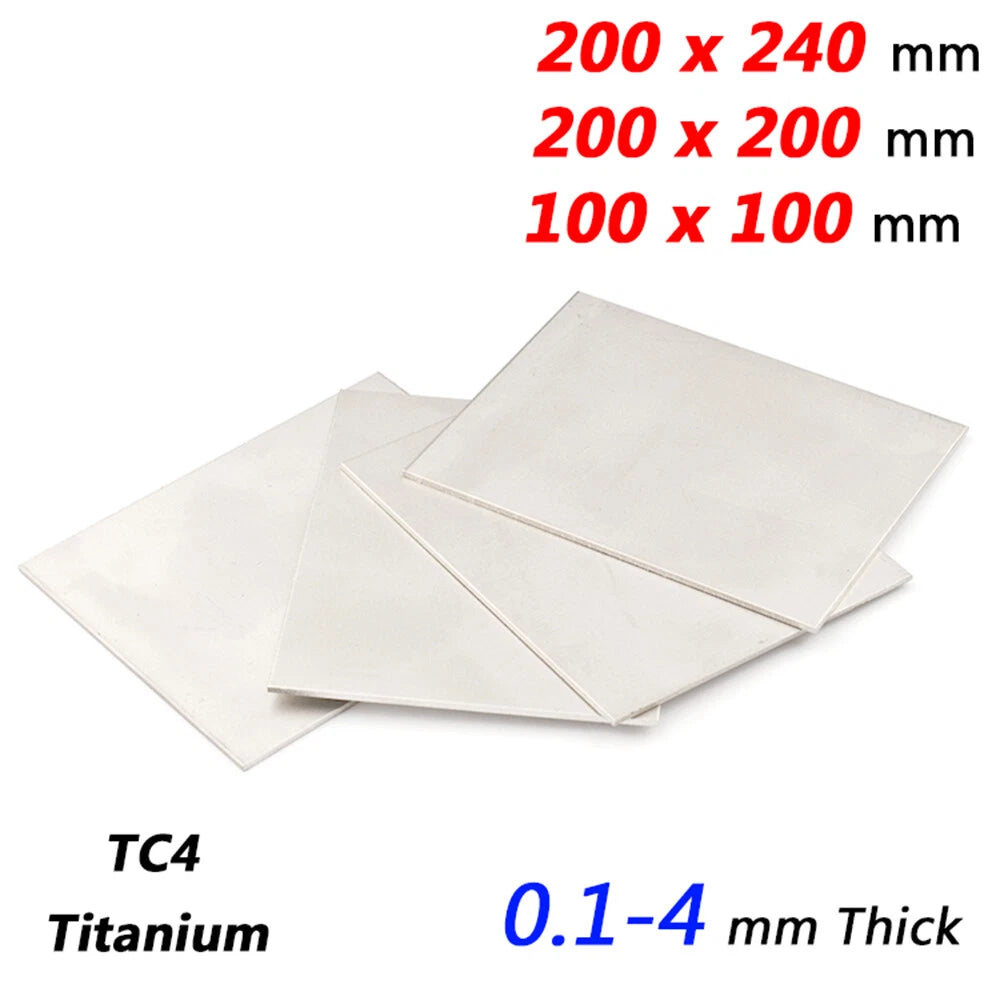
Each plate is cut from Ti-6Al-4V (Grade 5) titanium alloy — the most widely used titanium alloy, combining roughly 6% aluminum and 4% vanadium for a balanced profile of strength and workability. Sheet thickness ranges from 0.8 mm to 4.0 mm (approximately 0.031" to 0.157"), and sheet dimensions are available in 100 × 100 mm (~3.94" × 3.94") and 200 × 200 mm (~7.87" × 7.87"). Edges are machine-cut; surfaces carry a mill finish typical of aerospace-grade titanium stock.
Typical use cases include: custom RC frame plates and drone chassis requiring a low-weight structural panel; knife-making and blade blanks where corrosion resistance and hardness matter; heat-shield inserts and exhaust brackets in motorsport or motorcycle builds; and small-batch prototyping for medical device or aerospace component mockups where Ti-6Al-4V material certification is required.
| Material | Ti-6Al-4V (TC4, Grade 5) Titanium Alloy |
|---|---|
| Alloy Composition | ~90% Ti, ~6% Al, ~4% V |
| Sheet Shape | Square |
| Available Sizes | 100 × 100 mm / 200 × 200 mm |
| Thickness Range | 0.8 mm / 1.0 mm / 1.2 mm / 1.5 mm / 2.0 mm / 2.5 mm / 3.0 mm / 3.5 mm / 4.0 mm |
| Surface Finish | Mill finish (as-rolled) |
| Density | ~4.43 g/cm³ |
| Tensile Strength | ~900–950 MPa (typical for Ti-6Al-4V annealed) |
| Yield Strength | ~830 MPa (typical) |
| Hardness | ~36 HRC (typical) |
| Corrosion Resistance | Excellent — self-passivating oxide layer |
| Quantity per Order | See variant options |
| Weight per Piece | See variant options |
For lightweight structural panels, drone frames, or thin heat shields, 0.8–1.2 mm is typically sufficient. For load-bearing brackets, knife blanks, or parts that will be machined down, 1.5–2.5 mm offers a good balance of rigidity and machinability. Thicknesses of 3.0–4.0 mm are suited to heavy-duty structural inserts or applications where significant material removal is planned. When in doubt, select one step thicker than your minimum requirement to allow for surface finishing.
Yes. Ti-6Al-4V, TC4, and Grade 5 titanium all refer to the same alloy — the most widely used titanium alloy globally. It contains approximately 6% aluminum and 4% vanadium by weight, which gives it a significantly higher strength than commercially pure (CP) titanium grades (Grade 1–4) while remaining weldable and machinable with appropriate tooling.
Ti-6Al-4V can be cut with carbide-tipped tooling, waterjet, or fiber laser. It work-hardens quickly, so slow feed rates, sharp carbide end mills, and adequate coolant are important for CNC milling. Hand cutting with a hacksaw fitted with a bi-metal blade is possible for thinner gauges (0.8–1.5 mm) but requires patience. Avoid high-speed steel (HSS) tooling for anything above 1.0 mm thickness.
Ti-6Al-4V has excellent corrosion resistance in saltwater, marine atmospheres, and most mild acid environments. The alloy forms a stable, self-repairing titanium oxide (TiO₂) passive layer on its surface when exposed to air or water. No additional coating, anodizing, or plating is required for corrosion protection in typical outdoor or marine DIY applications.
The 100 × 100 mm plates are suited to small components: brackets, inserts, test coupons, knife scales, or RC frame tabs. The 200 × 200 mm plates cover larger panels such as drone top/bottom plates, heat shields, or structural frame sections. If your finished part dimensions are close to 100 × 100 mm, choose the 200 × 200 mm size to allow for cutting margin and fixturing.
If you need a single prototype or test piece, the 1 Pcs option is the most economical entry point. For projects requiring matched pairs (e.g., symmetric frame plates) or batch production of small parts, the 2, 3, or 4 Pcs packs offer a lower per-unit cost. Multi-packs also ensure all pieces come from the same production batch, which is useful when consistent material properties across parts are important.
Ti-6Al-4V is used in knife making, particularly for handles, liners, and bolsters rather than cutting edges — its hardness (~36 HRC) is lower than dedicated blade steels. For blade blanks where edge retention is critical, a dedicated blade steel is more appropriate. However, for titanium-handled knives, frame-lock folders, or corrosion-resistant utility blades where sharpness requirements are moderate, TC4 sheet is a practical and widely used choice.