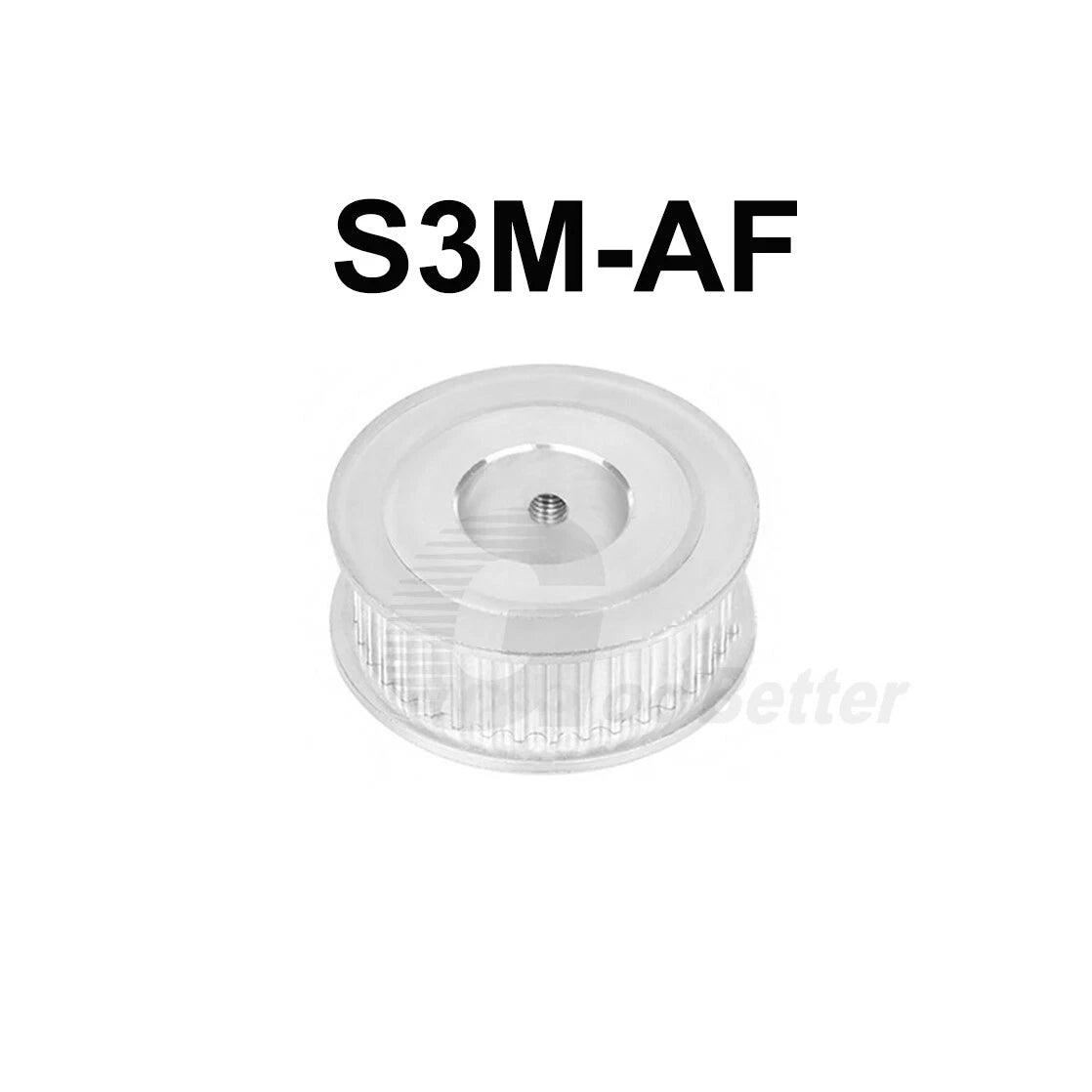
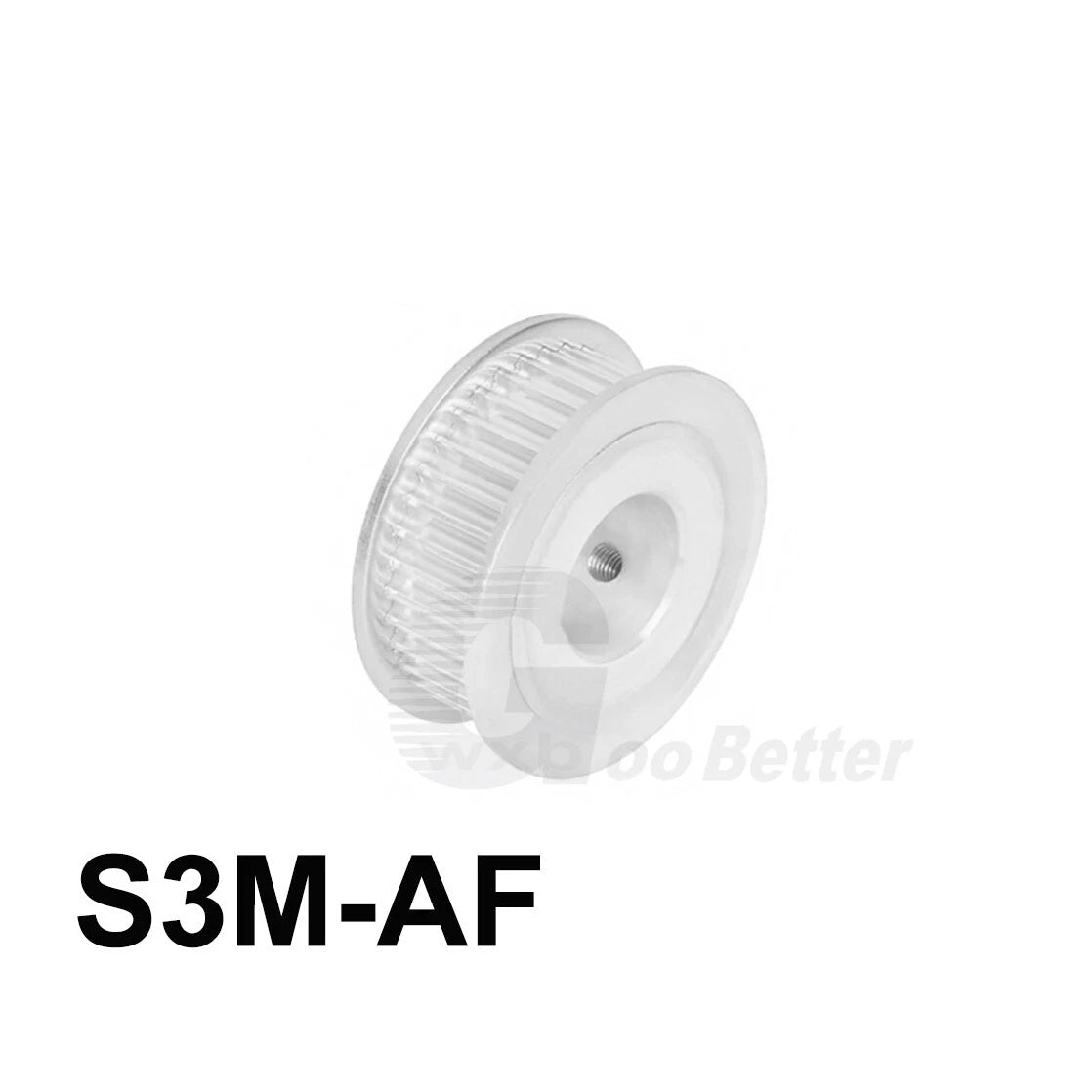
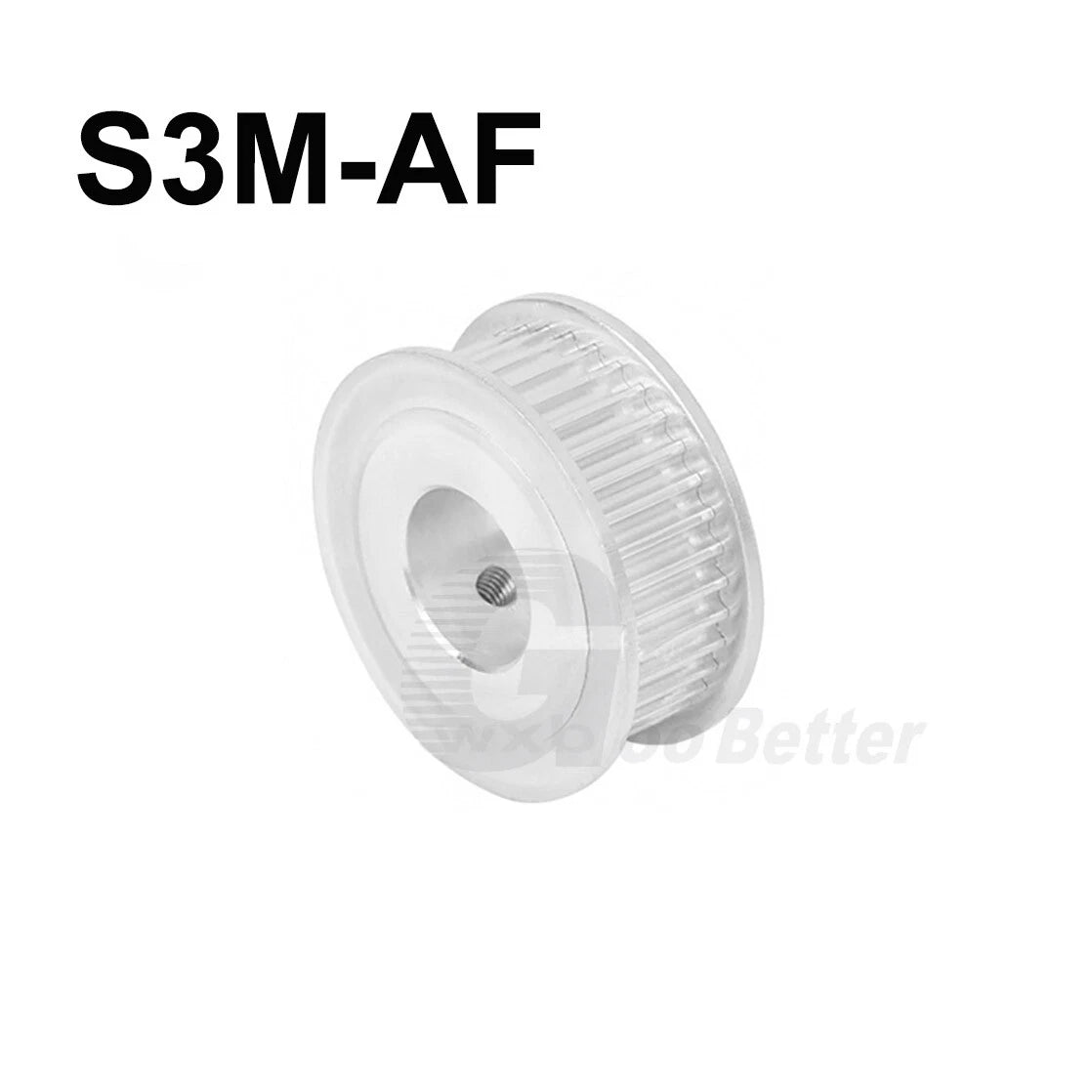
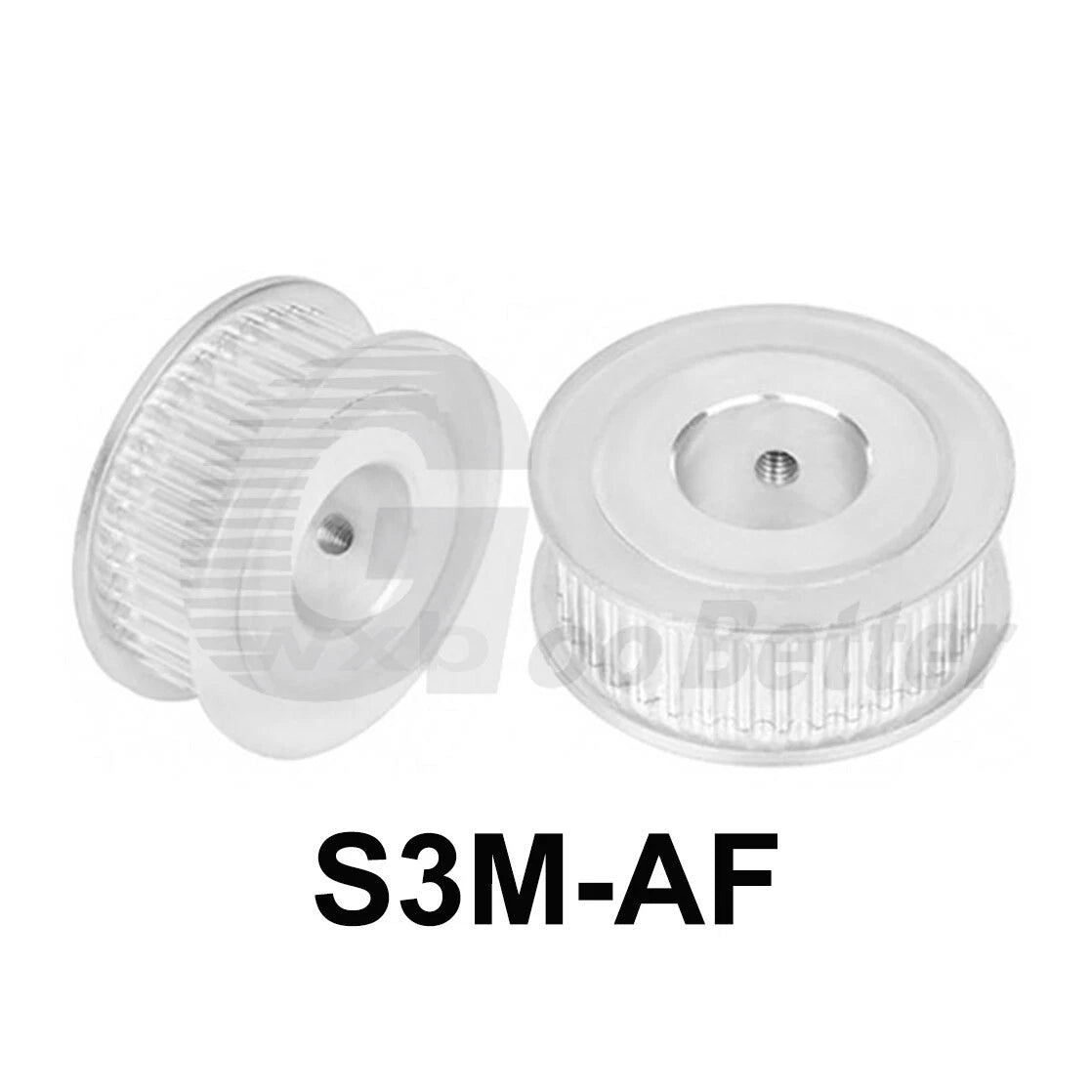
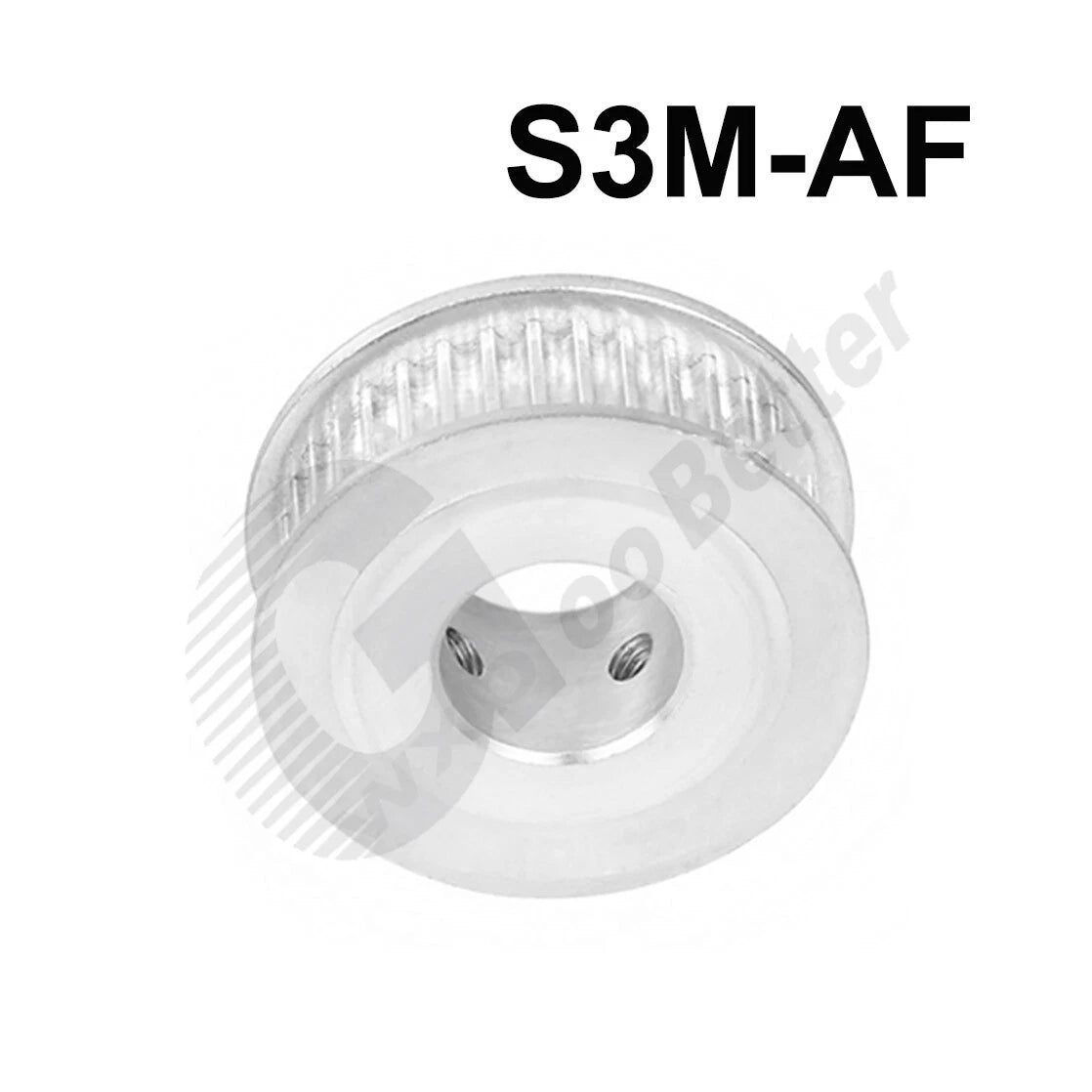
Timing Pulley S3M 15T~28T for 10mm Belt Aluminum AF Shape Timing Pulley ID=4~15

No reviews

Price:
Sale price$7.33 USD
Stock:
In stock (500 units), ready to be shipped

Payment & Security

Ach Direct Debit Amazon American Express Apple Pay Bancontact BLIK Diners Club Discover EPS Google Pay iDEAL Wero JCB Maestro Mastercard Multibanco MobilePay PayPal Przelewy24 Shop Pay Twint Union Pay USDC Visa

Your payment information is processed securely. We do not store credit card details nor have access to your credit card information.

Limited Offer — Spend More, Save More
Spend $55+
Save $5
Spend $100+
Save $10
Spend $200+
Save $25
HomeDIYer DIY Expert Support

DIY Expert Support

Get fitment advice & recommendations

Mon–Fri  8:30 AM – 8:00 PM
24-Hour Fast Ship
Arrives in 3–14 Days
Worldwide Shipping
30-Day Returns
1 tree planted with every purchase

Description

S3M Aluminum Timing Pulley 15T–28T — Precise, Lightweight Drive for DIY Automation

When your CNC router, 3D printer, or custom automation rig demands slip-free synchronous motion, a mismatched or undersized pulley becomes the weakest link in the entire drive train. Makers, hobbyists, and small-workshop engineers who need a reliable S3M timing pulley with a wide tooth-count selection will find this series covers the most common configurations in a single listing.

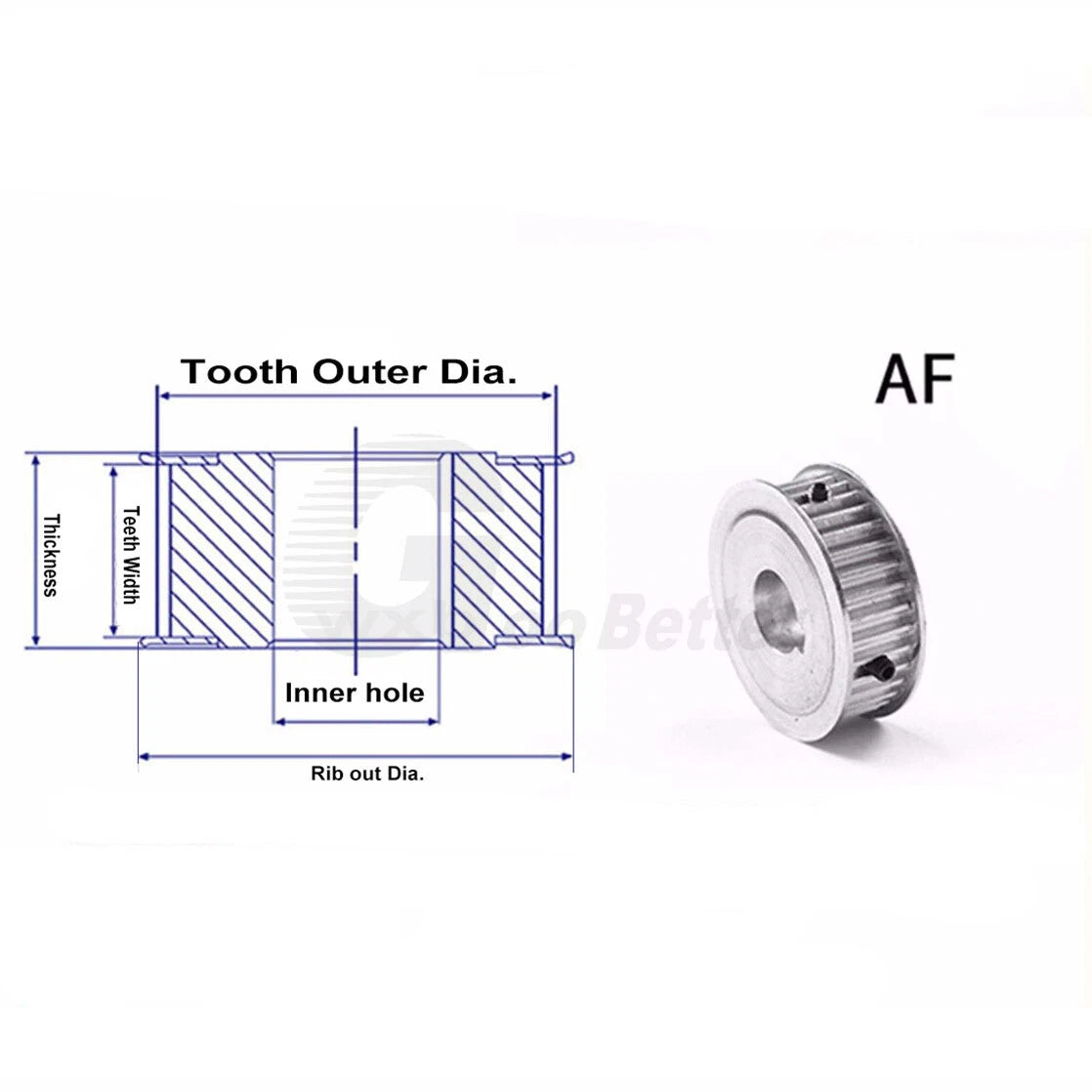
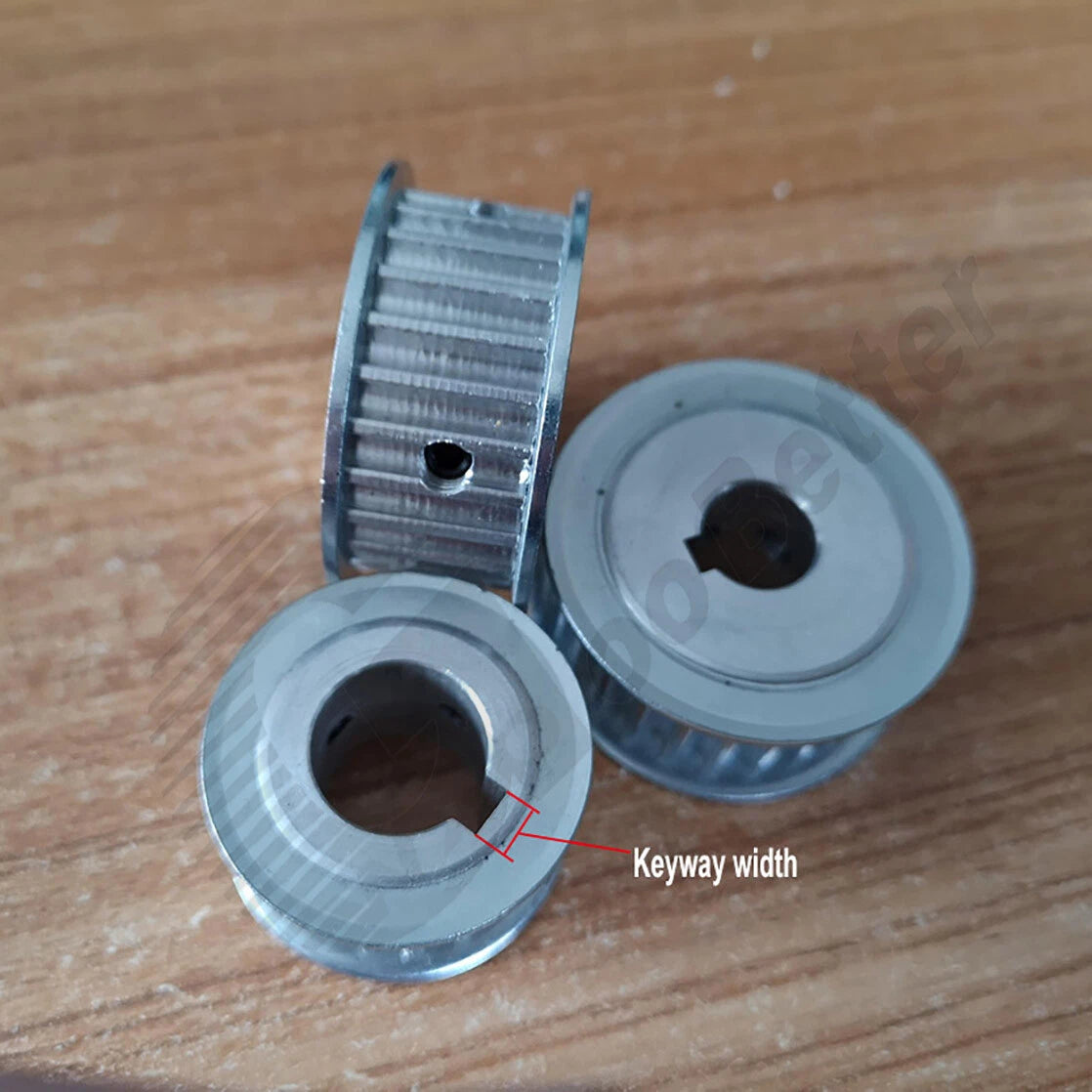
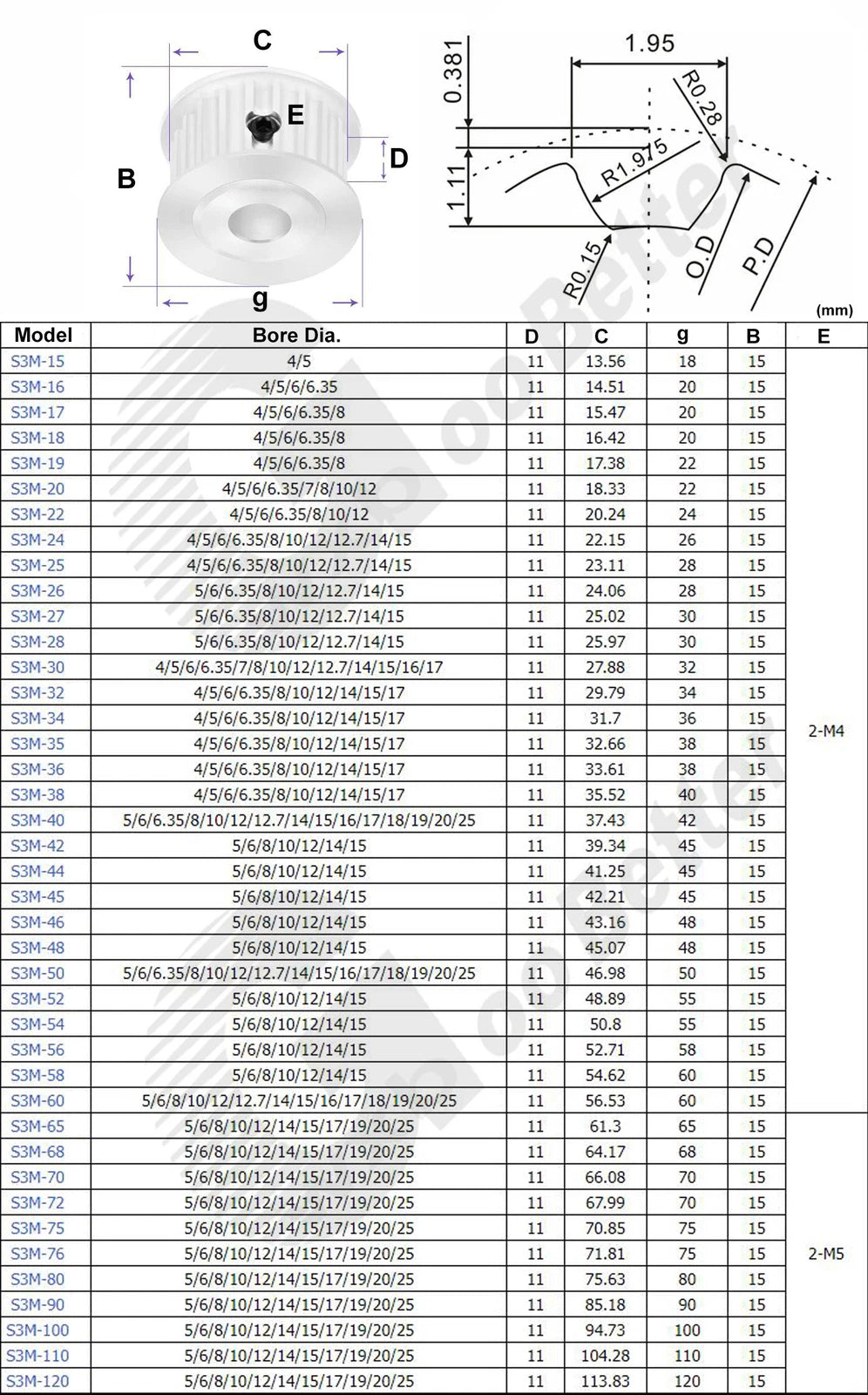
Each S3M timing pulley in this series is machined from aluminum alloy with an AF (aluminum flange) profile. The S3M tooth profile features a 3 mm pitch and is designed for 10 mm (0.39 in) wide S3M synchronous belts. Bore diameters range from 3 mm to 15 mm (0.12–0.59 in), and tooth counts span 15 T to 28 T, giving you fine control over your drive ratio. Keyway options (3 mm, 4 mm, or 5 mm width) are available on select bore/tooth combinations for positive shaft engagement.

Typical use cases include DIY CNC axis drives requiring low-backlash S3M belt pulley sets, 3D printer extruder and motion systems using 10 mm S3M timing belt pulleys, and compact automation conveyor or indexing mechanisms where an aluminum timing pulley with keyway keeps the shaft locked under load.

⚙️ Compatibility: Designed for S3M synchronous belts with 3 mm pitch and 10 mm (0.39 in) width. Verify your shaft diameter and keyway requirement before ordering.

✅ Key Features of These S3M Aluminum Timing Pulleys

🦷
Wide Tooth-Count Range

Available in 15 T, 16 T, 17 T, 18 T, 19 T, 20 T, 22 T, 24 T, 25 T, 26 T, 27 T, and 28 T to suit a broad range of drive ratios without custom machining.

🔩
Multiple Bore Sizes

Bore diameters from 3 mm to 15 mm (0.12–0.59 in) accommodate common motor and shaft standards, including 6.35 mm (1/4 in) and 12.7 mm (1/2 in) imperial sizes.

🔑
Optional Keyway for Positive Drive

Select variants include a precision-cut keyway (3 mm, 4 mm, or 5 mm width) to prevent rotational slip under load — essential for high-torque or indexing applications.

🪶
Aluminum AF Construction

Machined from aluminum alloy with an integrated flange (AF profile) that keeps the belt tracking on the pulley face, reducing misalignment and belt walk.

📐
S3M 3 mm Pitch Profile

Tooth geometry matches the S3M standard (3 mm pitch, 10 mm belt width), ensuring accurate meshing with S3M synchronous belts for repeatable, backlash-minimized motion.

📦
Single or Twin-Pack Options

Order 1 pc for a single-axis replacement or 2 pcs for a matched drive pair — both options are available across most tooth/bore combinations in this listing.

📐 Technical Specifications — S3M Timing Pulley

Belt Type S3M Synchronous Belt
Pitch 3 mm
Belt Width 10 mm (0.39 in)
Number of Teeth 15 T – 28 T (see variant options)
Bore Diameter 3 mm – 15 mm (see variant options)
Keyway Width Without keyway / 3 mm / 4 mm / 5 mm (see variant options)
Material Aluminum Alloy
Profile AF (Aluminum Flange)
Flange Integrated aluminum flange on both sides
Tooth Width (belt seat) 11 mm (0.43 in)
Quantity per Order 1 pc or 2 pcs (see variant options)
Surface Finish Natural aluminum (uncoated)
Weight See variant options

❓ Frequently Asked Questions

How do I choose the right number of teeth for my application?

The tooth count determines your drive ratio. Divide the driven pulley teeth by the driving pulley teeth to get the ratio. For example, a 20 T driver paired with a 20 T driven pulley gives a 1:1 ratio. For speed reduction, use a smaller driver and larger driven pulley. This listing covers 15 T to 28 T — select the combination that matches your target ratio.

Which bore diameter should I select for my motor shaft?

Match the bore diameter to your motor or shaft OD. Common stepper motor shaft sizes are 5 mm and 6.35 mm (1/4 in); servo motors often use 8 mm or 10 mm shafts. If your shaft is imperial (e.g., 1/4 in = 6.35 mm, 1/2 in = 12.7 mm), select the corresponding bore option in the variant selector above.

Do I need a keyway, and which keyway width should I choose?

A keyway is recommended when the pulley must transmit significant torque or when the shaft direction reverses frequently (e.g., CNC axes). Without a keyway, the pulley is held by a set screw alone, which can slip under high load. Choose the keyway width that matches the key already cut on your shaft — typically 3 mm for 8 mm bores, 4 mm for 10–12 mm bores, and 5 mm for 12.7–15 mm bores. Confirm your shaft's key specification before ordering.

Is this pulley compatible with S3M belts from other brands?

Yes. The S3M tooth profile is an industry-standard specification (3 mm pitch, curvilinear tooth form). These pulleys are compatible with any S3M synchronous belt of 10 mm width, regardless of brand, as long as the belt pitch and width match.

How strong is an aluminum pulley compared to steel for my use case?

Aluminum alloy pulleys offer an excellent strength-to-weight ratio and are the standard choice for CNC machines, 3D printers, and light-to-medium automation where minimizing rotating mass improves acceleration and reduces motor load. For very high-torque industrial drives or abrasive environments, steel pulleys may be preferred. For typical DIY and maker applications with S3M belts, aluminum is more than adequate.

Will the aluminum pulley corrode or oxidize over time?

Aluminum naturally forms a thin oxide layer that acts as a protective barrier against further corrosion in most indoor environments. For outdoor or high-humidity applications, consider applying a light coat of dry lubricant or corrosion inhibitor. The natural (uncoated) finish is suitable for the vast majority of workshop and lab automation uses.

Can I order a matched pair for a two-pulley drive system?

Yes. Select the "without keyway & 2" or the keyway + 2 pcs option in the Keyway width & Qty(pcs) variant selector to receive two pulleys of the same tooth count and bore in one order — ideal for building a complete drive pair at a lower per-unit cost.

🛒 Select your Number of Teeth, Bore Dia., and Keyway width & Qty(pcs) above, then add to cart.

You may also like

Recently viewed