The chain is fine...but I ordered the wrong size. Nine links of the chain I ordered equals six of the size I wanted. My error...
How can I straighten out the springs? I can't use them coil uo as is.
Your payment information is processed securely. We do not store credit card details nor have access to your credit card information.
Get fitment advice & recommendations
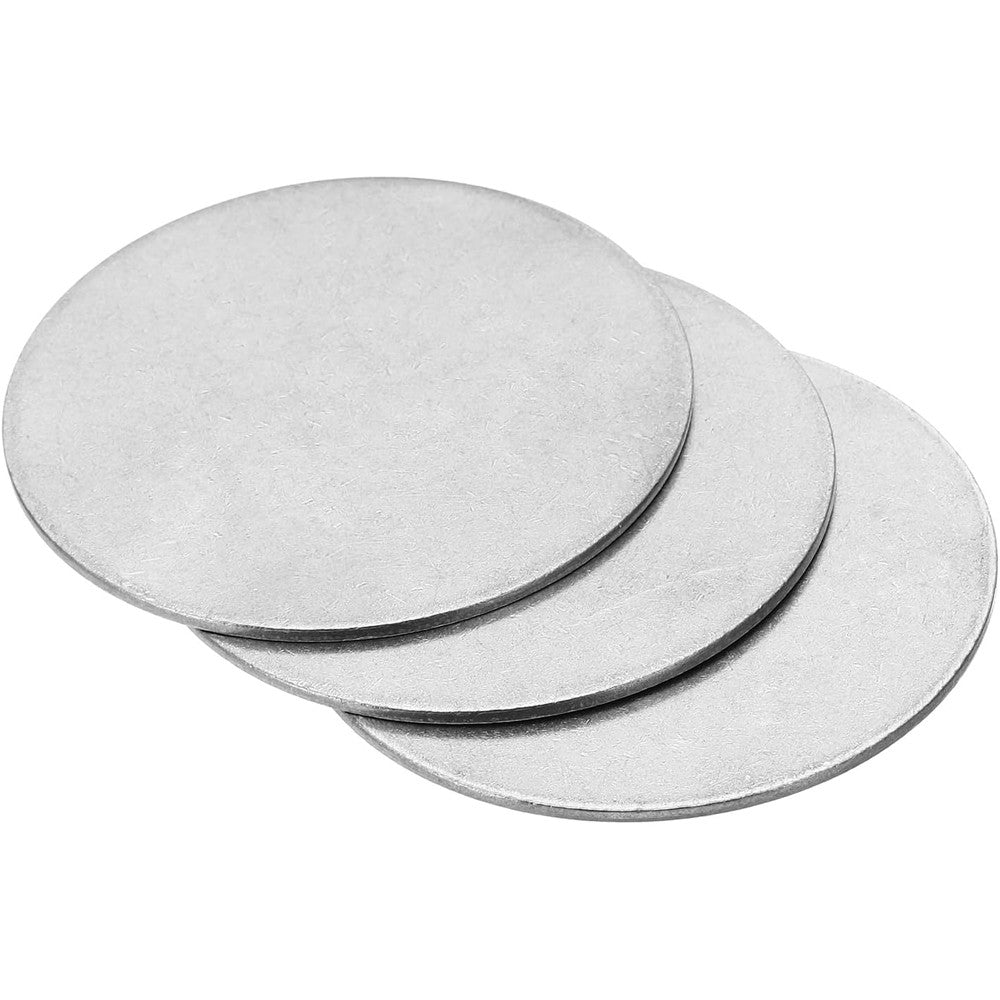
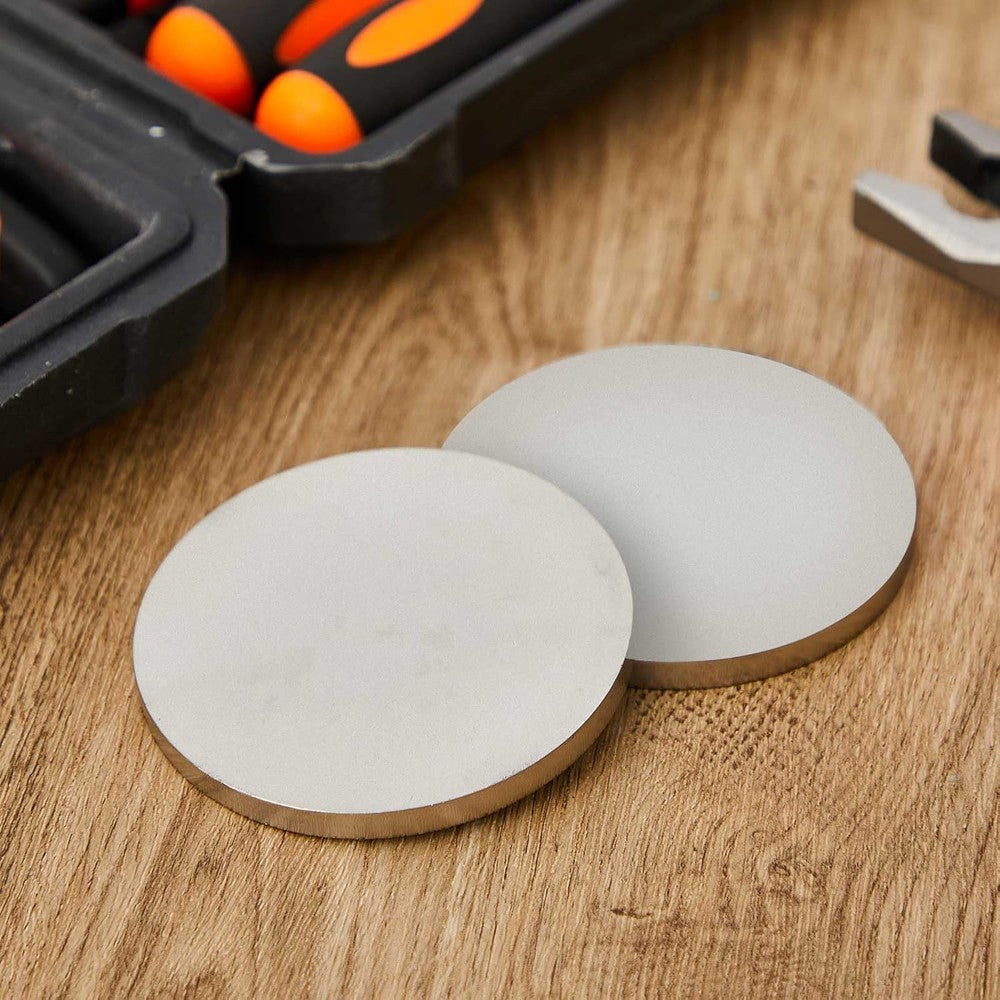
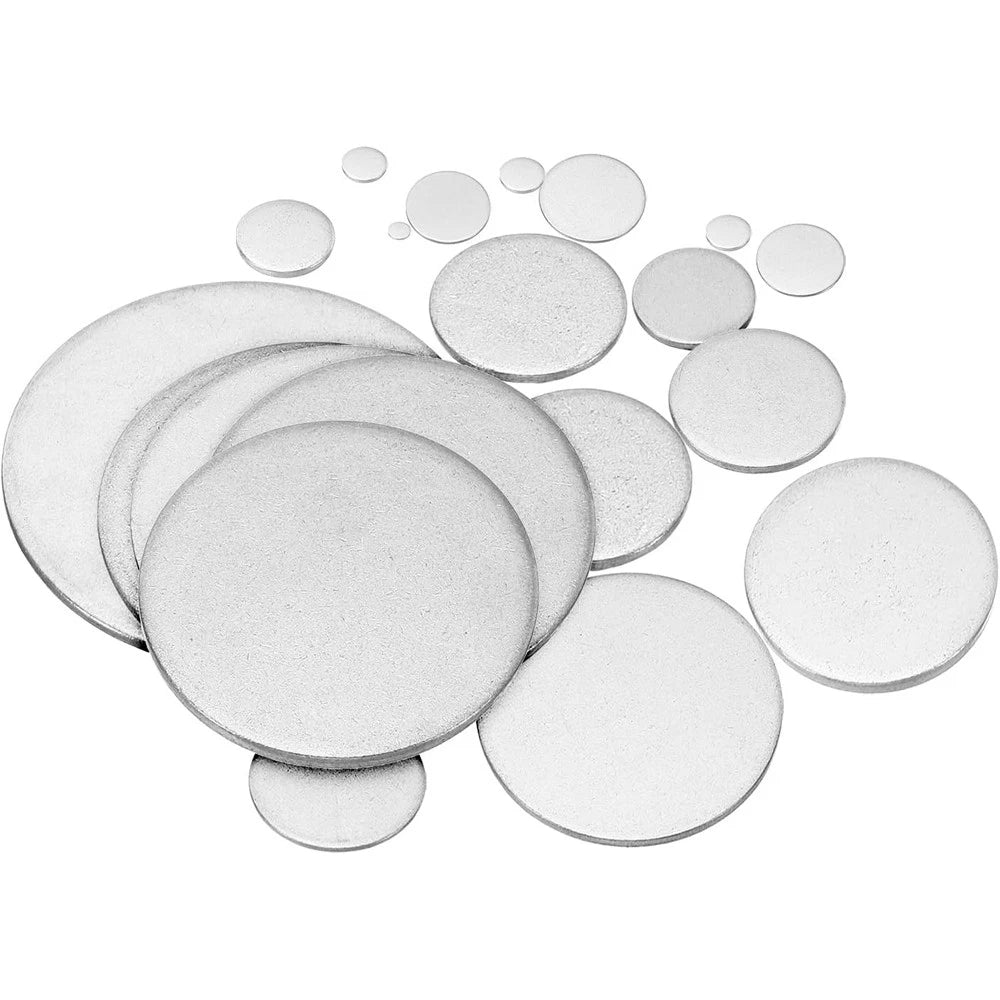
When a project demands a material that won't corrode, won't add unnecessary mass, and won't fail under mechanical stress, finding the right titanium disc in the exact size and grade can be a frustrating search. Engineers, fabricators, machinists, and serious DIY makers who need a reliable, ready-to-use titanium round blank often struggle with limited size ranges or inconsistent alloy grades. This listing solves that problem with a comprehensive selection of solid titanium discs across three commercially proven grades.
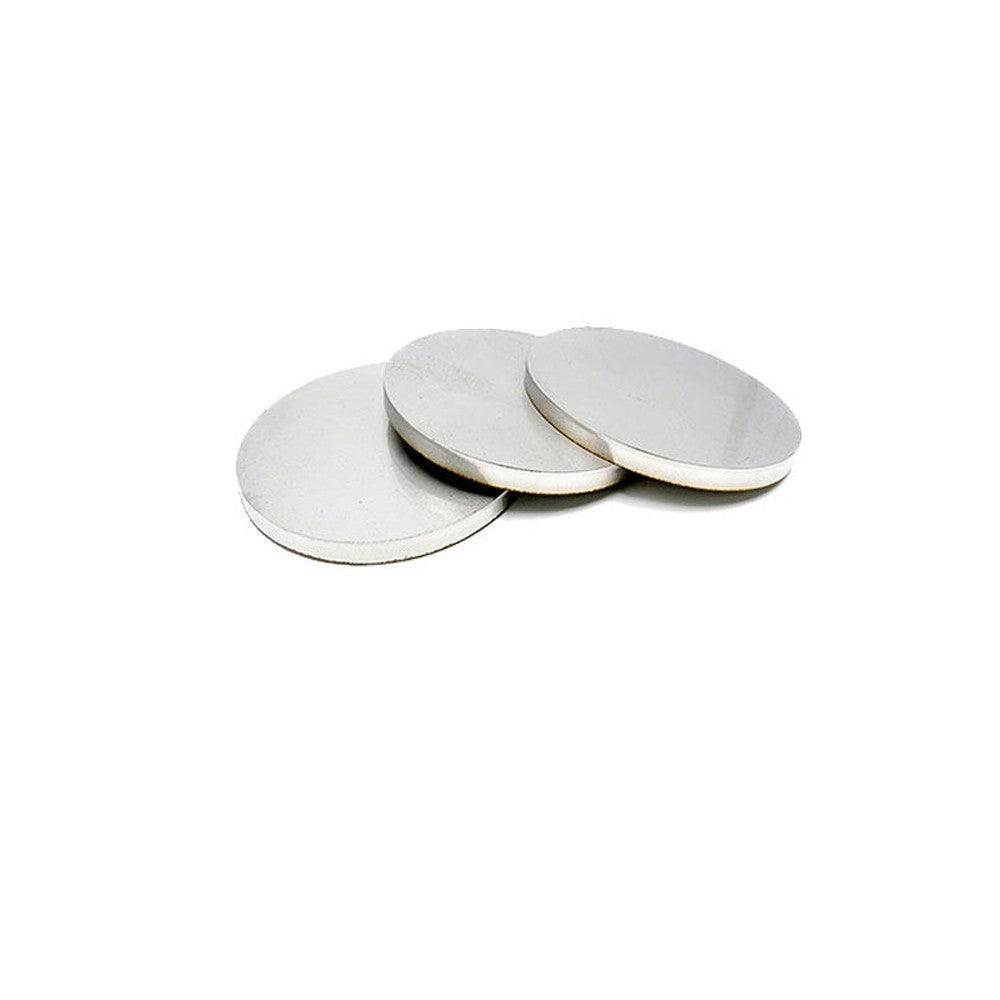
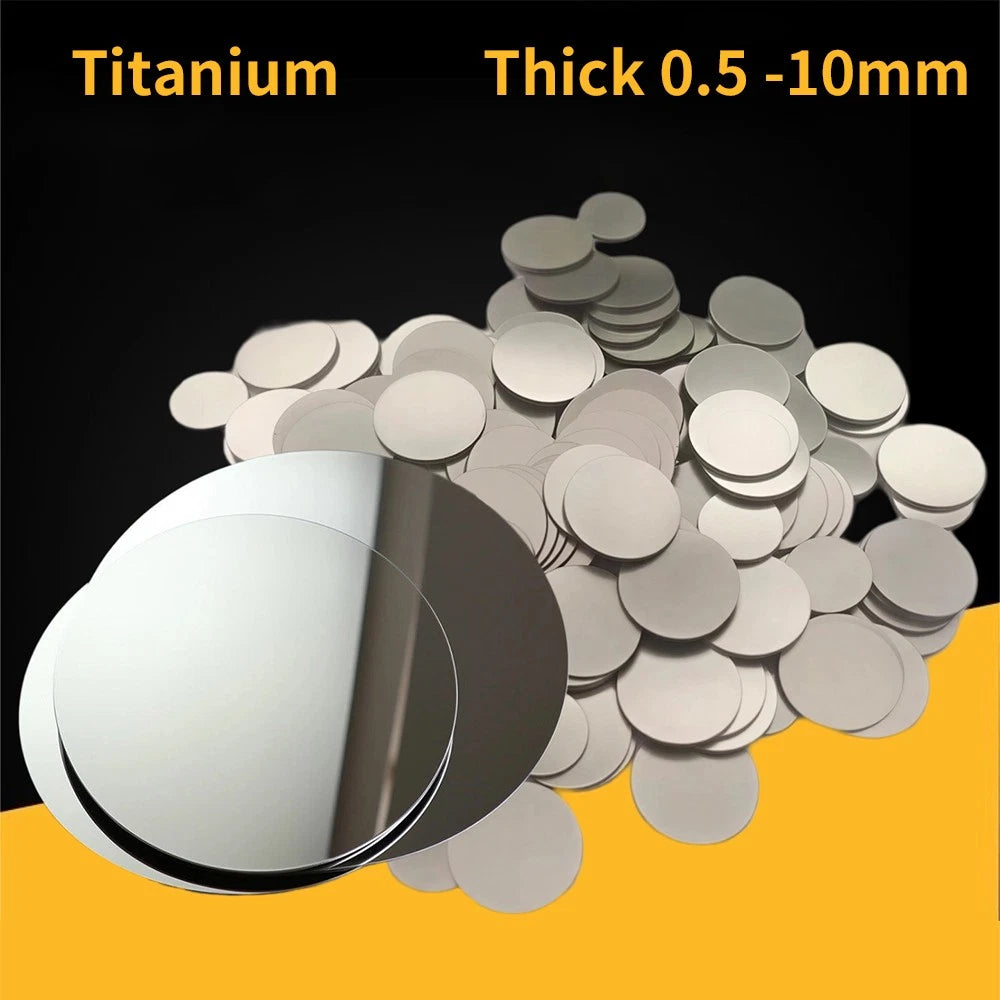
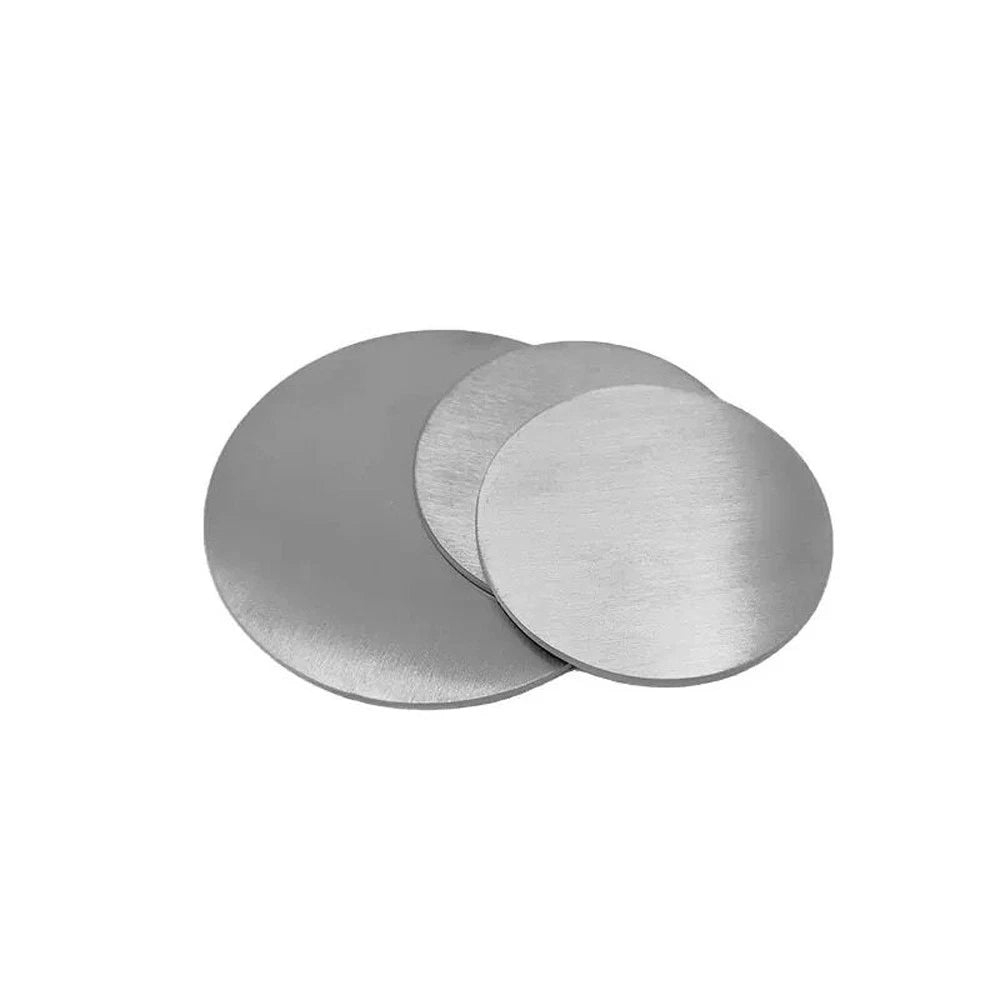
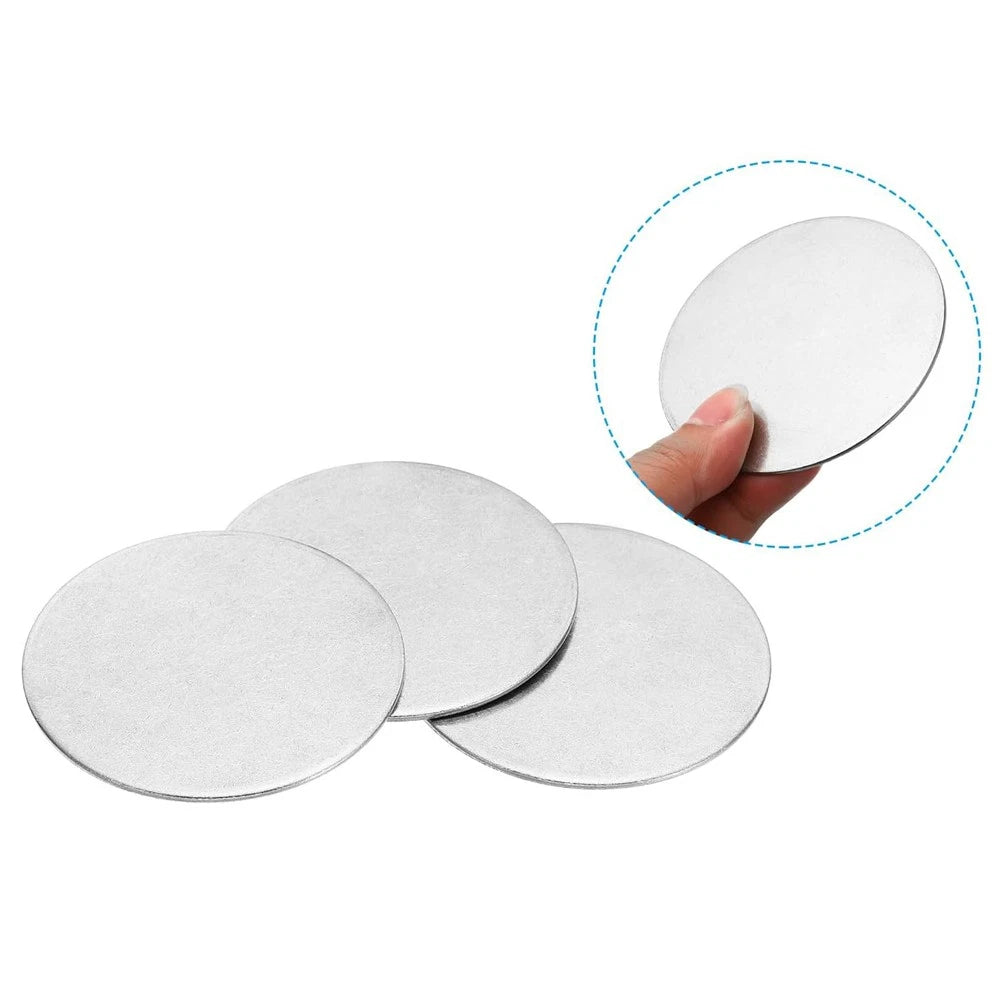
Each disc is a solid, flat circular blank cut from titanium plate or bar stock. Available in three material grades — GR1 (commercially pure, maximum corrosion resistance), GR2 (commercially pure, balanced strength and formability), and GR5 / Ti-6Al-4V (aerospace-grade alloy, highest strength-to-weight ratio) — and spanning diameters from 50 mm (approx. 2.0 in) to 300 mm (approx. 11.8 in) with thicknesses from 0.5 mm (approx. 0.02 in) to 10 mm (approx. 0.39 in). Pack quantities of 1 or 2 pieces are available depending on the variant selected.
Typical use cases include custom titanium gaskets and sealing discs for chemical or marine environments, lightweight structural blanks for aerospace and motorsport components, electrode substrates and electrochemical cell components requiring a corrosion-resistant titanium round disc, heat exchanger baffles, medical device prototyping, and artistic or jewellery-making blanks where a solid titanium round sheet provides a clean starting surface.
Choose GR1 for maximum corrosion resistance, GR2 for a balance of strength and weldability, or GR5 (Ti-6Al-4V) for the highest tensile strength — each grade is clearly labelled per variant.
Diameters from 50 mm to 300 mm and thicknesses from 0.5 mm to 10 mm give you a broad selection of solid titanium disc blanks without custom-order lead times.
Titanium's density is approximately 4.5 g/cm³ — roughly 57% lighter than steel at comparable strength levels — making these discs ideal for weight-sensitive assemblies.
The natural titanium oxide layer provides outstanding resistance to saltwater, acids, and oxidising environments, making these discs suitable for marine, chemical, and outdoor applications without additional coating.
All three grades are compatible with standard TIG welding and CNC machining processes. GR1 and GR2 offer excellent cold-formability; GR5 delivers superior machinability for precision parts.
Smaller diameter variants are available in 2-piece packs for prototyping or paired applications; larger and thicker variants are sold individually — select your preferred pack quantity in the variant options.
| Material | Titanium — GR1 (Grade 1), GR2 (Grade 2), GR5 / Ti-6Al-4V (Grade 5) |
|---|---|
| Form | Solid round disc / flat circular blank |
| Diameter Range | 50 mm – 300 mm (approx. 2.0 in – 11.8 in) |
| Thickness Range | 0.5 mm – 10 mm (approx. 0.02 in – 0.39 in) |
| Density (approx.) | GR1/GR2: ~4.51 g/cm³ | GR5: ~4.43 g/cm³ |
| Tensile Strength (approx.) | GR1: ≥240 MPa | GR2: ≥345 MPa | GR5: ≥895 MPa |
| Surface Finish | See variant options |
| Tolerance | See variant options |
| Pack Quantity | 1 Pcs or 2 Pcs (see variant options) |
| Weldability | TIG weldable (all grades); inert-gas shielding required |
| Machinability | Machinable with carbide tooling; GR5 recommended for precision machining |
| Corrosion Resistance | Excellent — natural TiO₂ passive layer; resistant to seawater, dilute acids, and oxidising media |
GR1 is commercially pure titanium with the highest corrosion resistance and best cold-formability — ideal for chemical processing, marine seals, and applications where forming or deep-drawing is required. GR2 offers slightly higher strength than GR1 while retaining good weldability and formability, making it the most widely used commercially pure grade for general fabrication. GR5 (Ti-6Al-4V) is an alpha-beta alloy with roughly 3–4× the tensile strength of GR1/GR2, suited to aerospace, motorsport, and structural components where maximum strength-to-weight ratio is critical. If you are unsure, GR2 is the most versatile starting point for most fabrication tasks.
Select a diameter at least 5–10 mm larger than your target finished diameter to allow for machining or grinding to final size. For sealing applications, thinner discs (0.5–1 mm) are typically used as soft gaskets when annealed GR1 is chosen, while thicker discs (2–5 mm) are used as rigid flanges or spacers. Always verify the mating flange bore and bolt-circle dimensions before ordering.
Yes. All three grades are weldable using TIG (GTAW) welding with argon or argon/helium shielding gas. Titanium is highly reactive at elevated temperatures, so back-purging and trailing-shield protection are strongly recommended to prevent oxidation (discolouration beyond a light gold indicates contamination). GR5 may require post-weld stress relief for structural applications. Laser welding is also suitable for thin sections.
Titanium generally outperforms 316L stainless steel in chloride-rich environments (seawater, brine, bleach solutions) and in many oxidising acid media. The natural TiO₂ passive layer is self-healing and stable across a wide pH range. For applications involving strong reducing acids (e.g., concentrated hydrochloric acid), consult a materials engineer, as titanium's resistance varies with concentration and temperature.
Titanium has low thermal conductivity, so heat builds up at the cutting edge quickly. Use sharp carbide tooling, maintain moderate cutting speeds (typically 30–60 m/min for GR1/GR2, 20–50 m/min for GR5), apply generous flood coolant, and avoid dwelling or rubbing the tool. GR5 work-hardens more readily than GR1/GR2, so consistent chip removal is important. Avoid using high-speed steel tooling for anything beyond light finishing passes.
Yes. Titanium anodises readily using a simple electrolytic process with dilute sulphuric or phosphoric acid electrolyte and a DC power supply. The colour produced (gold, blue, purple, green, etc.) depends on the anodising voltage and corresponds to the thickness of the oxide layer. No dyes are used — the colour is structural. GR1 and GR2 produce the most vivid and consistent anodised colours; GR5 can also be anodised but may show slightly different hue characteristics due to the alloying elements.
Use the formula: Weight (g) = π × (Diameter/2)² × Thickness × Density. For GR1/GR2, use density ≈ 4.51 g/cm³; for GR5, use ≈ 4.43 g/cm³. All dimensions must be in centimetres. Example: a 100 mm × 2 mm GR2 disc = π × 5² × 0.2 × 4.51 ≈ 71 g. This helps you estimate shipping weight and confirm suitability for weight-critical assemblies.