
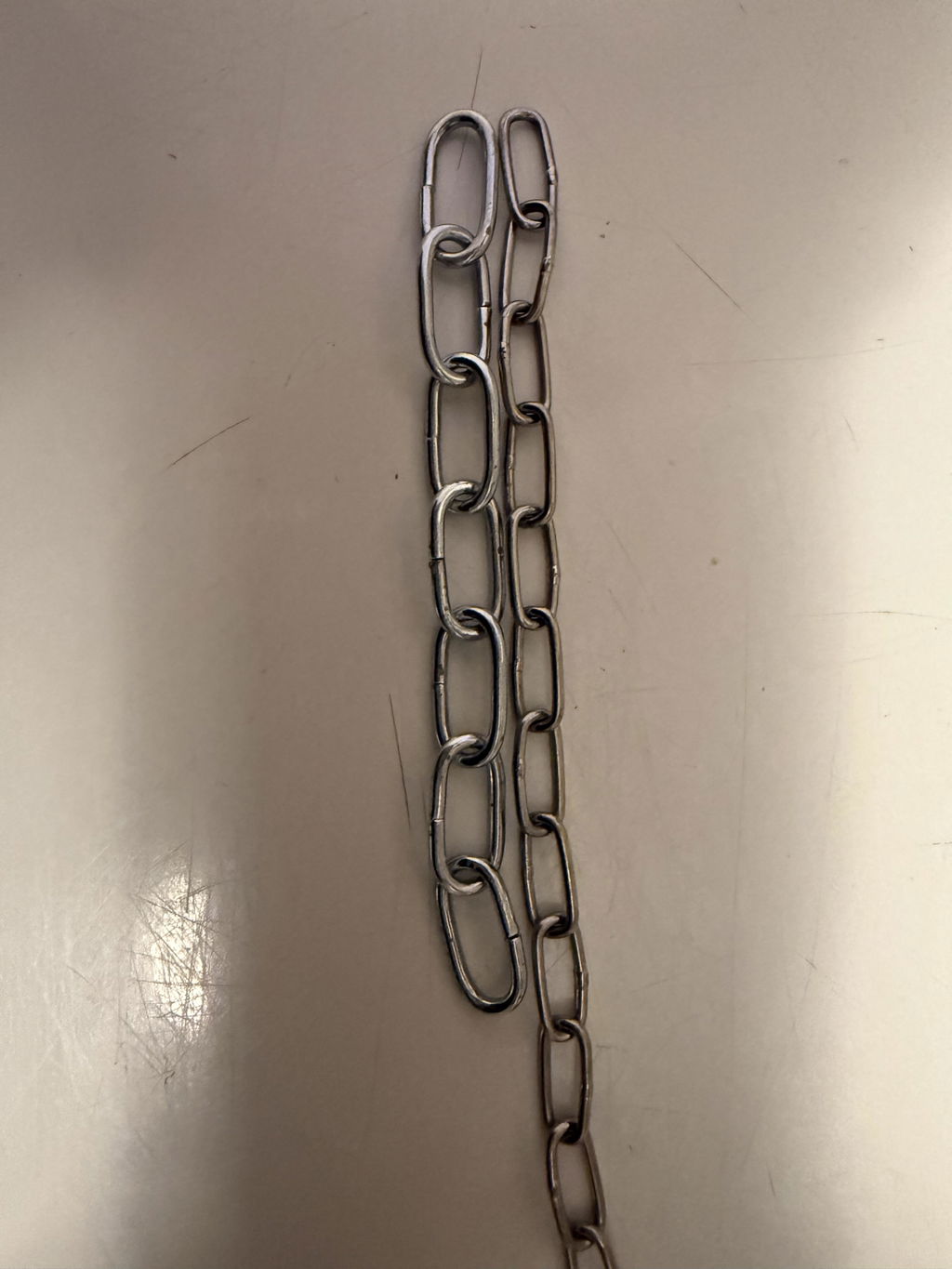
The chain is fine...but I ordered the wrong size. Nine links of the chain I ordered equals six of the size I wanted. My error...
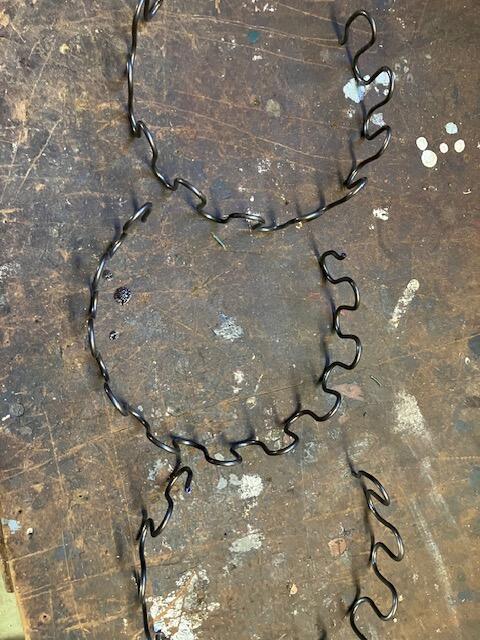
How can I straighten out the springs? I can't use them coil uo as is.
Your payment information is processed securely. We do not store credit card details nor have access to your credit card information.
Get fitment advice & recommendations
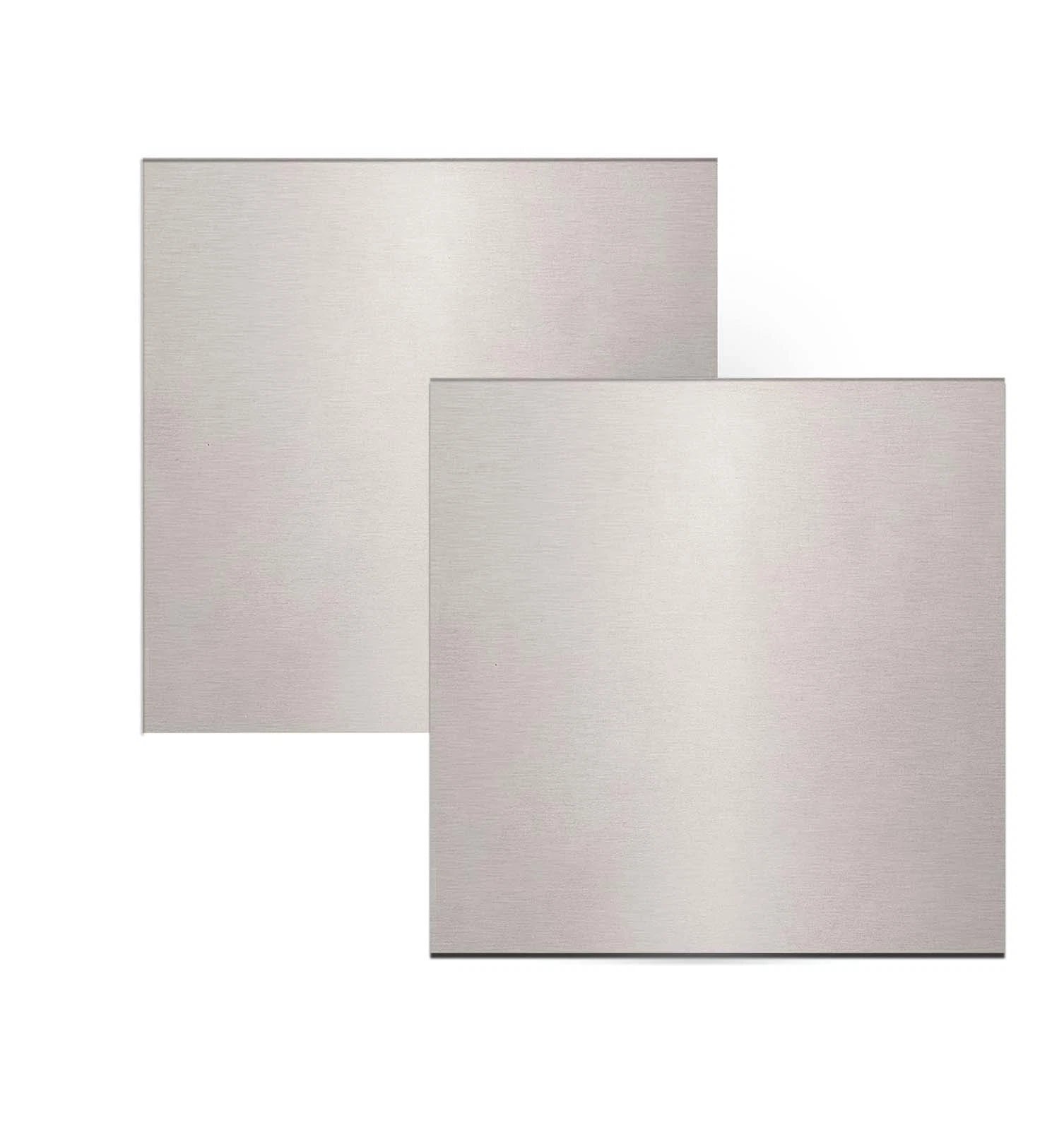
Finding flat titanium stock in usable sizes without ordering full mill sheets is a persistent challenge for engineers, hobbyists, and specialist fabricators. These Grade 2 titanium sheet plates are offered in ready-to-use dimensions, letting you source exactly the thickness and size your project demands without excess material or minimum-order constraints.
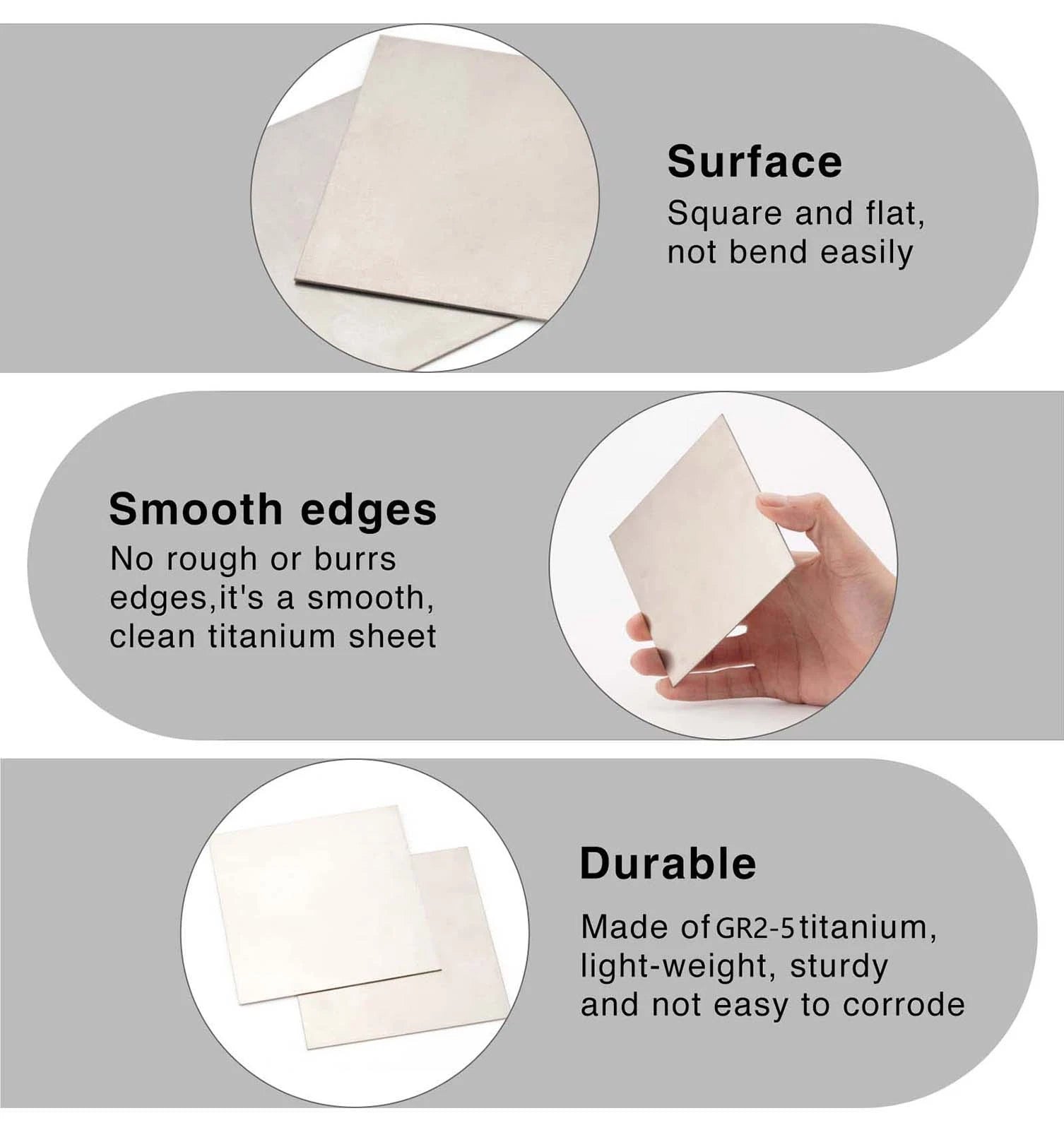
Each plate is cut from commercially pure Grade 2 titanium (CP-Ti Gr2, equivalent to ASTM B265 Grade 2), offering an excellent balance of strength, ductility, and corrosion resistance. The current listing covers 100×100mm (approx. 3.94"×3.94") panels in 6mm (approx. 0.236") and 8mm (approx. 0.315") thicknesses. Surface finish is mill-finish with a characteristic titanium oxide layer; edges are shear- or saw-cut to dimension.
Typical applications include aerospace component blanks and repair patches, marine hardware and fittings where saltwater corrosion resistance is critical, chemical processing equipment plates, custom bicycle and motorsport components, and knife-making or EDC tool blanks requiring a titanium sheet plate for machining. Long-tail use cases include Grade 2 titanium flat bar stock for CNC milling, titanium plate for heat exchanger baffles, and corrosion-resistant titanium sheet for medical device prototyping.
| Material Grade | Grade 2 Commercially Pure Titanium (CP-Ti Gr2, ASTM B265 Gr2) |
|---|---|
| Purity | ≥99.2% Ti (commercially pure) |
| Surface Finish | Mill finish with natural oxide layer |
| Dimensions | 100mm × 100mm (approx. 3.94" × 3.94") |
| Thickness Options | 6mm (approx. 0.236") / 8mm (approx. 0.315") |
| Edge Type | Shear-cut or saw-cut, square edges |
| Tensile Strength | Typically 345–485 MPa (ASTM B265 Gr2) |
| Yield Strength | Typically ≥275 MPa |
| Density | Approx. 4.51 g/cm³ |
| Max Service Temperature | Approx. 300–350°C (572–662°F) |
| Corrosion Resistance | Excellent — seawater, acids, chlorine environments |
| Pack Quantity | 1 piece per variant (6mm or 8mm) |
| Weight per Piece | See variant options |
Grade 2 (CP-Ti) is commercially pure titanium with excellent corrosion resistance, good ductility, and full weldability — the standard choice for chemical, marine, and general engineering applications. Grade 5 (Ti-6Al-4V) is an alloy with significantly higher strength but reduced corrosion resistance in some environments and more demanding machining requirements. For most corrosion-critical or weld-intensive applications, Grade 2 is the appropriate choice.
Yes. Grade 2 titanium is fully weldable using TIG (GTAW) welding with 100% argon shielding gas. Both the weld pool and the back of the joint must be shielded from atmospheric oxygen and nitrogen during welding and cooling to prevent embrittlement and discolouration. MIG welding is not recommended for titanium. Proper purging fixtures or a glove box are advisable for critical welds.
Titanium machines best with sharp carbide or cobalt-HSS tooling at lower cutting speeds than steel (typically 30–60 m/min for carbide). Use a generous flow of cutting fluid (water-soluble or neat oil) to manage heat, as titanium has low thermal conductivity and heat concentrates at the cutting edge. Avoid rubbing or dwelling — keep the tool moving to prevent work-hardening. For drilling, use a centre punch, sharp drill, and moderate feed rate with frequent chip clearing.
Choose 6mm (0.236") for applications where moderate rigidity is needed alongside lower weight — such as brackets, flanges, small structural plates, and knife blanks. Choose 8mm (0.315") where greater section thickness is required for load-bearing, deep machining operations, or applications where the finished part needs substantial wall thickness after material removal. If in doubt, select the thicker option and machine down to your target dimension.
Titanium does not rust. It forms a stable, self-healing titanium dioxide (TiO₂) oxide layer on its surface that provides exceptional resistance to seawater, chlorine, dilute acids, and most industrial chemicals. This passive layer reforms automatically if scratched or damaged. No additional coating, plating, or surface treatment is required for most corrosive environments, making it a low-maintenance material for long-term outdoor or marine use.
Yes. Titanium anodises readily using a simple electrolytic process with dilute sulphuric or phosphoric acid solution. Unlike aluminium anodising, titanium anodising produces interference colours (gold, blue, purple, green) by varying the voltage — no dye is required. The resulting oxide layer also improves surface hardness slightly. This makes these plates suitable for decorative EDC, jewellery, and custom hardware applications where colour finishing is desired.
Grade 2 titanium is biocompatible and widely used in medical implants and surgical instruments. It is also considered safe for food contact applications. However, for regulated medical device or food-grade applications, you should verify that the specific material batch meets the relevant standards (e.g., ASTM F67 for surgical implants) and obtain appropriate certification documentation. Contact us to confirm if certification is required for your application.