Titanium Sheet Plate Various Size And Grade 2 Grade 5 GR1 GR2 GR5 0.5mm - 30mm

No reviews

Price:
Sale price$4.01 USD
Stock:
In stock (500 units), ready to be shipped

Payment & Security

Ach Direct Debit Amazon American Express Apple Pay Bancontact BLIK Diners Club Discover EPS Google Pay iDEAL Wero JCB Maestro Mastercard Multibanco MobilePay PayPal Przelewy24 Shop Pay Twint Union Pay USDC Visa

Your payment information is processed securely. We do not store credit card details nor have access to your credit card information.

Limited Offer — Spend More, Save More
Spend $55+
Save $5
Spend $100+
Save $10
Spend $200+
Save $25
HomeDIYer DIY Expert Support

DIY Expert Support

Get fitment advice & recommendations

Mon–Fri  8:30 AM – 8:00 PM
24-Hour Fast Ship
Arrives in 3–14 Days
Worldwide Shipping
30-Day Returns
1 tree planted with every purchase

Description

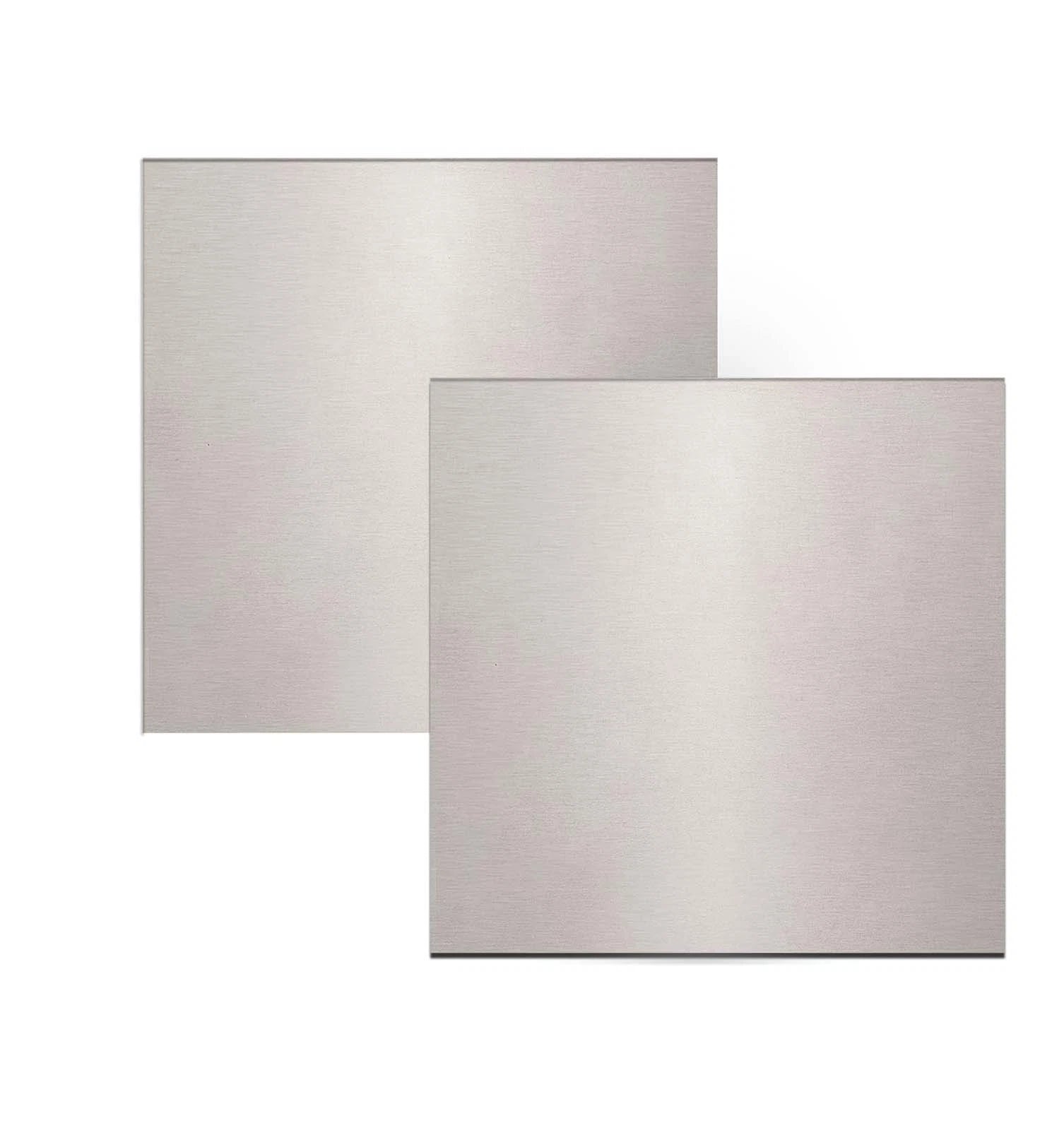
Titanium Sheet Plate — Precision-Cut GR2 & GR5 for Demanding Applications

When your project demands a material that won't corrode, won't buckle under stress, and won't add unnecessary weight, standard steel or aluminum simply falls short. Engineers, makers, and fabricators who need reliable flat stock turn to titanium sheet plate — and getting the right grade and thickness in one place is rarely straightforward. This listing solves that problem with a comprehensive selection of Grade 2 (GR2) and Grade 5 (GR5) titanium flat plates, available in multiple sizes and thicknesses to match your exact specification.

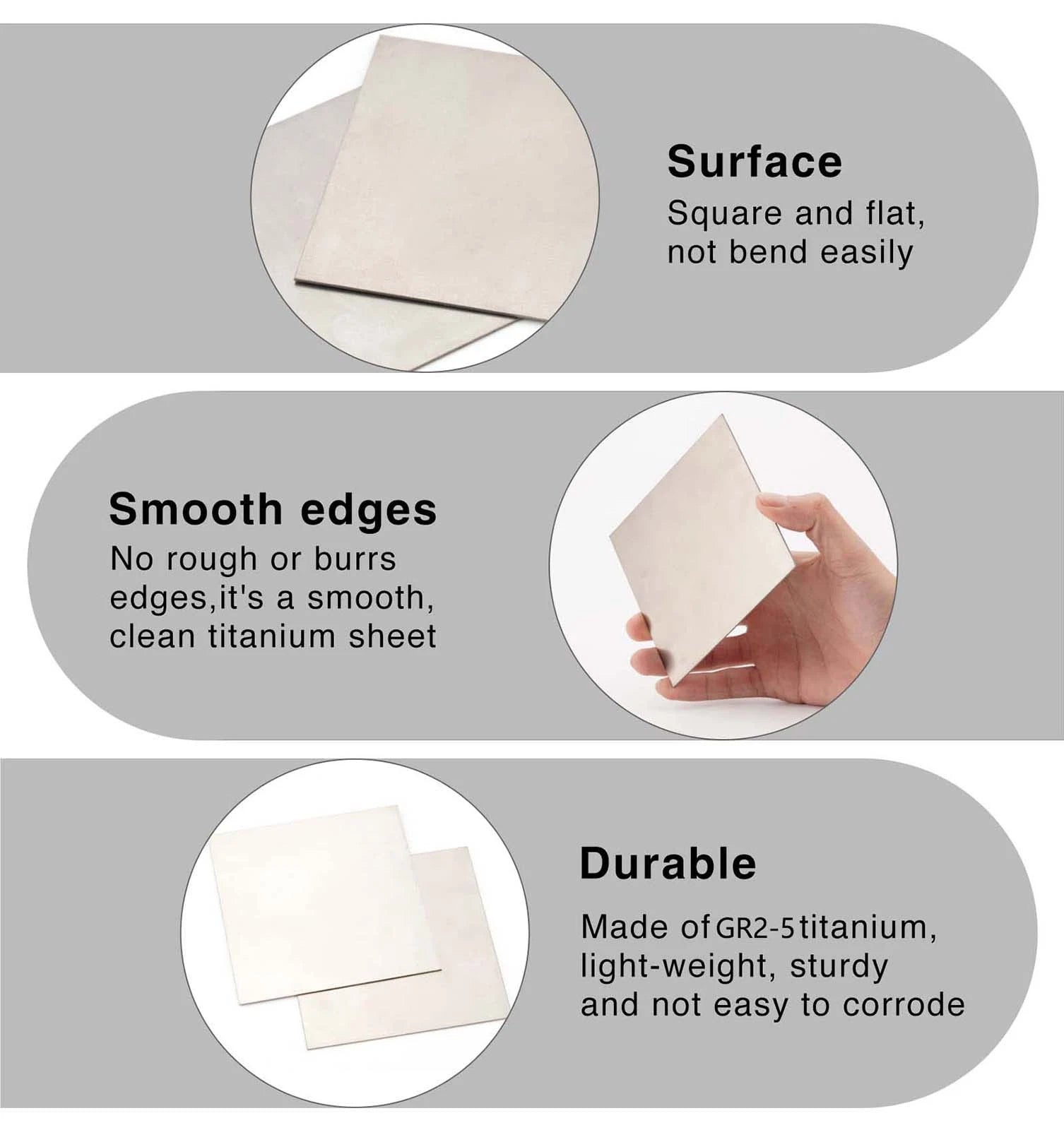
Each plate is cut from commercially pure or alloyed titanium stock. Grade 2 (GR2) is commercially pure titanium offering excellent corrosion resistance and formability, while Grade 5 (GR5 / Ti-6Al-4V) is the aerospace-grade alloy delivering significantly higher tensile strength. Sheet sizes span 100 × 100 mm (approx. 3.94 × 3.94 in) and 200 × 200 mm (approx. 7.87 × 7.87 in), with thickness options ranging from 0.5 mm to 30 mm (approx. 0.02 in to 1.18 in). Quantity options of 1, 2, or 5 pieces per order let you buy exactly what you need.

Typical use cases include aerospace structural components and repair patches, marine hardware and saltwater-exposed fixtures, medical device prototyping and implant-adjacent tooling, custom bicycle or motorsport parts requiring a low-weight high-strength flat blank, and DIY knife-making or artistic metalwork where titanium's distinctive appearance and durability are valued.

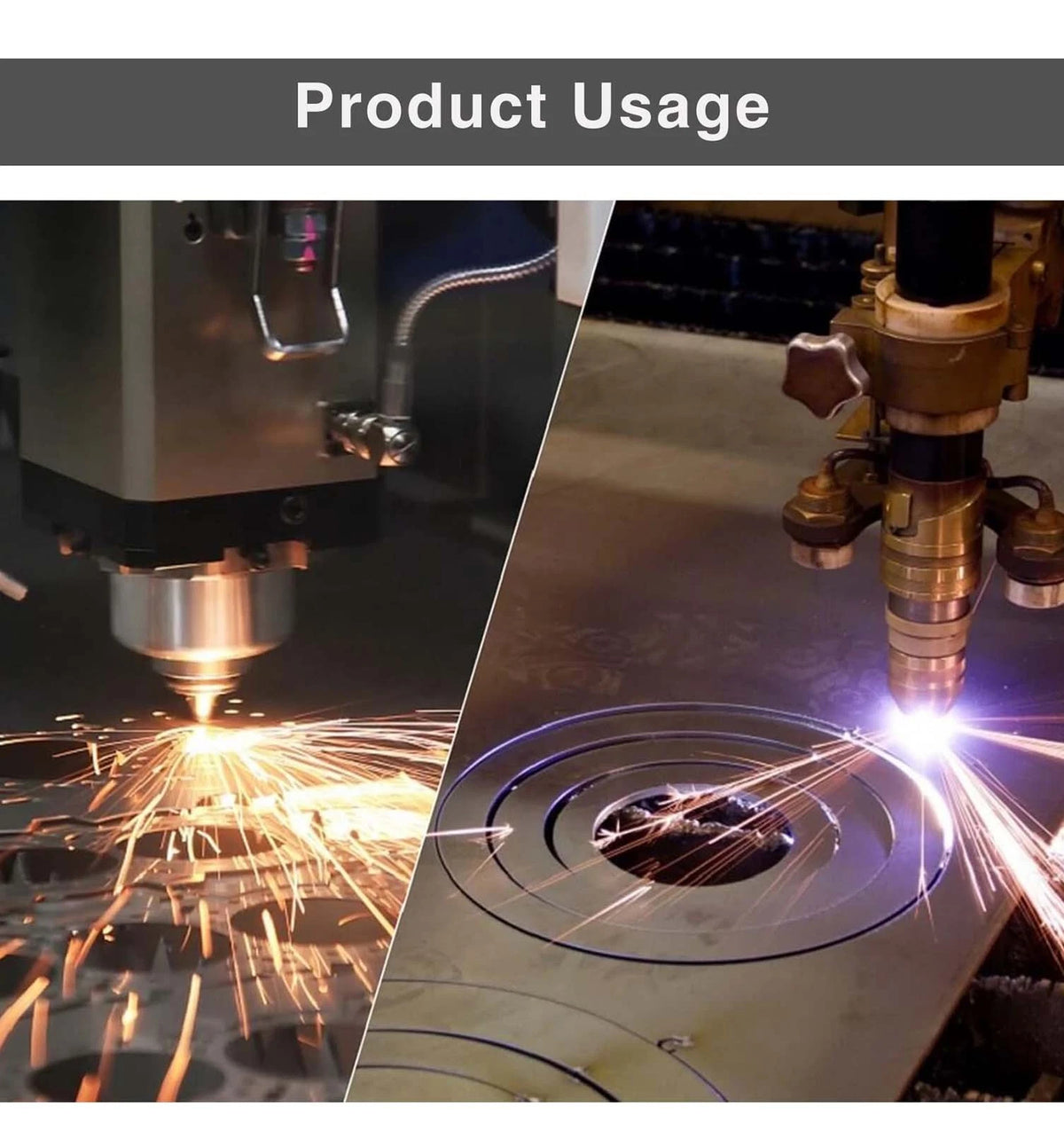
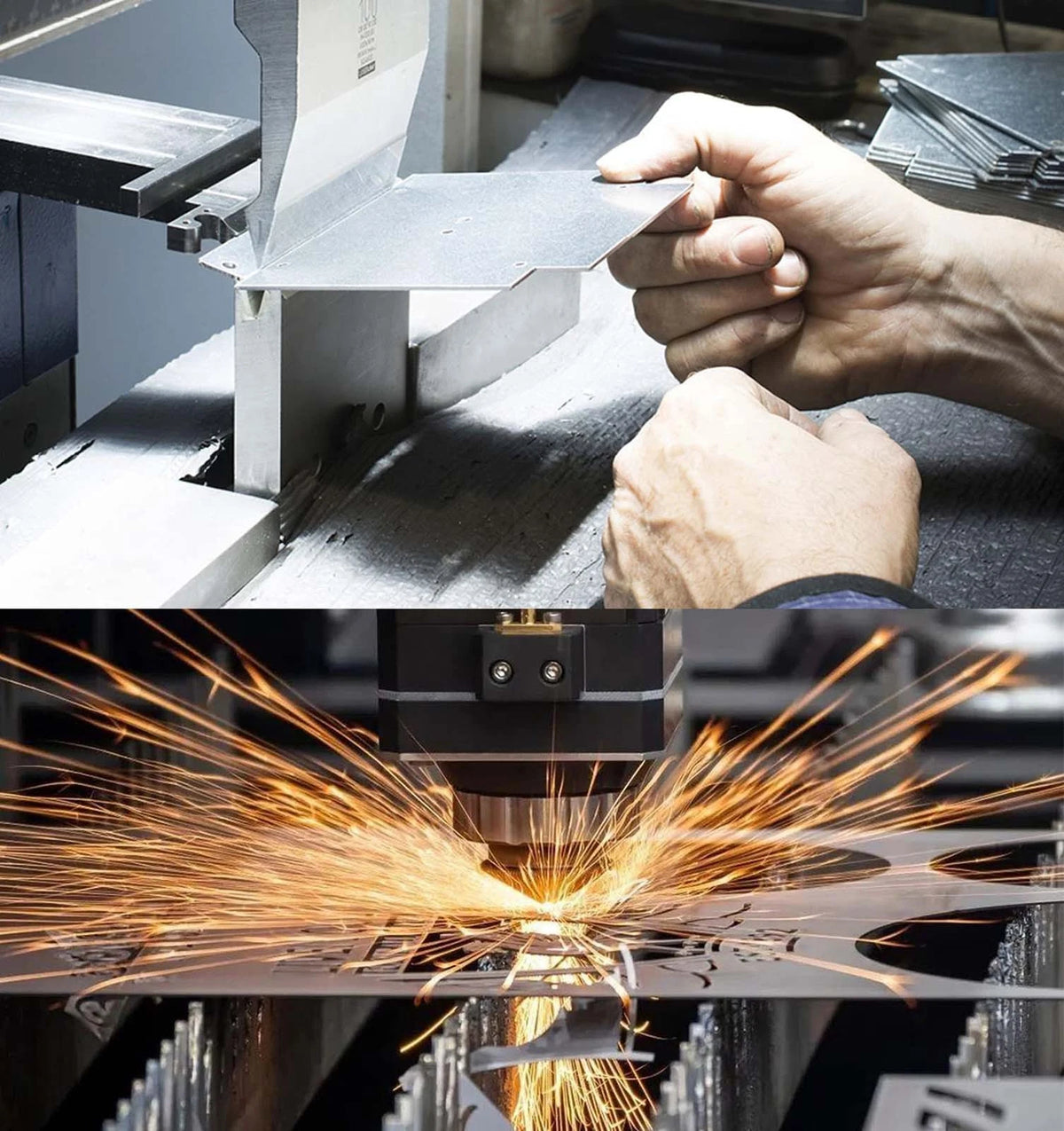
🔧 Compatibility: Suitable for CNC machining, waterjet cutting, laser cutting (with appropriate settings), TIG/plasma welding, and hand fabrication. GR2 is recommended for forming and bending; GR5 is recommended for structural and load-bearing applications.

✅ Key Features of These Titanium Sheet Plates

🏗️ Two Distinct Grades Available

Choose Grade 2 (GR2) for corrosion resistance and formability, or Grade 5 (GR5 / Ti-6Al-4V) for aerospace-level tensile strength — both available in the same size and thickness matrix.

📐 Wide Thickness Range: 0.5 mm – 30 mm

From ultra-thin 0.5 mm foil-like sheets to solid 30 mm plates, the range covers shim stock, structural blanks, and everything in between — all in one listing.

✂️ Two Sheet Sizes: 100×100 mm & 200×200 mm

Compact 100 × 100 mm squares are ideal for prototyping and small components; 200 × 200 mm sheets provide more material for larger blanks or multiple smaller cuts.

🌊 Exceptional Corrosion Resistance

Titanium naturally forms a stable oxide layer that resists saltwater, acids, and most industrial chemicals — making these plates suitable for marine, chemical, and outdoor environments.

⚖️ Outstanding Strength-to-Weight Ratio

Titanium delivers steel-comparable strength at roughly 45% of steel's density, reducing component weight without sacrificing structural integrity — critical for aerospace and performance applications.

📦 Flexible Quantity Options: 1, 2, or 5 Pieces

Order a single piece for prototyping, two for matched pairs, or five for small-batch production runs — all at per-piece pricing that scales with quantity.

📐 Technical Specifications — Titanium Sheet Plate

Material Titanium (Grade 2 / GR2 or Grade 5 / GR5 — Ti-6Al-4V)
Grade 2 (GR2) Standard ASTM B265 Grade 2 (commercially pure titanium)
Grade 5 (GR5) Standard ASTM B265 Grade 5 (Ti-6Al-4V alloy)
Sheet Size Options 100 × 100 mm (3.94 × 3.94 in) / 200 × 200 mm (7.87 × 7.87 in)
Thickness Range 0.5 mm – 30 mm (0.020 in – 1.181 in)
Quantity per Order 1 pcs / 2 pcs / 5 pcs (select via variant)
Surface Finish See variant options
Tensile Strength (GR2) Typically 345–485 MPa
Tensile Strength (GR5) Typically 895–1000 MPa
Density Approx. 4.51 g/cm³ (GR2) / 4.43 g/cm³ (GR5)
Melting Point Approx. 1668 °C (3034 °F)
Corrosion Resistance Excellent — resistant to seawater, chlorides, and most acids
Machinability Machinable with carbide tooling; low thermal conductivity requires appropriate feeds/speeds
Weldability TIG weldable in inert atmosphere; plasma cutting compatible

❓ Frequently Asked Questions

How do I choose between Grade 2 (GR2) and Grade 5 (GR5)?

Grade 2 (GR2) is commercially pure titanium — it offers excellent corrosion resistance, good ductility, and is easier to form and weld. It is the right choice for chemical processing, marine hardware, heat exchangers, and applications where formability matters. Grade 5 (GR5 / Ti-6Al-4V) is an alloyed titanium with roughly twice the tensile strength of GR2. Choose GR5 for structural, aerospace, motorsport, or load-bearing applications where strength-to-weight ratio is the priority.

Which thickness should I select for my project?

For shims, gaskets, or thin decorative panels, 0.5 mm – 1.5 mm is typically appropriate. For brackets, flanges, and moderate structural parts, 2 mm – 6 mm covers most needs. For heavy-duty structural blocks, tooling plates, or knife blanks requiring significant stock removal, 8 mm – 30 mm provides the necessary material depth. If you are unsure, select the variant options on this page to compare sizes and thicknesses before adding to cart.

Can these titanium sheets be cut with a laser or waterjet?

Yes. Waterjet cutting works well across all thicknesses without heat-affected zones. Laser cutting is effective on thinner sheets (typically up to 6 mm) with appropriate laser power and assist gas (nitrogen recommended to prevent oxidation). Plasma cutting is also viable for thicker plates. CNC milling and turning with carbide tooling is the standard approach for precision machining.

Is titanium difficult to weld?

Titanium can be TIG welded successfully, but it requires an inert shielding gas (argon or helium) and a clean, contamination-free environment. Titanium reacts with oxygen and nitrogen at welding temperatures, so trailing shields and back-purging are recommended for structural welds. GR2 is generally more weldable than GR5 due to its lower alloy content. For non-structural joins, mechanical fastening or adhesive bonding are also common approaches.

How corrosion-resistant is titanium compared to stainless steel?

Titanium's corrosion resistance is superior to most grades of stainless steel in many environments. It forms a stable, self-healing titanium dioxide (TiO₂) oxide layer that resists seawater, chlorides, dilute acids, and many industrial chemicals that would attack 304 or 316 stainless steel. This makes titanium the preferred choice for marine, chemical processing, and medical applications where long-term corrosion resistance is critical.

What size and quantity should I order for prototyping?

For initial prototyping, the 100 × 100 mm size in a quantity of 1 or 2 pieces is the most cost-effective starting point. This gives you enough material to test machining parameters, fit, and finish without committing to larger stock. Once your design is validated, the 200 × 200 mm sheets or multi-piece quantities (2 or 5 pcs) offer better material utilization for small production runs.

Can I use these plates for knife-making or artistic metalwork?

Yes. Titanium is increasingly popular in custom knife-making for liners, bolsters, and frame-lock handles due to its light weight, corrosion resistance, and distinctive appearance when anodized. GR5 is preferred for structural knife components due to its higher hardness and strength. For artistic or decorative work, GR2 is easier to form and anodizes to vivid colors. Thicknesses of 3 mm – 6 mm are most commonly used for knife liners and handles.

🛒 Select your Material, Size, and Thickness & Quantity above, then add to cart.


You may also like

Recently viewed