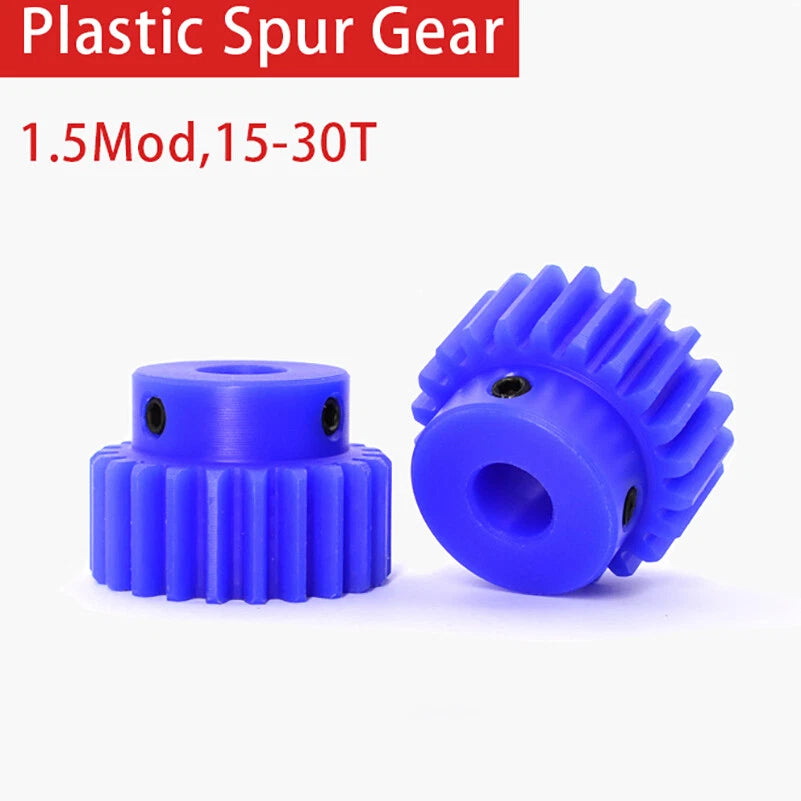
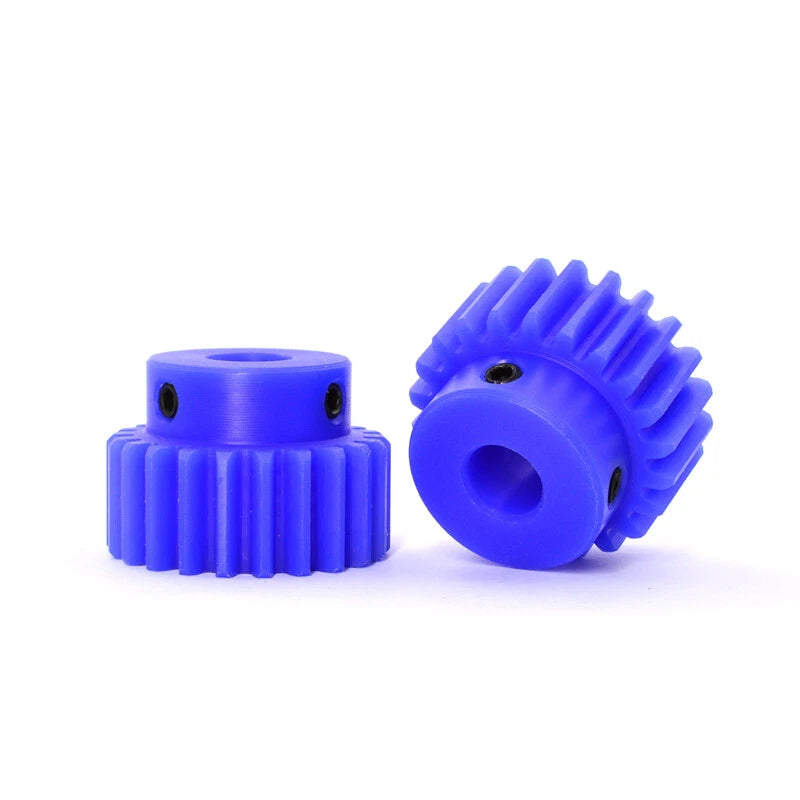
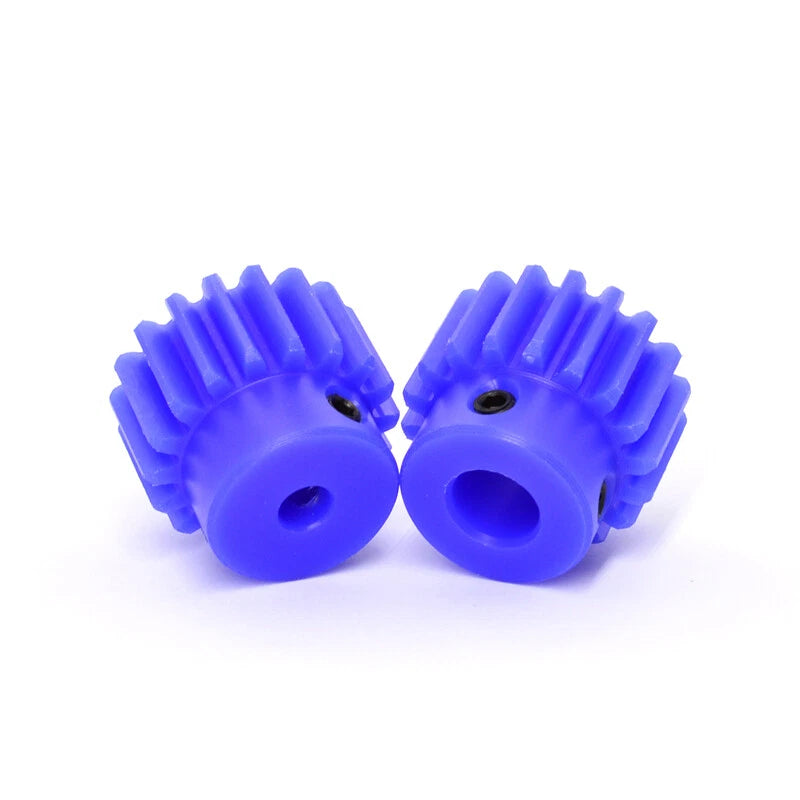
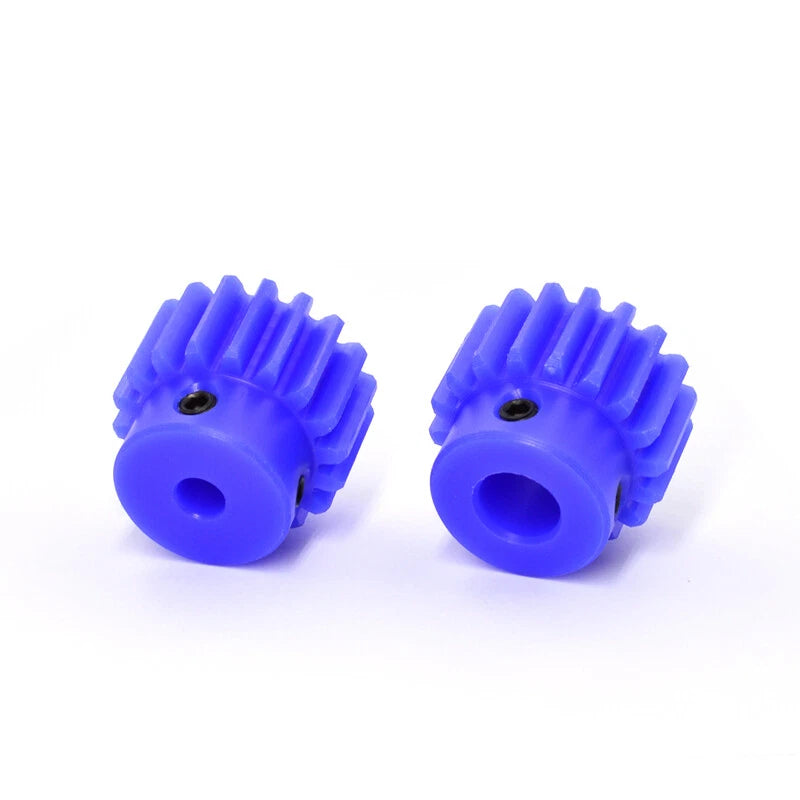
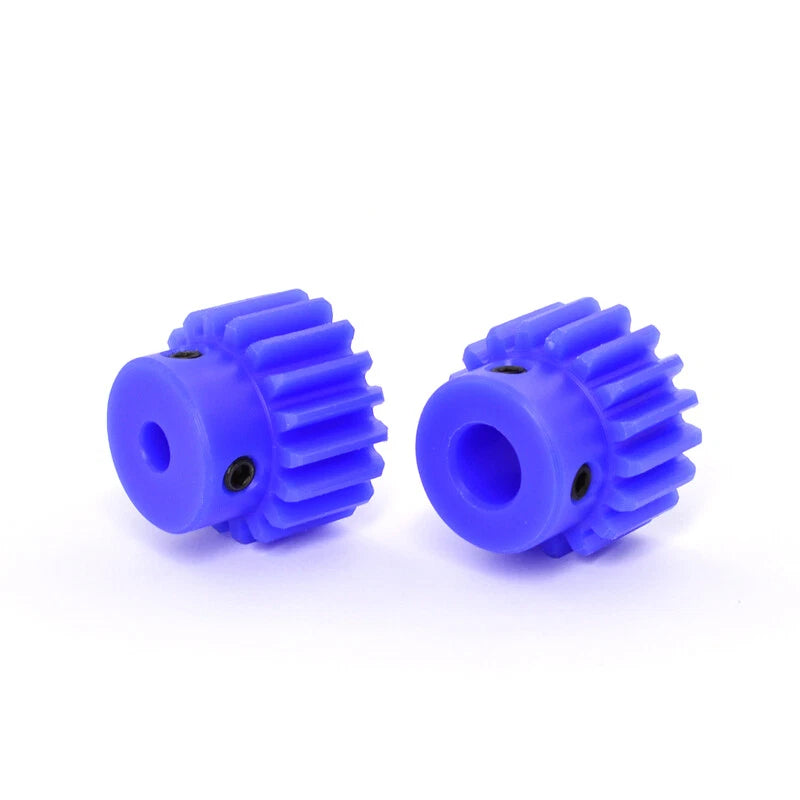
Transmission Spur Gears 1.5Modulus 15-30Tooth Bore 6-12mm Plastic Convex Gears

No reviews

Price:
Sale price$14.93 USD
Stock:
In stock (500 units), ready to be shipped

Payment & Security

Ach Direct Debit Amazon American Express Apple Pay Bancontact BLIK Diners Club Discover EPS Google Pay iDEAL Wero JCB Maestro Mastercard Multibanco MobilePay PayPal Przelewy24 Shop Pay Twint Union Pay USDC Visa

Your payment information is processed securely. We do not store credit card details nor have access to your credit card information.

Limited Offer — Spend More, Save More
Spend $55+
Save $5
Spend $100+
Save $10
Spend $200+
Save $25
HomeDIYer DIY Expert Support

DIY Expert Support

Get fitment advice & recommendations

Mon–Fri  8:30 AM – 8:00 PM
24-Hour Fast Ship
Arrives in 3–14 Days
Worldwide Shipping
30-Day Returns
1 tree planted with every purchase

Description

1.5 Modulus Plastic Spur Gears — Precision Transmission for DIY Builds

When your robotics project, 3D printer gearbox, or RC drivetrain demands reliable torque transfer without the weight penalty of metal, finding the right plastic spur gear in the exact tooth count and bore diameter can be a frustrating hunt. These 1.5 modulus convex spur gears are engineered for makers, hobbyists, and engineers who need a broad selection of sizes in a single, dependable product line.

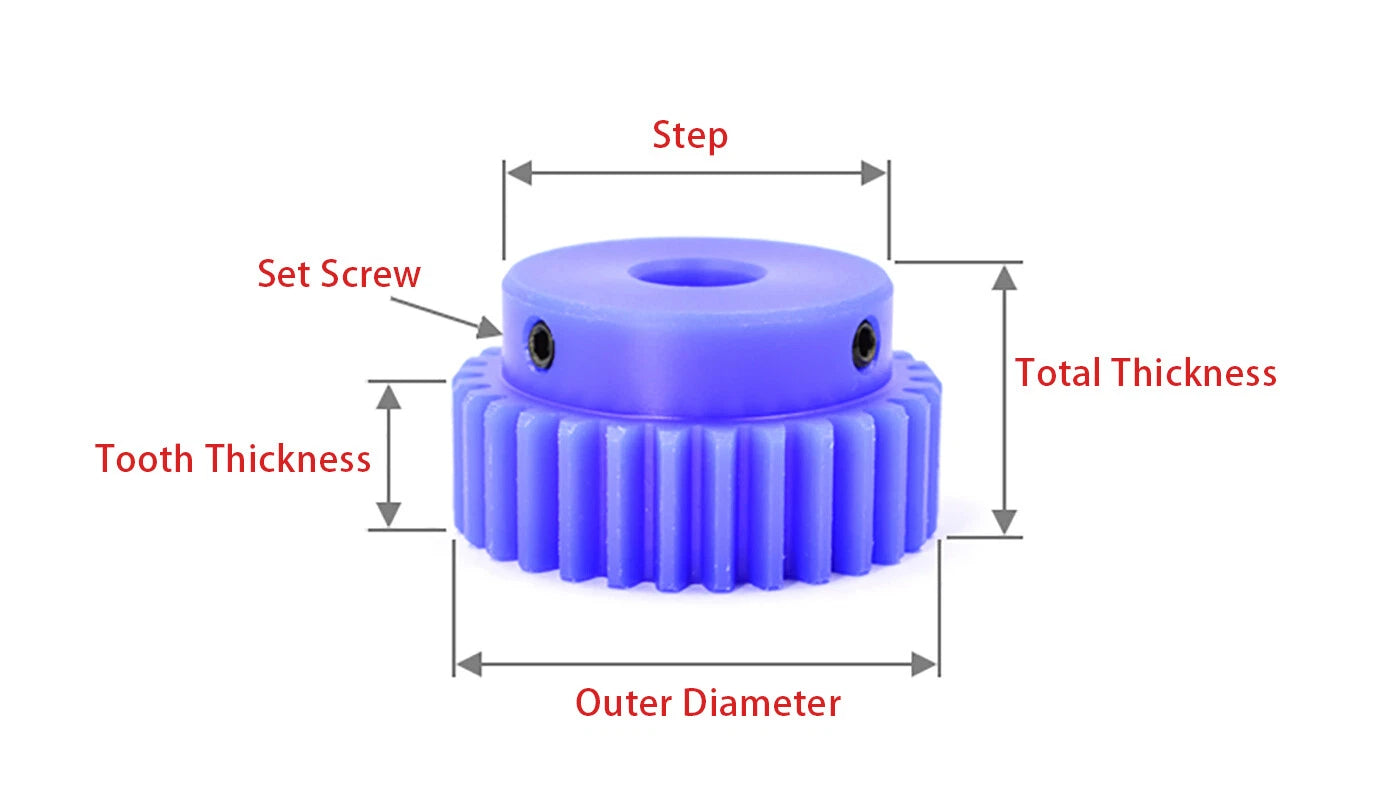
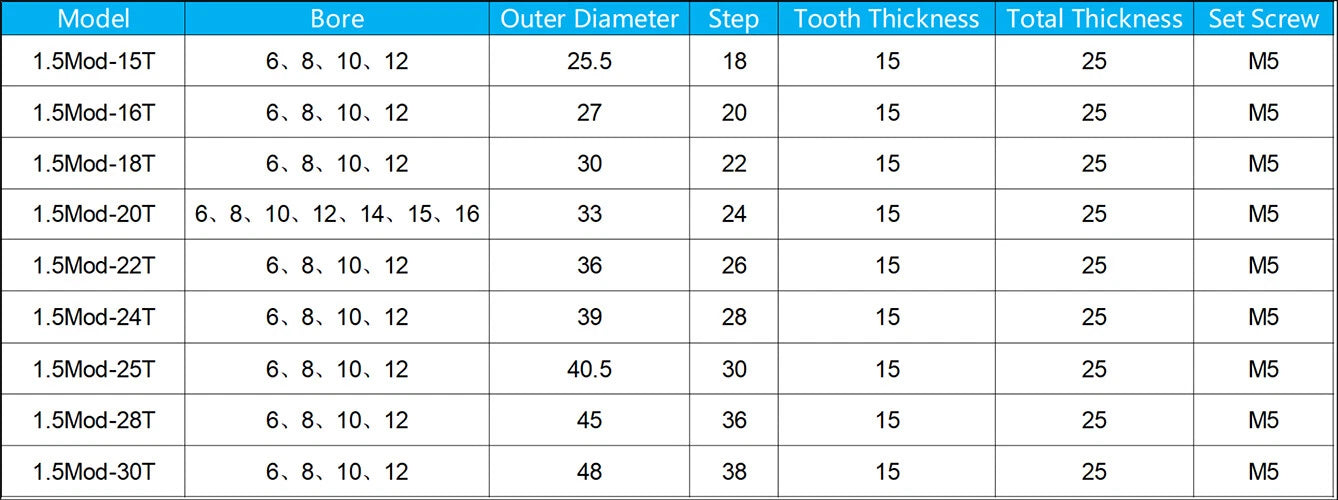
Each gear is machined from engineering-grade plastic (typically nylon or POM/Delrin), offering a balance of low friction, moderate load capacity, and corrosion resistance. The gear range covers 15 to 30 teeth across multiple bore diameters from 6 mm (0.24 in) to 16 mm (0.63 in), with outer diameters scaling proportionally from approximately 25.5 mm (1.00 in) for 15T up to 48 mm (1.89 in) for 30T at 1.5 modulus.

Typical use cases include DIY gearbox assemblies for small robotics and automation rigs, replacement transmission gears for desktop 3D printers and CNC feeders, and lightweight drive components for RC car and boat drivetrains where plastic spur gear weight savings matter.

⚙️ Compatible with standard 1.5 modulus gear systems. Verify tooth count, bore diameter, and face width against your shaft and mating gear before ordering.

✅ Key Features of These 1.5 Modulus Plastic Spur Gears

🔩Wide Model Range — 15T through 30T tooth counts with bore options from 6 mm to 16 mm, covering the most common DIY and light-industrial shaft sizes in a single product line.
🪶Lightweight Engineering Plastic — Constructed from engineering-grade plastic (nylon or POM), delivering low rotational inertia and self-lubricating properties that reduce noise and wear in continuous-duty applications.
🛡️Corrosion-Resistant Material — Unlike steel gears, the plastic construction resists moisture, mild chemicals, and oxidation, making these gears suitable for humid workshop environments and outdoor RC builds.
📐Standard 1.5 Modulus Profile — Machined to the ISO/DIN 1.5 modulus standard, ensuring direct interchangeability with other 1.5 Mod gears and racks in your existing drivetrain.
🔄Convex Tooth Profile — The convex gear face geometry improves tooth contact distribution, reducing stress concentration and extending service life compared to flat-face equivalents under cyclic loading.
🎯Precision Bore Sizing — Bores are machined to close tolerances (typically H7 fit) for a secure shaft fit. Available bore diameters: 6, 8, 10, 12, 14, 15, and 16 mm depending on tooth count variant.

📐 Technical Specifications — 1.5 Modulus Plastic Spur Gear

Modulus 1.5
Tooth Count Range 15T, 16T, 18T, 20T, 22T, 24T, 25T, 28T, 30T
Bore Diameter Range 6 mm – 16 mm (0.24 in – 0.63 in)
Outer Diameter (approx.) 25.5 mm – 48 mm (1.00 in – 1.89 in), varies by tooth count
Face Width (approx.) See variant options
Material Engineering plastic (nylon or POM/Delrin)
Tooth Profile Convex spur (standard involute)
Pressure Angle 20°
Bore Fit Tolerance Typically H7
Finish Natural (uncoated)
Gear Type Spur Gear
Quantity per Pack 1 piece

❓ Frequently Asked Questions

How do I choose the right tooth count for my application?

The gear ratio between two meshing spur gears equals the ratio of their tooth counts. For example, pairing a 15T drive gear with a 30T driven gear gives a 2:1 reduction. Determine your required speed reduction or multiplication first, then select tooth counts that achieve that ratio while fitting within your available space envelope.

Which bore diameter should I select?

Measure your shaft diameter with a caliper and select the matching bore. For a secure press or keyed fit, choose a bore equal to your shaft diameter. If you plan to use a set screw or locking collar, a bore that matches the shaft exactly (H7 tolerance) is recommended. Not all bore sizes are available for every tooth count — check the variant options for your chosen tooth count.

Are these gears strong enough for my robotics or RC project?

Engineering plastic gears (nylon/POM) are well-suited for light-to-moderate torque applications such as small robotics, 3D printer drives, and RC transmissions. They are not recommended for high-torque industrial machinery or applications with sustained shock loading. If your application exceeds the plastic's load capacity, consider metal spur gears instead.

Will these gears corrode or degrade outdoors?

Nylon and POM plastics are inherently corrosion-resistant and will not rust. They can handle moderate moisture and mild chemical exposure. Prolonged UV exposure may cause slight surface degradation over time; for long-term outdoor use, consider shielding the gears from direct sunlight or applying a UV-protective coating.

Are these compatible with metal spur gears of the same modulus?

Yes. Any two gears with the same modulus and pressure angle will mesh correctly regardless of material, provided the tooth counts and center distance are matched. These 1.5 Mod plastic gears will mesh with 1.5 Mod metal gears. Note that pairing plastic with metal may accelerate wear on the plastic gear under heavy loads.

Do I need to lubricate these plastic gears?

POM (Delrin) is self-lubricating and typically runs dry. Nylon also has low friction properties but can benefit from a light application of dry PTFE lubricant or white lithium grease in high-cycle applications. Avoid petroleum-based oils that may swell or degrade certain plastics over time.

What is the difference between the tooth counts available — how does it affect gear size?

At 1.5 modulus, the pitch diameter equals the tooth count multiplied by the modulus (e.g., 20T × 1.5 = 30 mm pitch diameter). More teeth means a larger gear diameter. Choose a higher tooth count when you need a larger driven gear for speed reduction, or a lower tooth count for a compact drive pinion.

🛒 Select your tooth count and bore diameter above, then add to cart.

You may also like

Recently viewed